Choose a location or an artwork to explore. You can also browse every artwork in the list below the map.
Loading map. The artwork list below is also available.
45 artworks
Krasl Art Center
2024 East Garden Installation
Owen Lowery "Weather Patterns"
Krasl Art Center
2024 East Garden Installation
Owen Lowery "Weather Patterns"
PVC pipe, anemometers, touch-and-motion-reactive LED lights and speakers, acoustic instruments, 2025
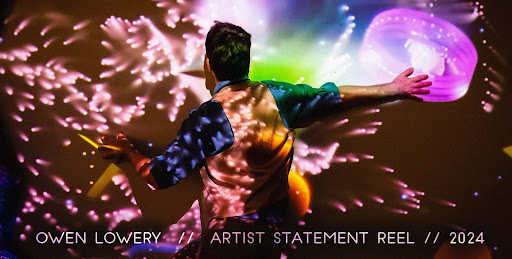
Weather Patterns is a modular touch, light, and sound installation that evolves via wind, precipitation, and human exploration. Each cluster is an independent sculpture, communicating with each other through bluetooth, changing in response to weather conditions and human interaction, and continually emitting responsive music and light. Together, the sculptures harmonize, evolving independently, engaging multiple senses, and experienced as one complete collaboration.
Owen Lowery is a Pittsburgh based interactive artist with a mission to create situations that foster intrinsic curiosity in children and adults alike. Owen prioritizes Universal Design in his work, hoping that all people—regardless of age, height, ability, or disability—may engage in a meaningful way. His work is often found in less traditional art spaces such as libraries, community centers, hospitals, halfway houses, psychiatric care facilities, and maker spaces. While Owen has created inclusive, interactive, outdoor installations in the past, Weather Patterns is the first to intentionally respond to outdoor elements, making the work most active during weather conditions people often avoid (rain, snow, high winds) and encouraging exploration of art in strange new conditions.
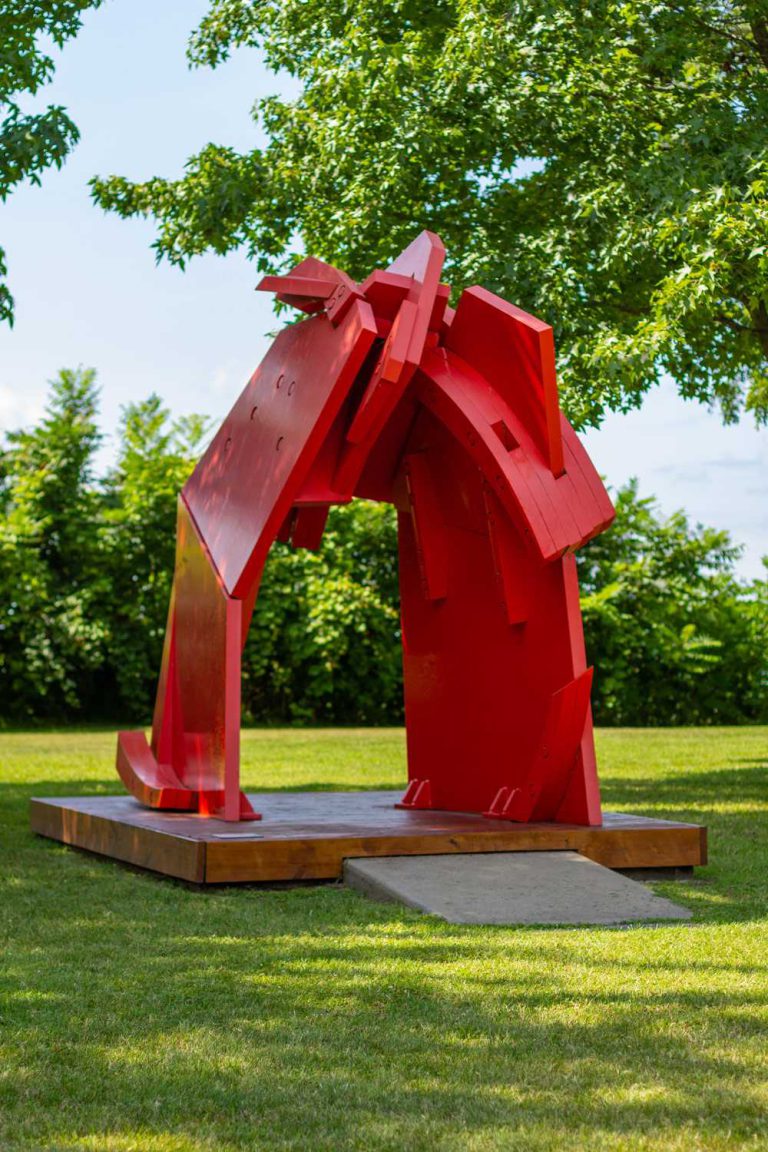
Lookout Park
Allegheny Drift
Michael Dunbar
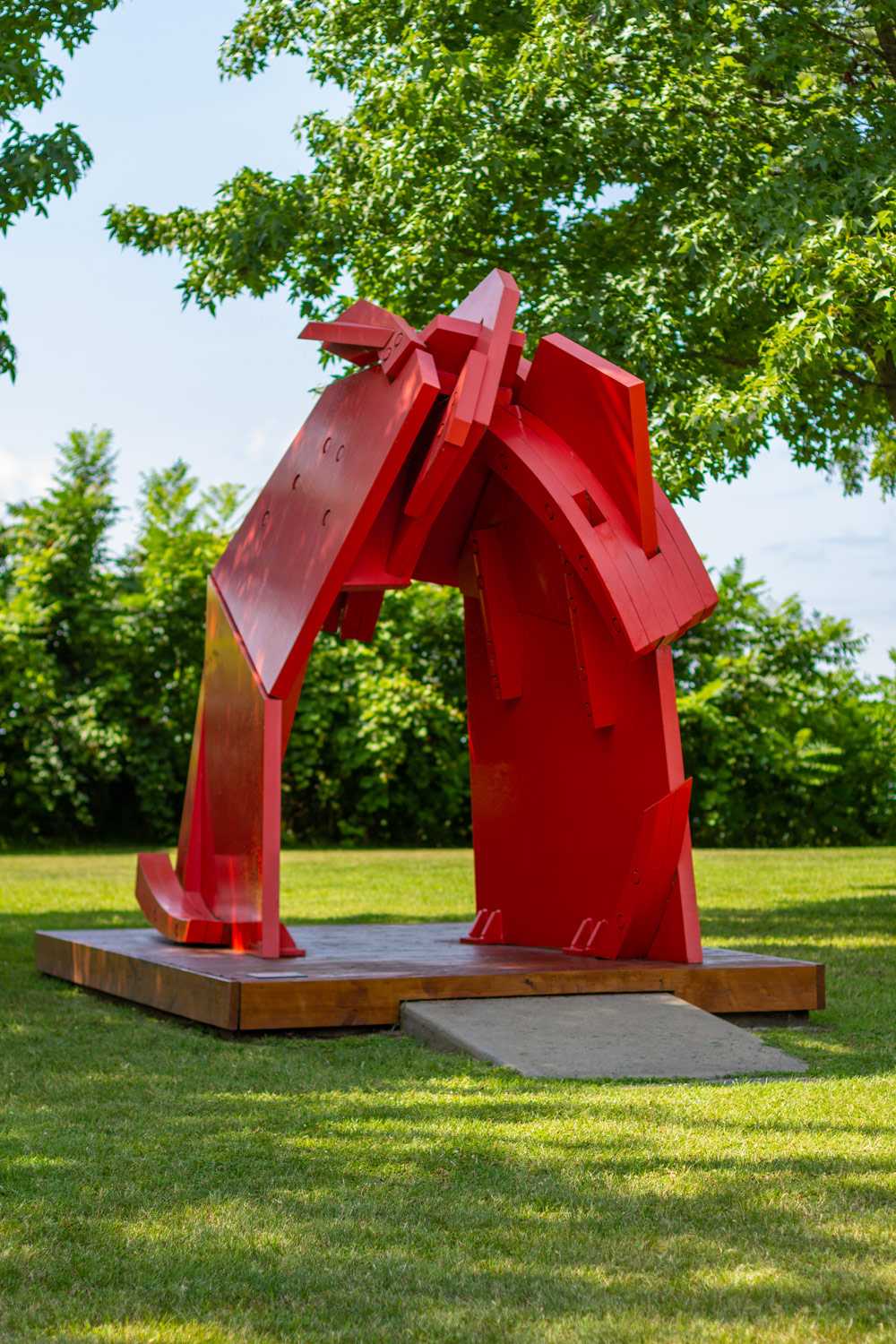
Lookout Park
Allegheny Drift
Michael Dunbar
Steel, 1995
UPDATED COPY: Allegheny refers to a geographic region in and around Pennsylvania and is also where Dunbar’s grandfather and mother were born. The large abstract steel shapes resemble tectonic plates near Pittsburg, Pennsylvania which is also the birthplace of the steel industry. Dunbar was influenced by a specific tool used in steel manufacturing; a “drift pin”. Look for the circular parts within the sculpture, these resemble drift pins.
1. What does Allegheny mean?
The Allegheny region is comprised of a mountain range, river and a large expanse of high ground. It begins in the northeast United States in central Pennsylvania and moves southwest through western Maryland and eastern West Virginia to Southwestern Virginia. The word Allegheny is thought to originate from the Lenape (Delaware) Indians and means “fine river”.

2. What are tectonic plates?
Tectonic Plates are part of the earth’s crust and are always shifting and moving. Sometimes, when they shift, they can cause earthquakes. Imagine the large steel plates of this sculpture moving and shifting. What sound would they make?
3. What is a drift pin?
In various metal work trades, the tapered drift pin aligns holes within separate large metal parts together. Look for the circular parts within the sculpture, these resemble drift pins.


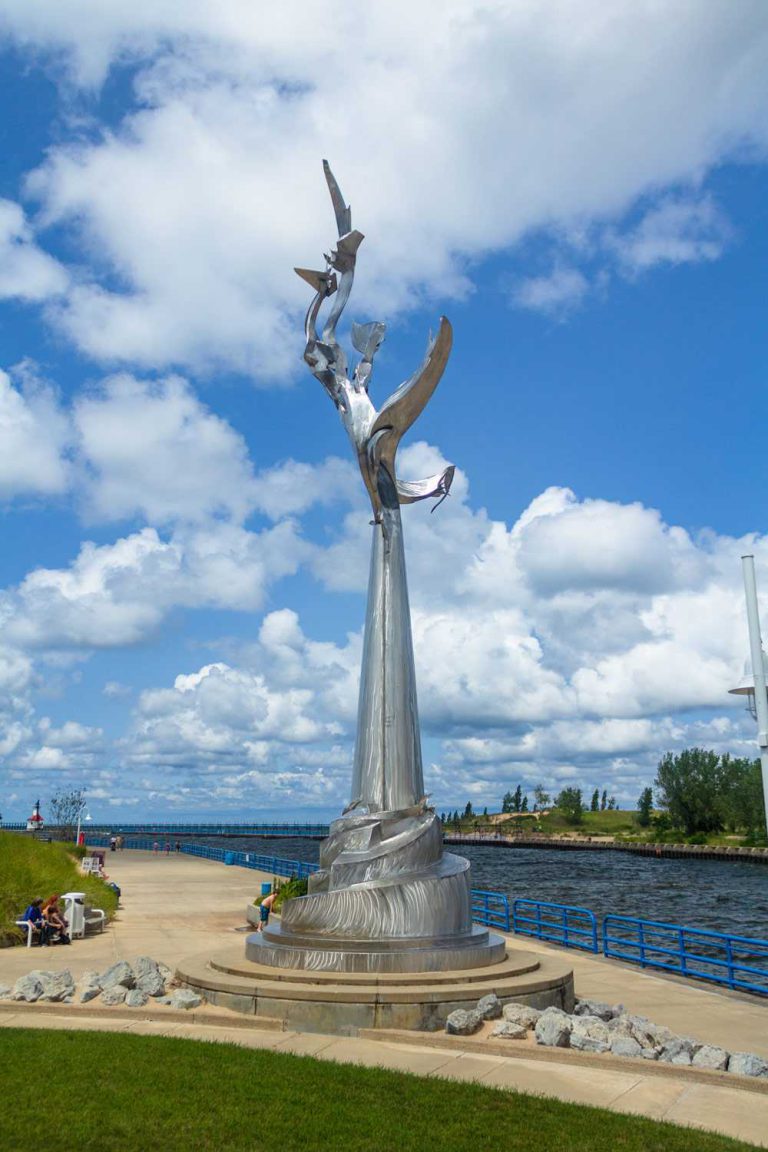
Silver Beach County Park
And You, Seas
Richard Hunt
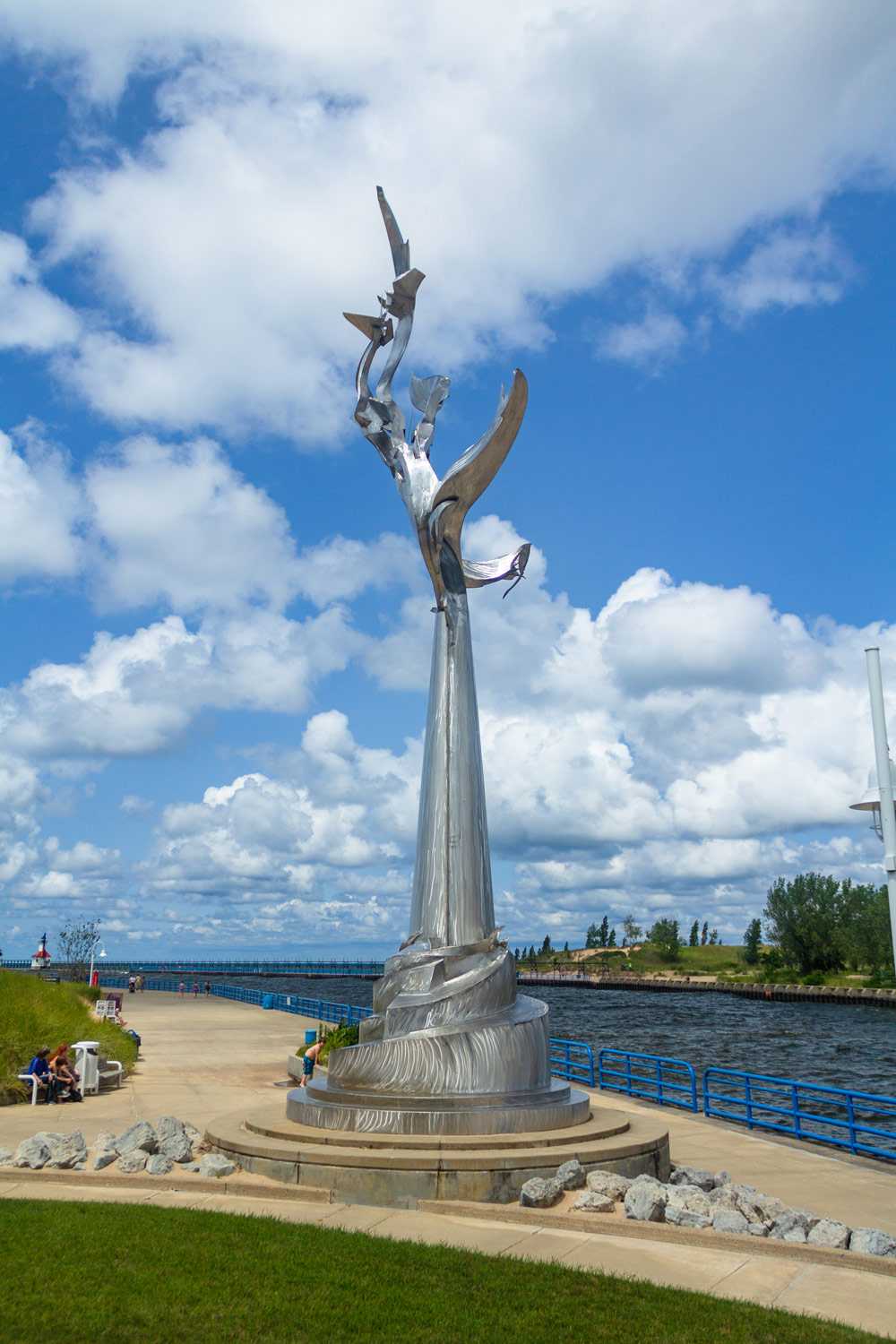
Silver Beach County Park
And You, Seas
Richard Hunt
Welded stainless steel, 2002
Standing nearly 50 feet tall, And You, Seas, is made from stainless steel by the accomplished American Sculptor, Richard Hunt. Native of Chicago, with a studio in Benton Harbor, Hunt is continually inspired by the movement and energy of nature.
1. What shapes from nature can you see?
Cresting waves? Rippling water?


2. What elements from nature can you feel?
A cool crisp wind? A warm summer reflection?
3. Look closely, can you see the numbers in the side of the sculpture?
These numbers are the numbers of avid sailor, Patrick Kinney, this sculpture was made as a memorial to him.

Krasl Art Center
Beacon Gold Chandelier
Dale Chihuly
Krasl Art Center
Beacon Gold Chandelier
Dale Chihuly
Glass, 2000
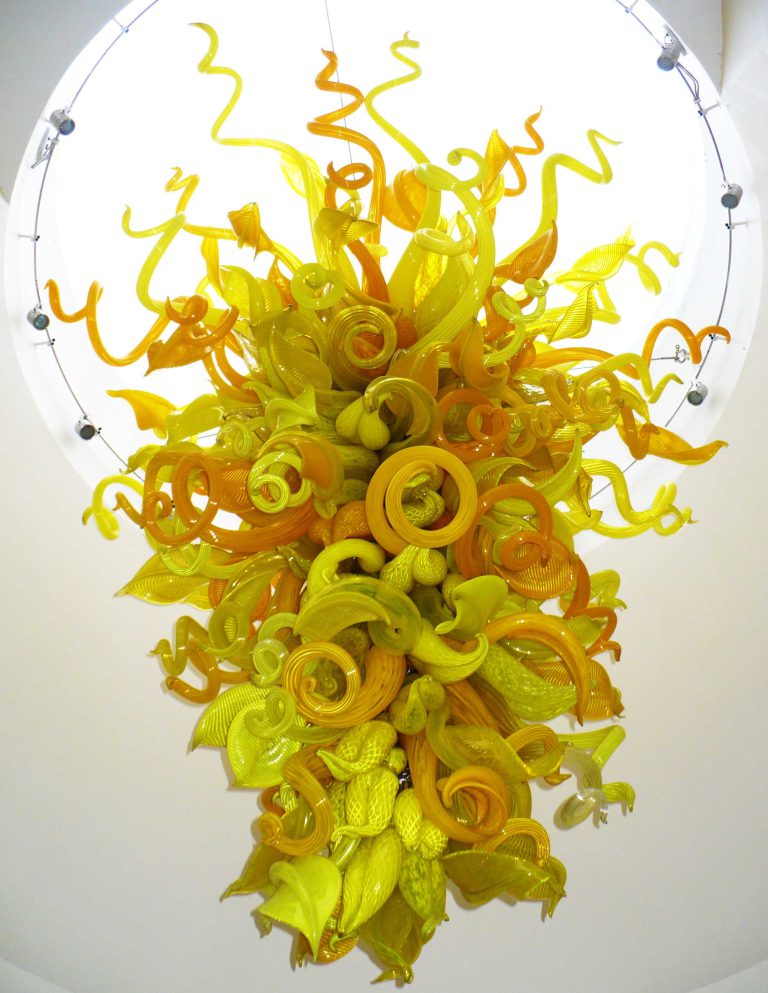
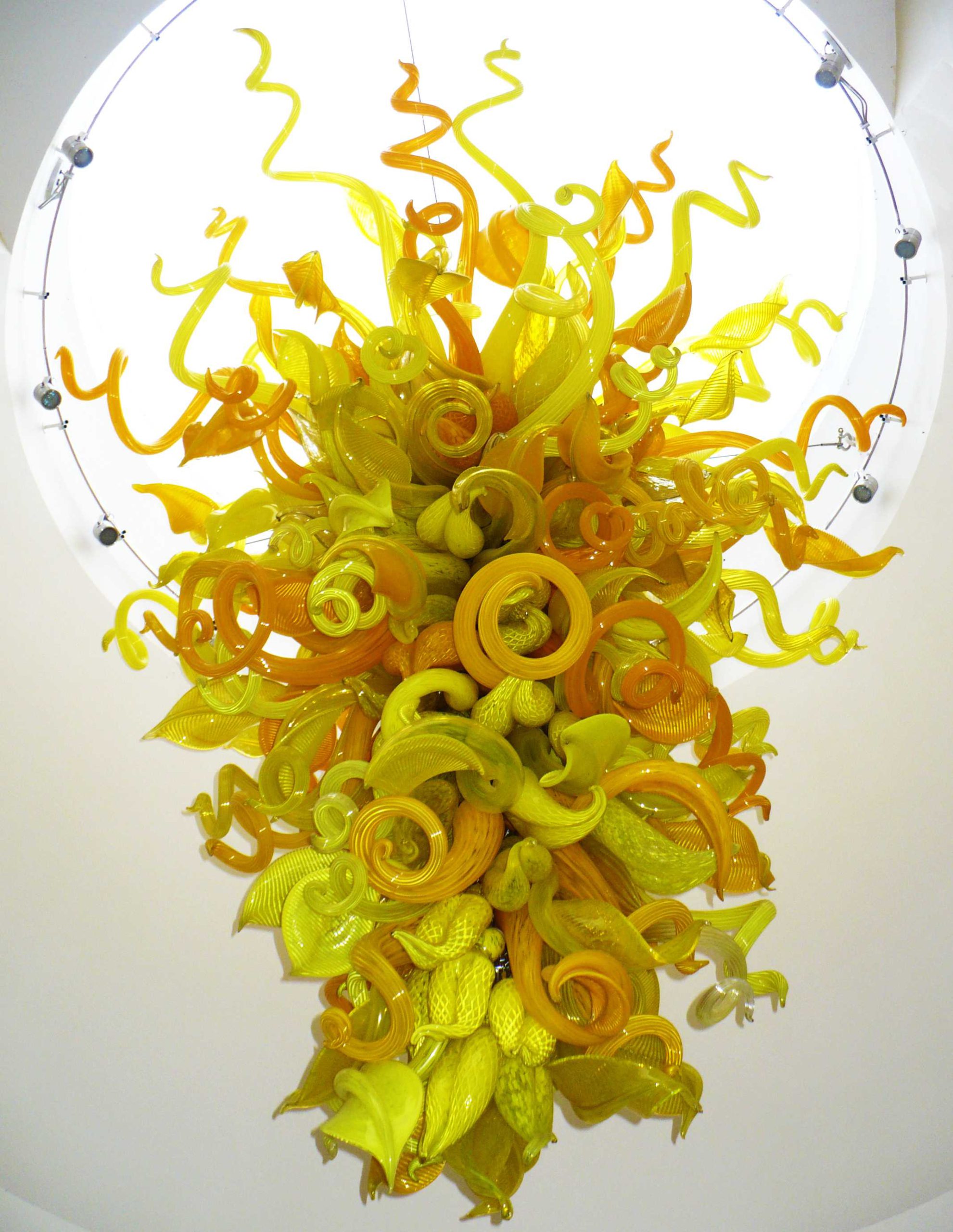
You are standing in the Krasl Art Center “silo,” a uniquely shaped entrance to the museum that was designed for a significant sculpture. In 2000, KAC commissioned Chihuly to create what we now know as Beacon Gold Chandelier. 200 individually blown glass pieces make up this 700-pound sculpture. Each delicate glass piece is secured to a stainless-steel armature.
Chihuly received his Masters of Science in sculpture from the University of Wisconsin in 1967, studying under Harvey Littleton, who is considered to be the father of the American Glass Movement. Chihuly continued his studies at the Rhode Island School of Design (RISD) and received his MFA in 1968. Today, Chihuly operates the “Boathouse” in Seattle, Washington, where he and his team of 100 artisans create dramatic masterpieces in glass.
Did you know that Chihuly was named the first National Living Treasure in America?
Chihuly was named the first National Living Treasure in America! Learn more by clicking this link.
Glass is kind of a big deal around here. Click here to find out why.
Did you know that our community has its own glass studio with a long legacy of talented artists and excellent classes and programs? Learn more about Benton Harbor’s Water Street Glassworks by clicking this link.
Krasl Art Center
Between the Lines (no. 10)
Kris Sanford
Krasl Art Center
Between the Lines (no. 10)
Kris Sanford
Archival photographic print on vinyl, 2024/2009
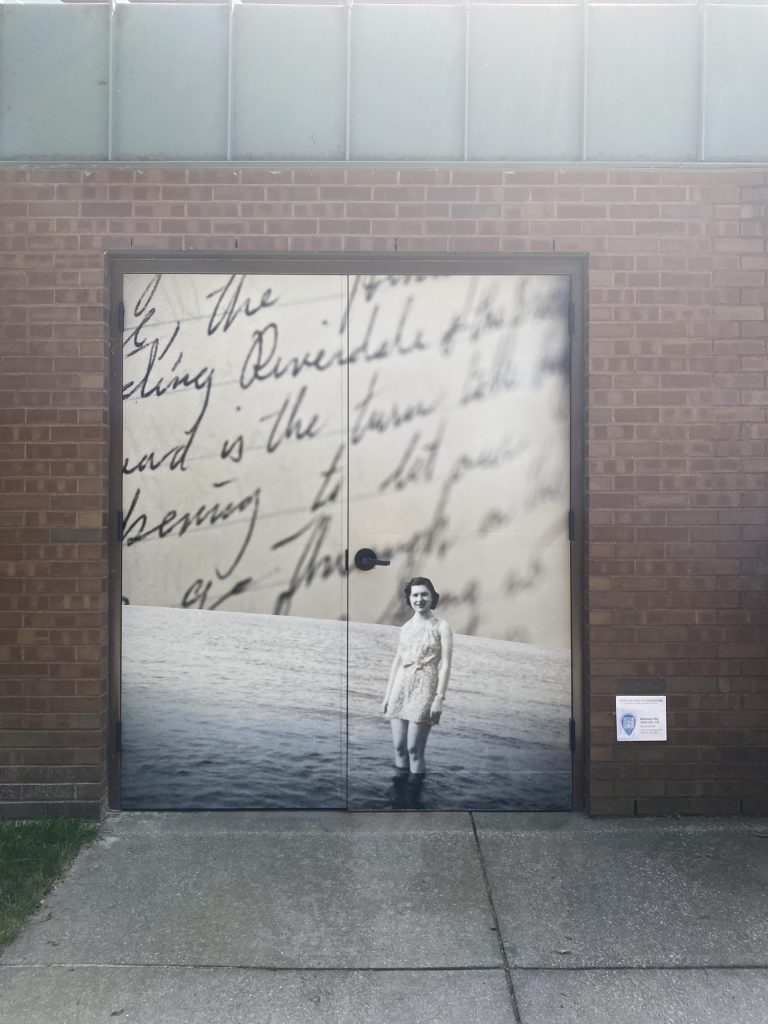
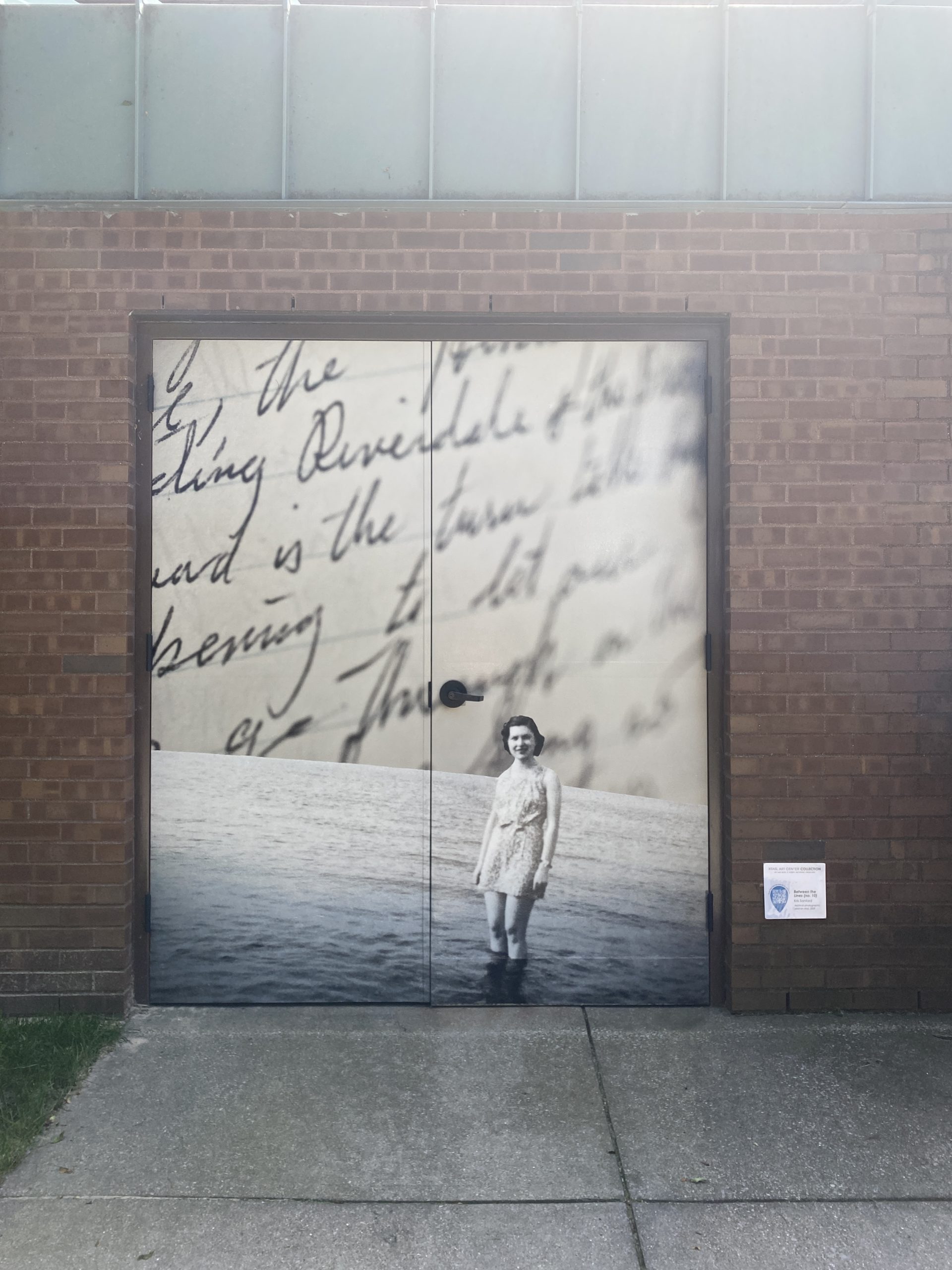
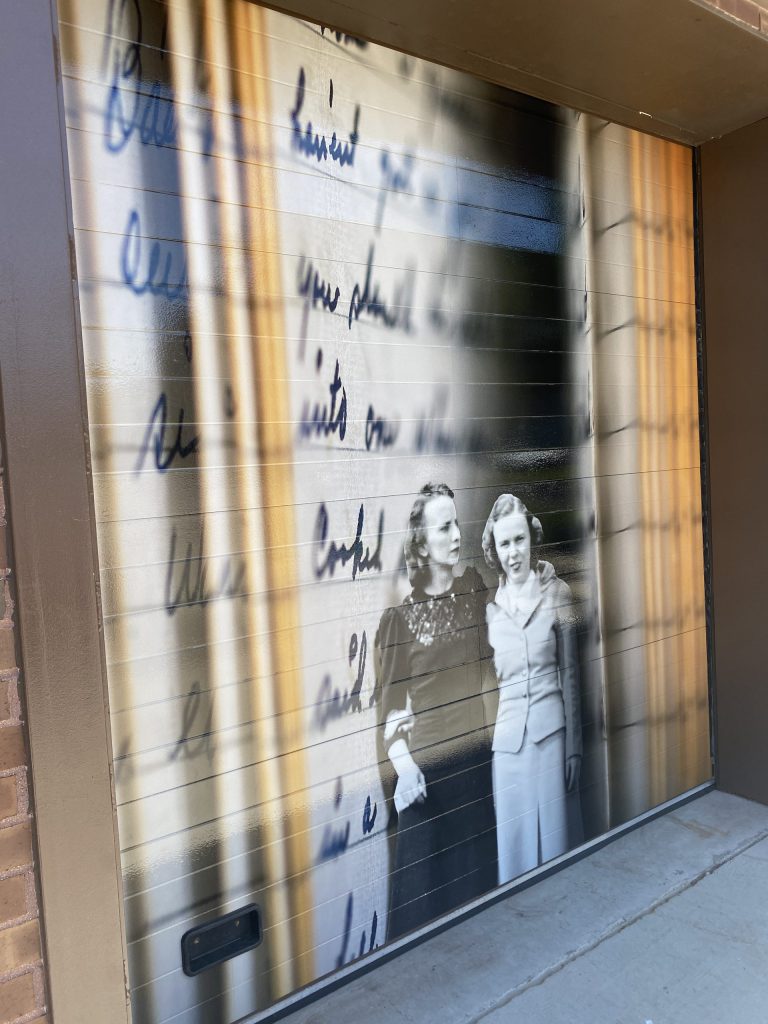
"A 1954 diary that belonged to a grandfather I never met serves as the inspiration for and background in many of the photographs from Between the Lines. The figures that emerge from the pages, actual vintage photographs cut and photographed in camera, represent the memories contained in the text. Shallow focus reveals small details, while obscuring the larger story.
Relationships, real or imagined, are at the center of my work. I live vicariously through unknown strangers, creating stories from abandoned diaries, letters, and photographs. I use appropriated photographs for their seemingly innocent and unselfconscious nature, reinterpreting vintage snapshots to speak about the tension and complexity in my own relationships. My work raises questions about memory, truth, and representation in photography, often drawing attention to changing attitudes toward gay and lesbian relationships. My images are works of fiction, where I project my own dreams onto moments from the past." ~Kris Sanford
Click here to learn more about artist Kris Sanford.
Kris Sanford grew up in southeast Michigan and received a BFA in photography from the College for Creative Studies in Detroit and an MFA in photography from Arizona State University. Her art explores relationships through the use of appropriated images, video, and text. Kris is currently an associate professor at Central Michigan University and has taught photography classes at several institutions, including Washtenaw Community College, Arizona State University, and Glendale Community College. Click here to see more of Kris’s work.

Krasl Art Center
Between the Lines (no. 13)
Kris Sanford
Krasl Art Center
Between the Lines (no. 13)
Kris Sanford
Archival photographic print on vinyl, 2024/2009
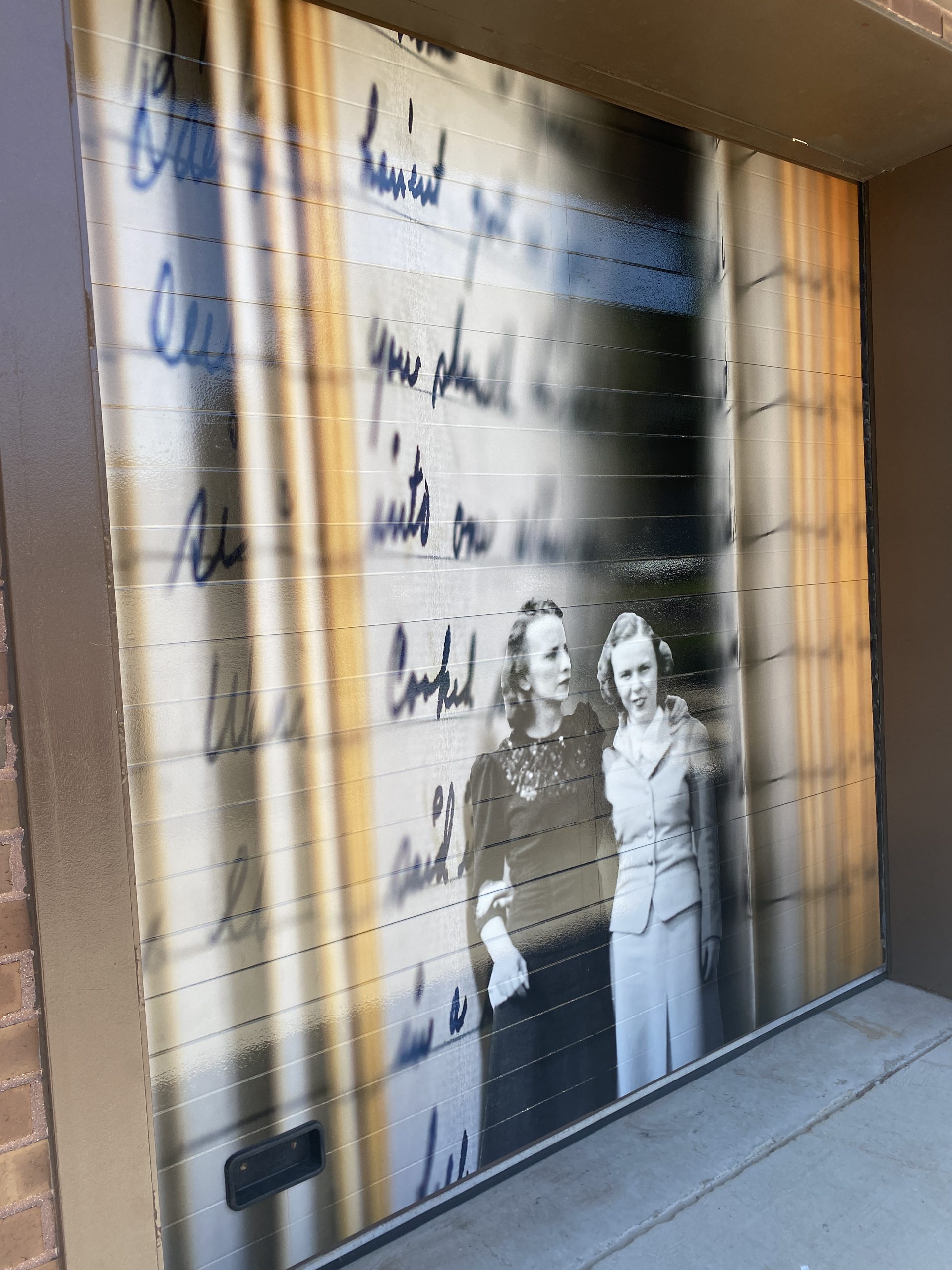
"A 1954 diary that belonged to a grandfather I never met serves as the inspiration for and background in many of the photographs from Between the Lines. The figures that emerge from the pages, actual vintage photographs cut and photographed in camera, represent the memories contained in the text. Shallow focus reveals small details, while obscuring the larger story.
Relationships, real or imagined, are at the center of my work. I live vicariously through unknown strangers, creating stories from abandoned diaries, letters, and photographs. I use appropriated photographs for their seemingly innocent and unselfconscious nature, reinterpreting vintage snapshots to speak about the tension and complexity in my own relationships. My work raises questions about memory, truth, and representation in photography, often drawing attention to changing attitudes toward gay and lesbian relationships. My images are works of fiction, where I project my own dreams onto moments from the past." ~Kris Sanford
Click here to learn more about artist Kris Sanford.
Kris Sanford grew up in southeast Michigan and received a BFA in photography from the College for Creative Studies in Detroit and an MFA in photography from Arizona State University. Her art explores relationships through the use of appropriated images, video, and text. Kris is currently an associate professor at Central Michigan University and has taught photography classes at several institutions, including Washtenaw Community College, Arizona State University, and Glendale Community College. Click here to see more of Kris’s work.
'Between the Lines' across the country. Click here to see it.
Another photo from this project, Between the Lines (no. 11), was included in the 2011 installment of the 7th Avenue Streetscape Panels in Phoenix, AZ. Click the photo below to learn more.

Krasl Art Center
Bi-Static #3
Eric Stephenson
Krasl Art Center
Bi-Static #3
Eric Stephenson
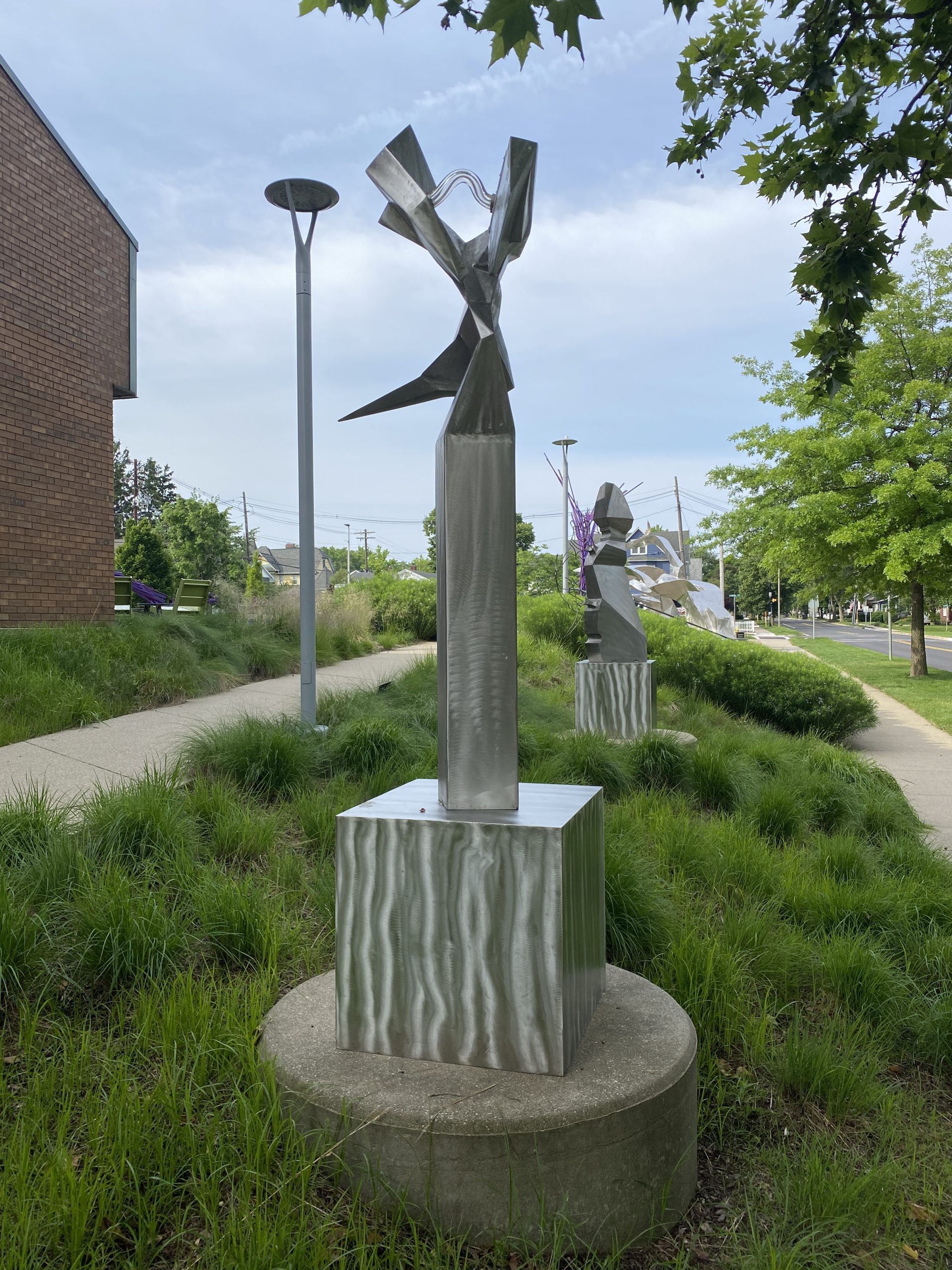
Welded stainless steel and blown glass, 2008
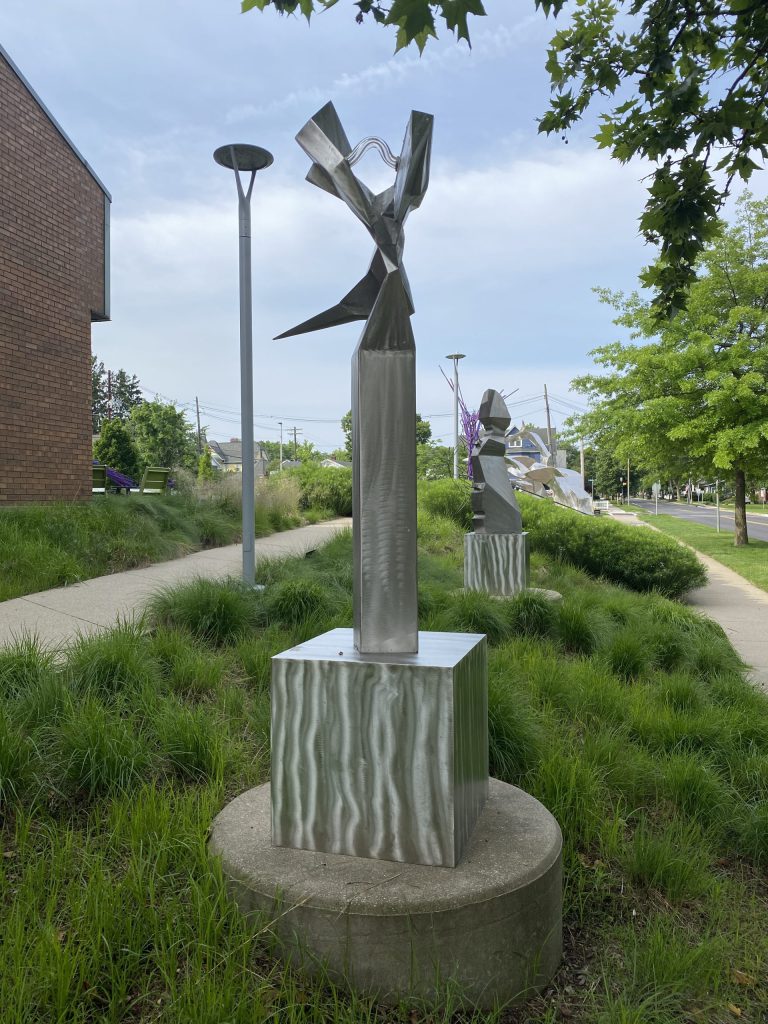
These three sculptures by Eric Stephenson form a mini retrospective of his work, each sculpture representing a different phase of his career.
Stephenson's work is informed by industrial materials. Metal may be what you notice first, but look more closely at Bi-Static #3, and you will find another material he occasionally explores: blown glass.
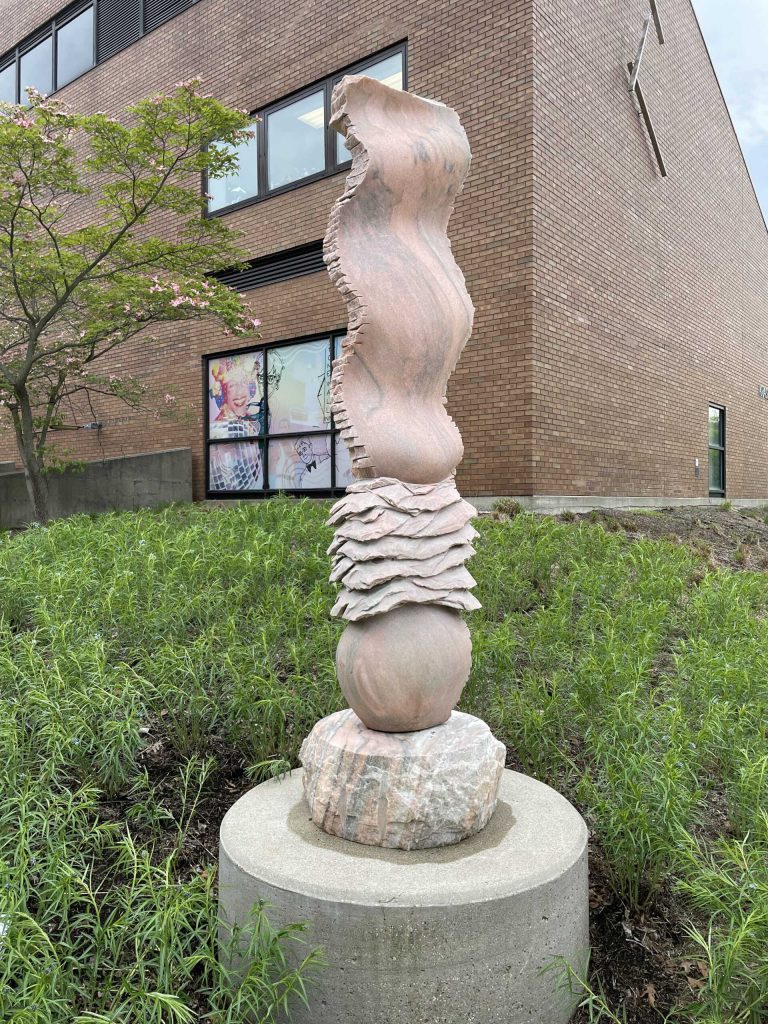
Krasl Art Center
Bouquet
Fritz Olsen
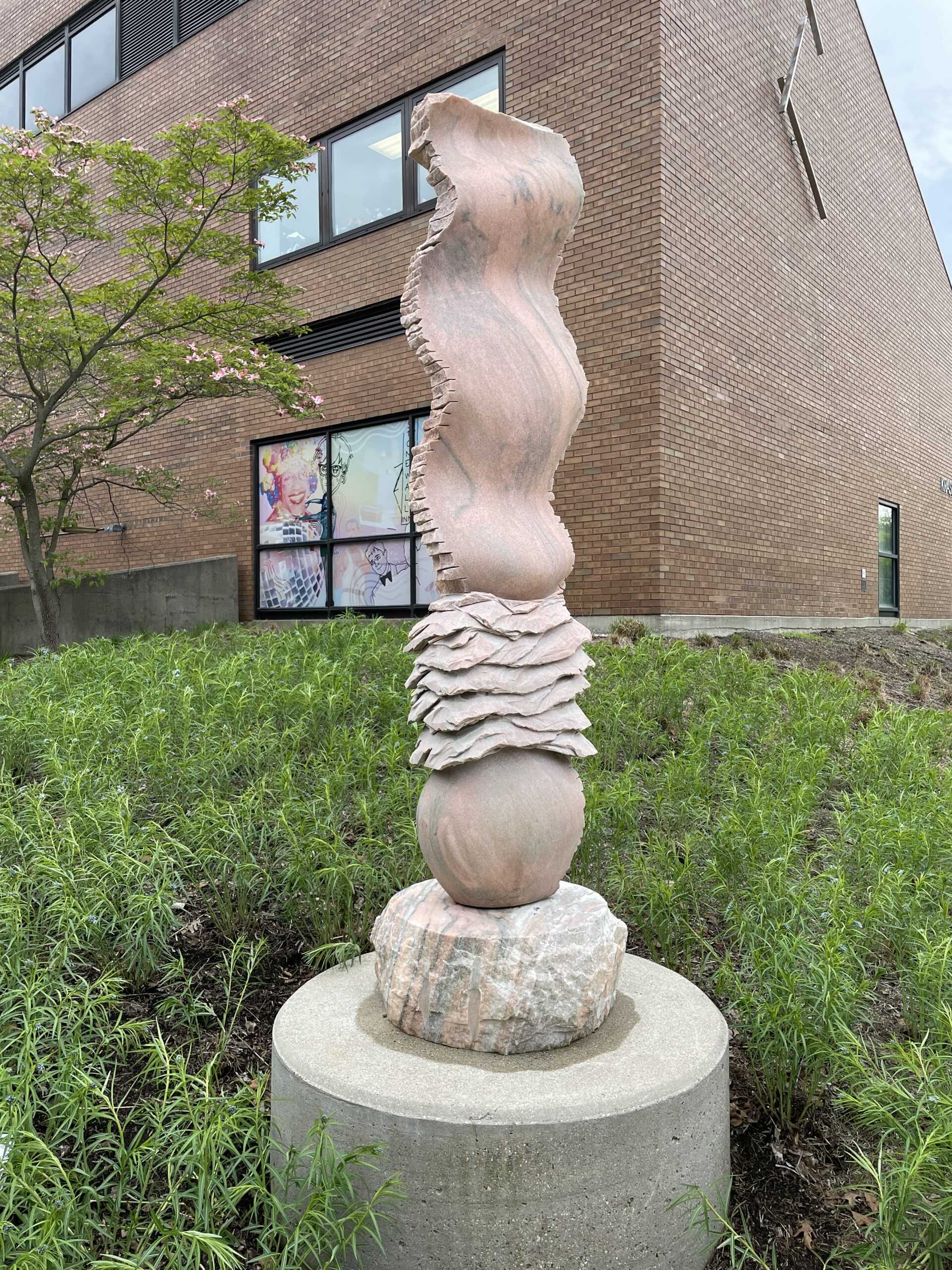
Krasl Art Center
Bouquet
Fritz Olsen
Marble, 1999
“Echoing wind, water and the human form, Bouquet represents the elegant energy of nature in motion” stated Fritz Olsen, sculptor. This sculpture is dedicated to all of the past, present, and future volunteers of the Krasl Art Center.
Fritz Olsen has been sculpting in stone, bronze, and steel for over 30 years. He lives in Sawyer, Michigan, where he works in a restored 1930s Azalea nursery and exhibits his work in his Gallery and Sculpture Gardens.
Click here to learn more about artist Fritz Olsen.
Fritz Olsen traded his studio on Goose Island in Chicago for the rural countryside of Sawyer, Michigan. He works in a beautifully restored 1930’s Azalia nursery just off the shores of Lake Michigan and exhibits his sculptures in his Gallery and Sculpture Gardens. For Thirty nine years he has been creating sculptures in stone, bronze and steel. His works can be found in public, private, and corporate collections across the United States.

Live at Lunchtime with Fritz Olsen. Click here to watch an interview with the artist.
KAC got to connect with Fritz Olsen during one of our virtual Live at Lunchtime Artist Talks. See the whole conversation by clicking this link.
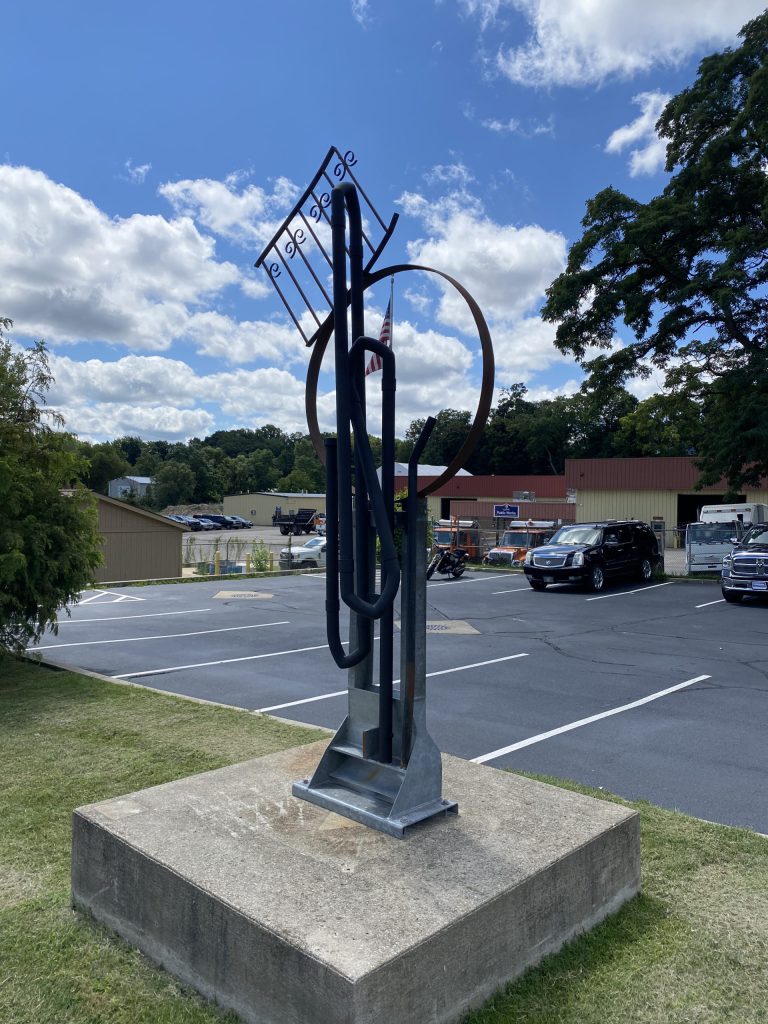
The Box Factory for the Arts
Construction NOLA
Bill Boyce
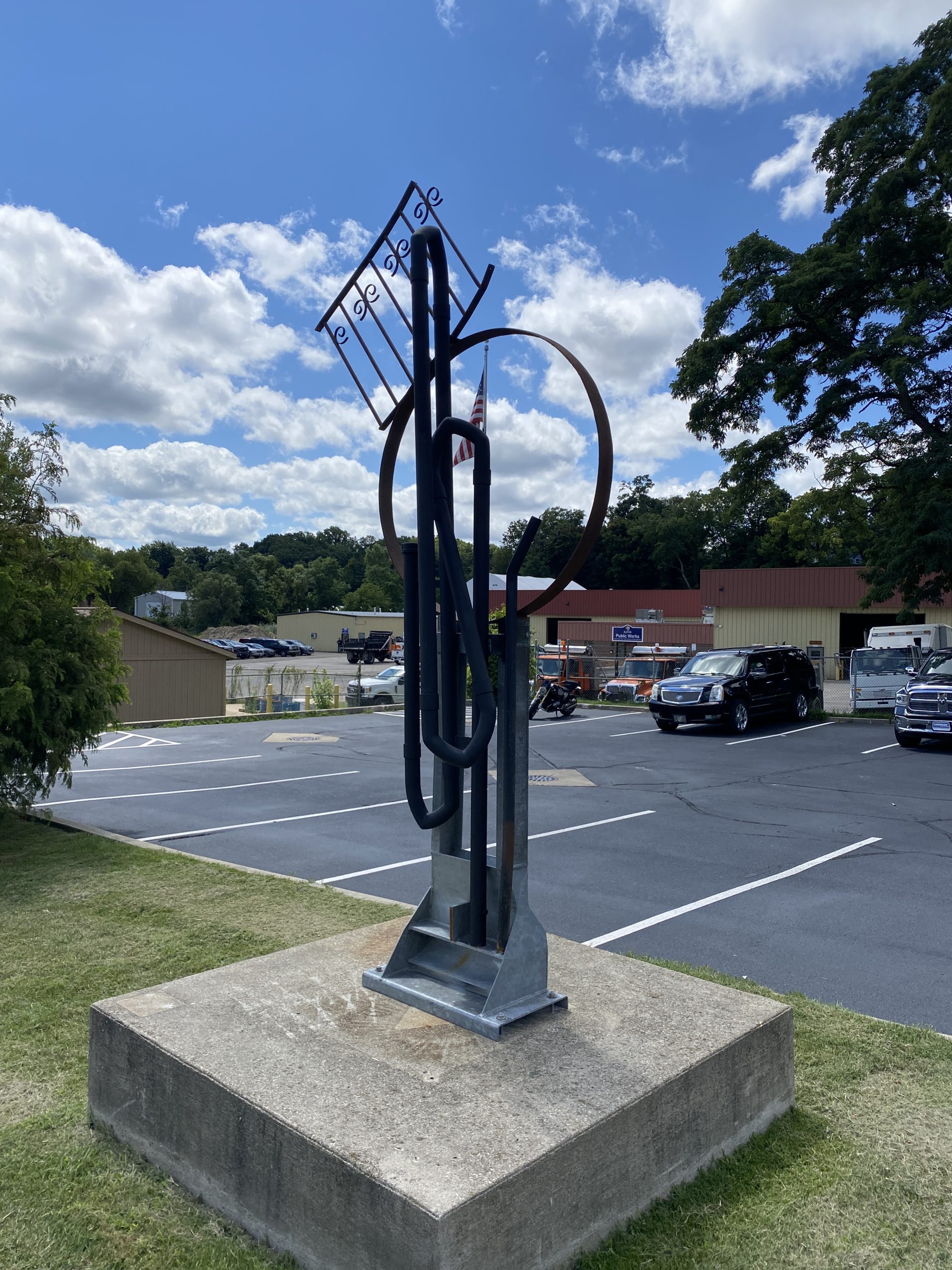
The Box Factory for the Arts
Construction NOLA
Bill Boyce
Mixed media, 2022
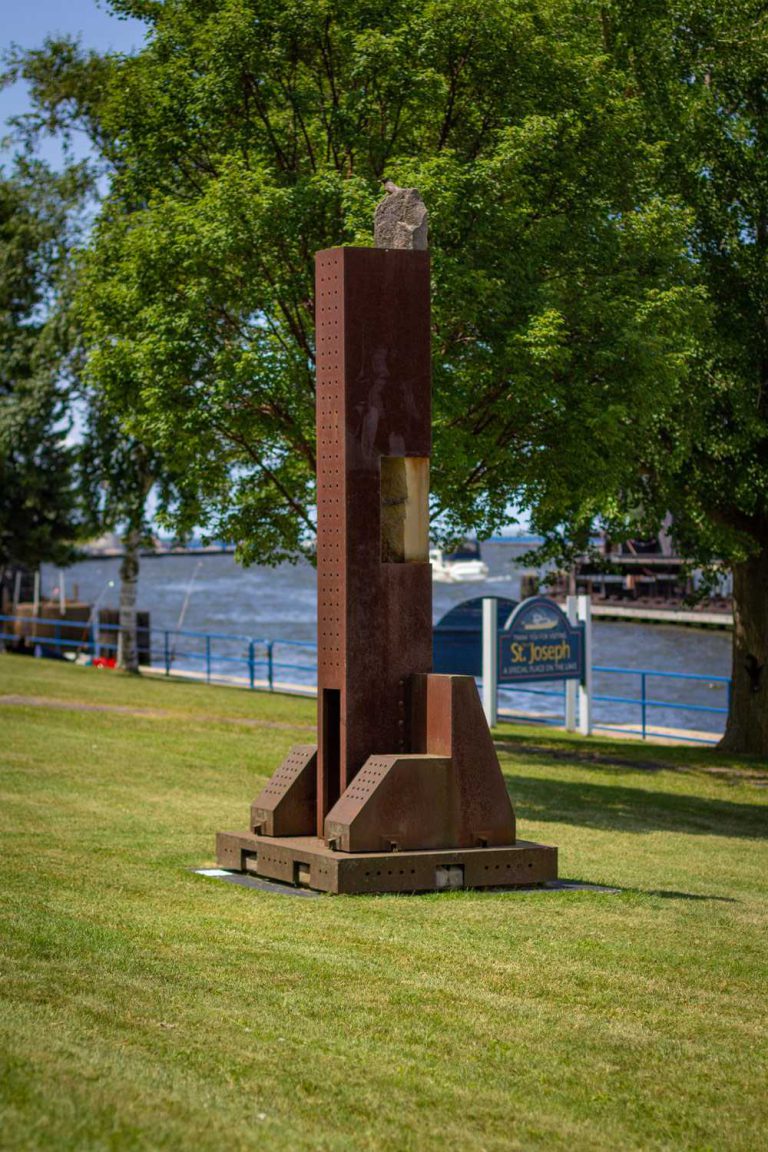
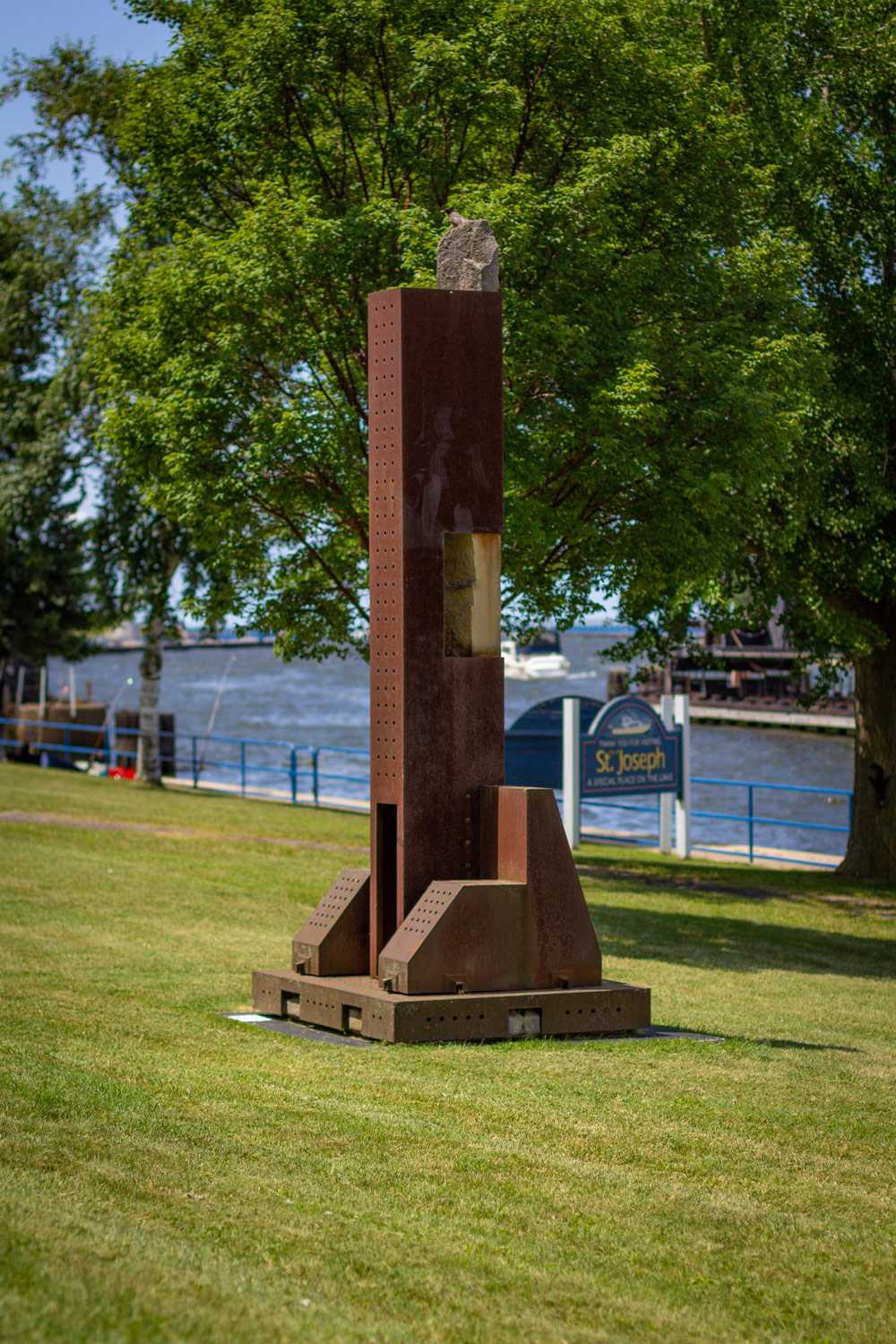
The Box Factory for the Arts
Construction of Breath
Kanri Nakano
The Box Factory for the Arts
Construction of Breath
Kanri Nakano
Limestone, iron, steel, 1998
This sculpture was created while Nakano was on an artist residency in Three Oaks, MI. It was first exhibited in the 1998 Pier Walk at Chicago’s Navy Pier on Lake Michigan. Afterward, it moved to the Purdue University Northwest Campus outdoor exhibition, Odyssey Sculpture Series. Today, Nakano lives and works on sculptures in Japan.
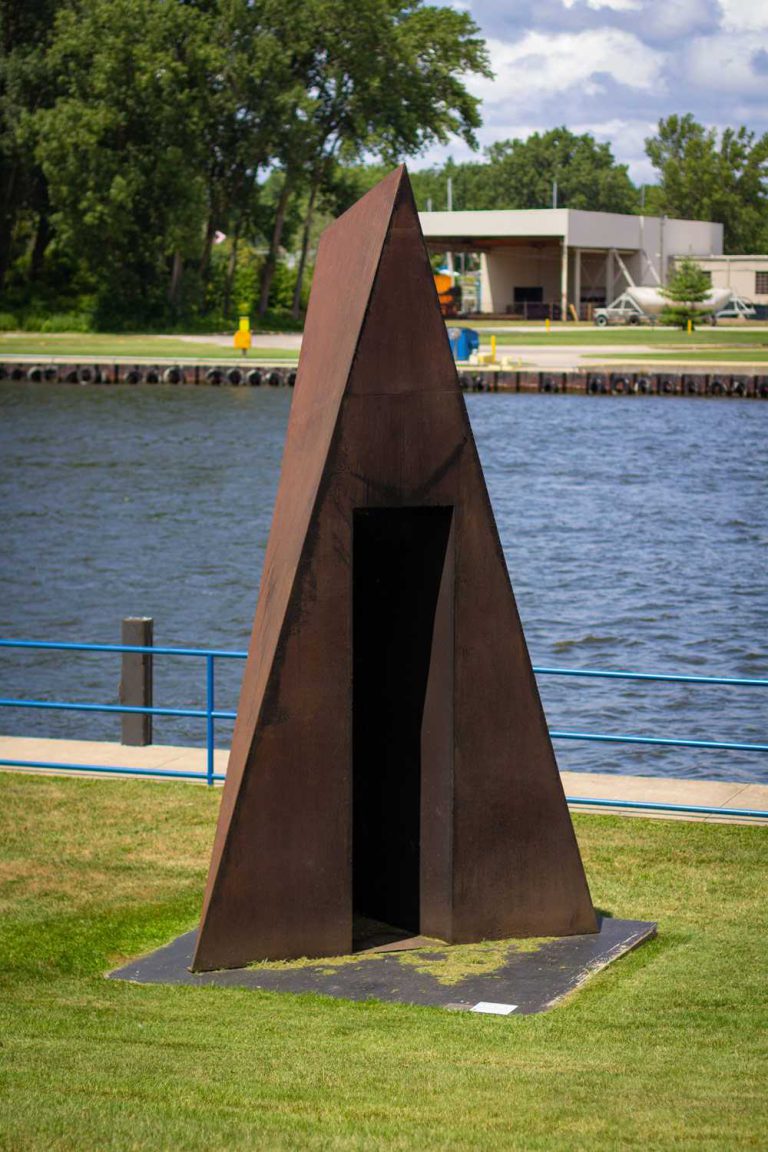
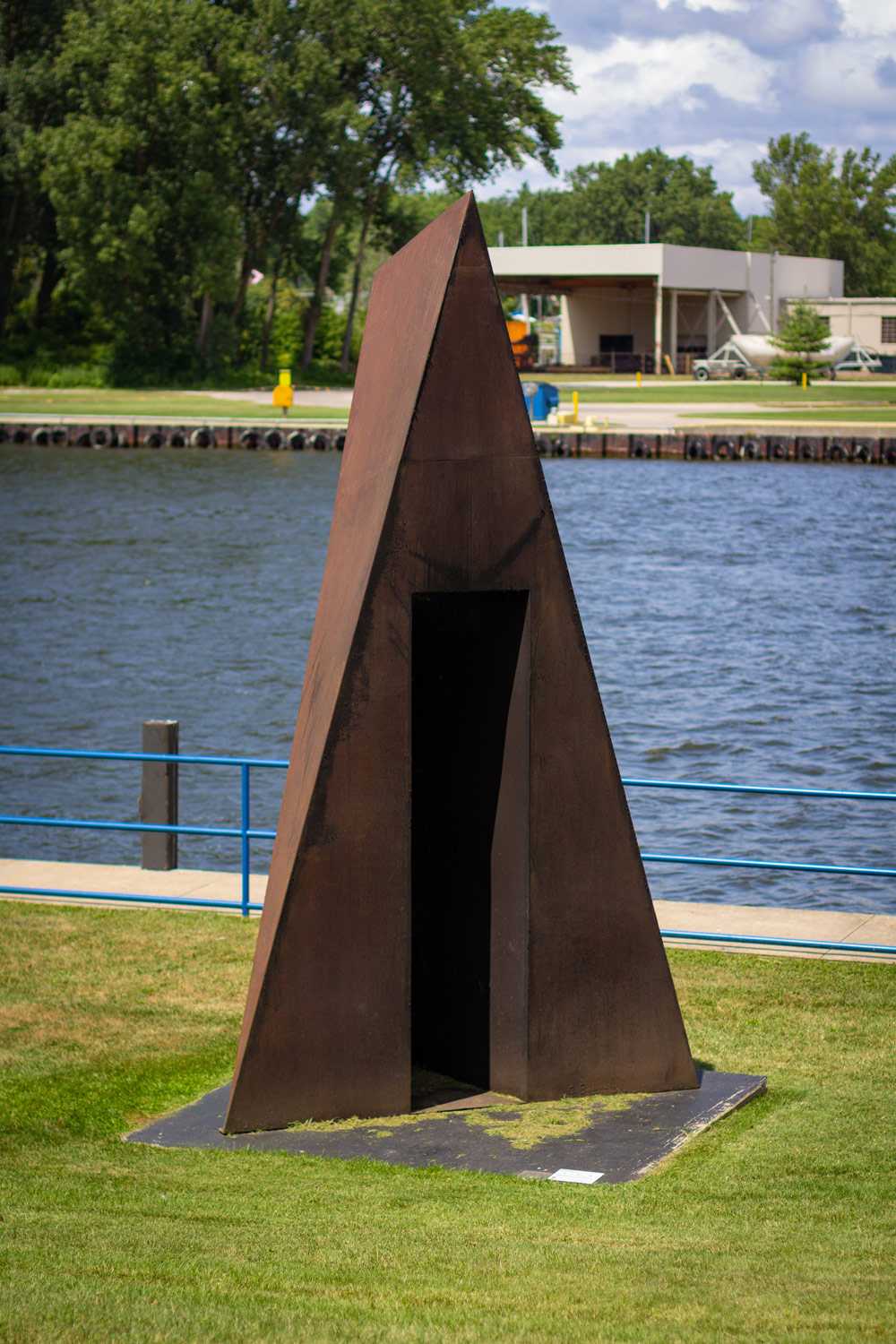
Margaret B. Upton Arboretum
Cowl
Carl Billingsley
Margaret B. Upton Arboretum
Cowl
Carl Billingsley
Corten steel
Billingsley believes that “all artists are on a journey of discovery through territory known but not fully understood.” His journey began at a young age when he spent as much time as possible with his grandfather who was a carpenter. This is when his “love of making” began.
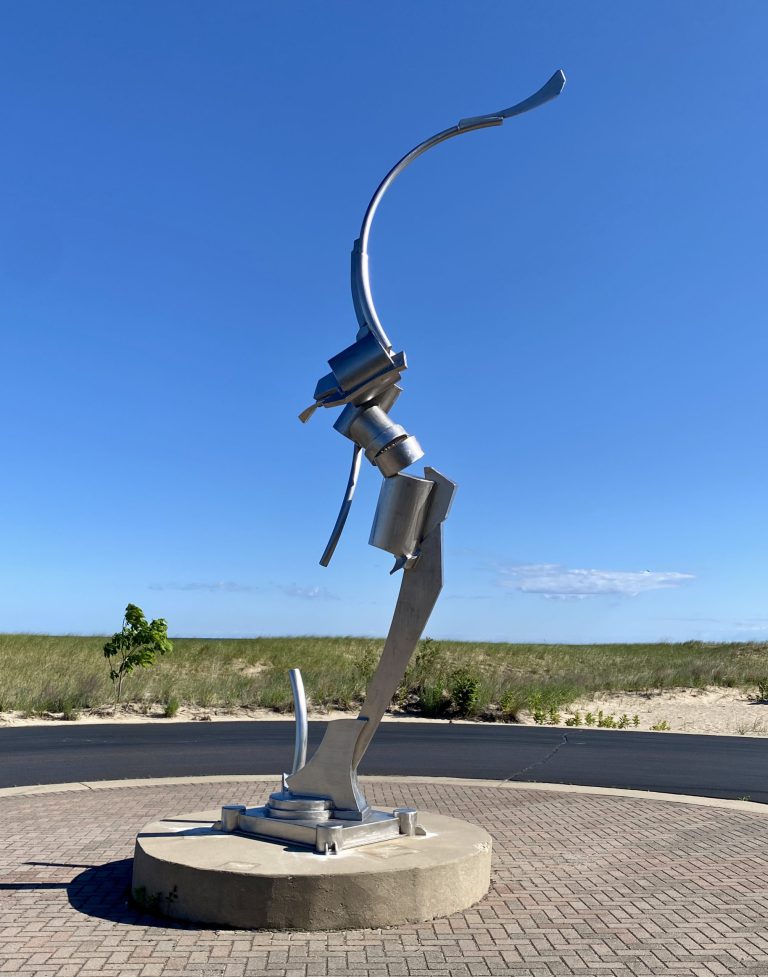
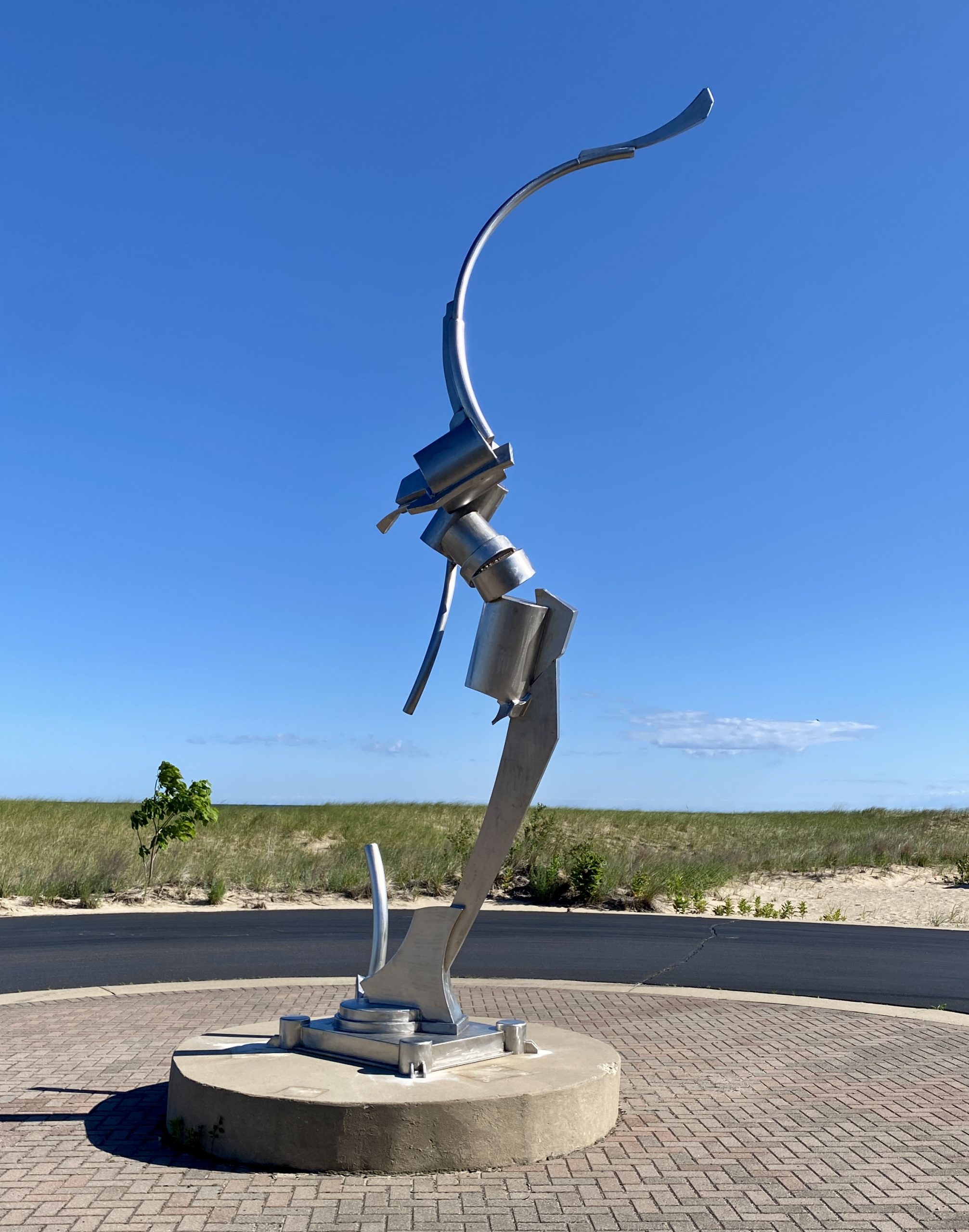
Jean Klock Park
Delphinian
Andrew Light
Jean Klock Park
Delphinian
Andrew Light
Stainless steel, 2015
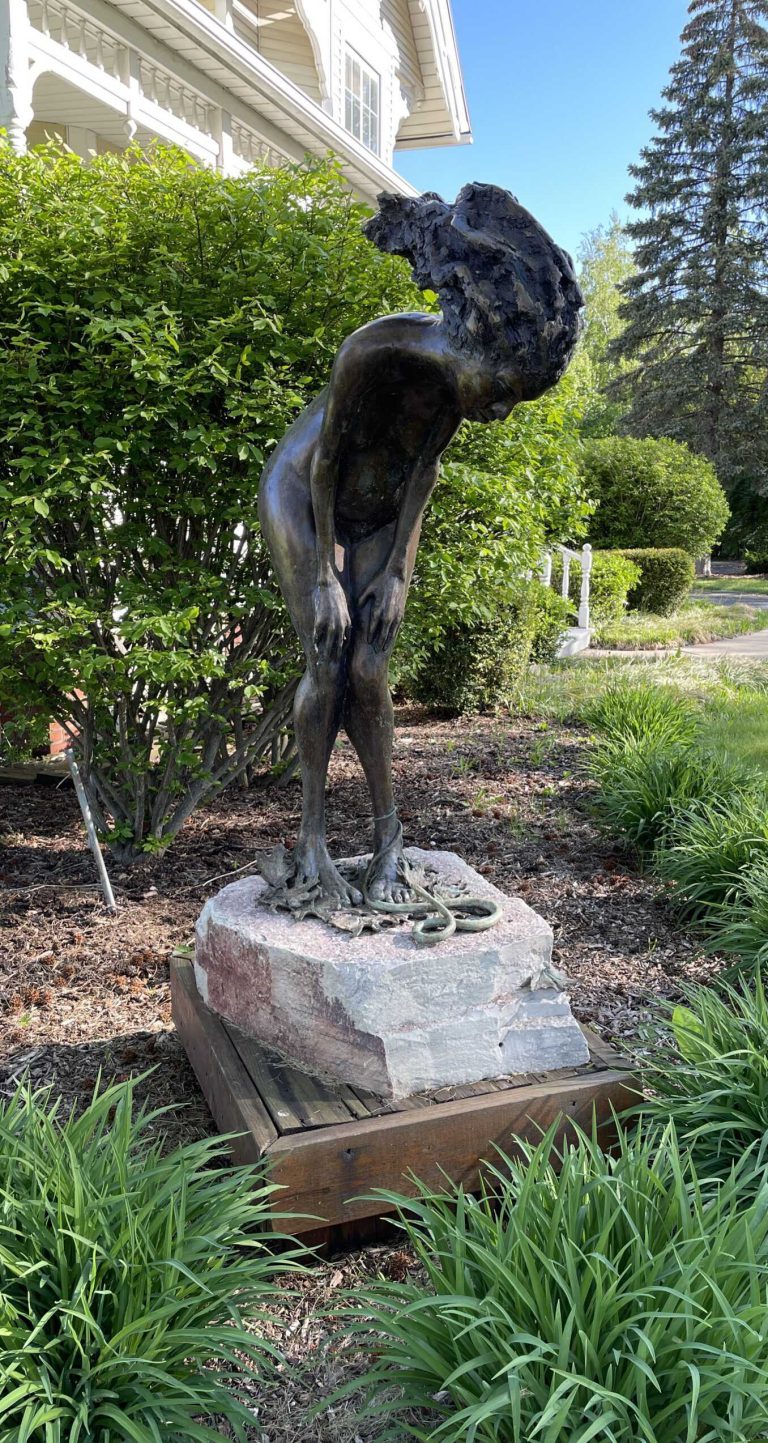
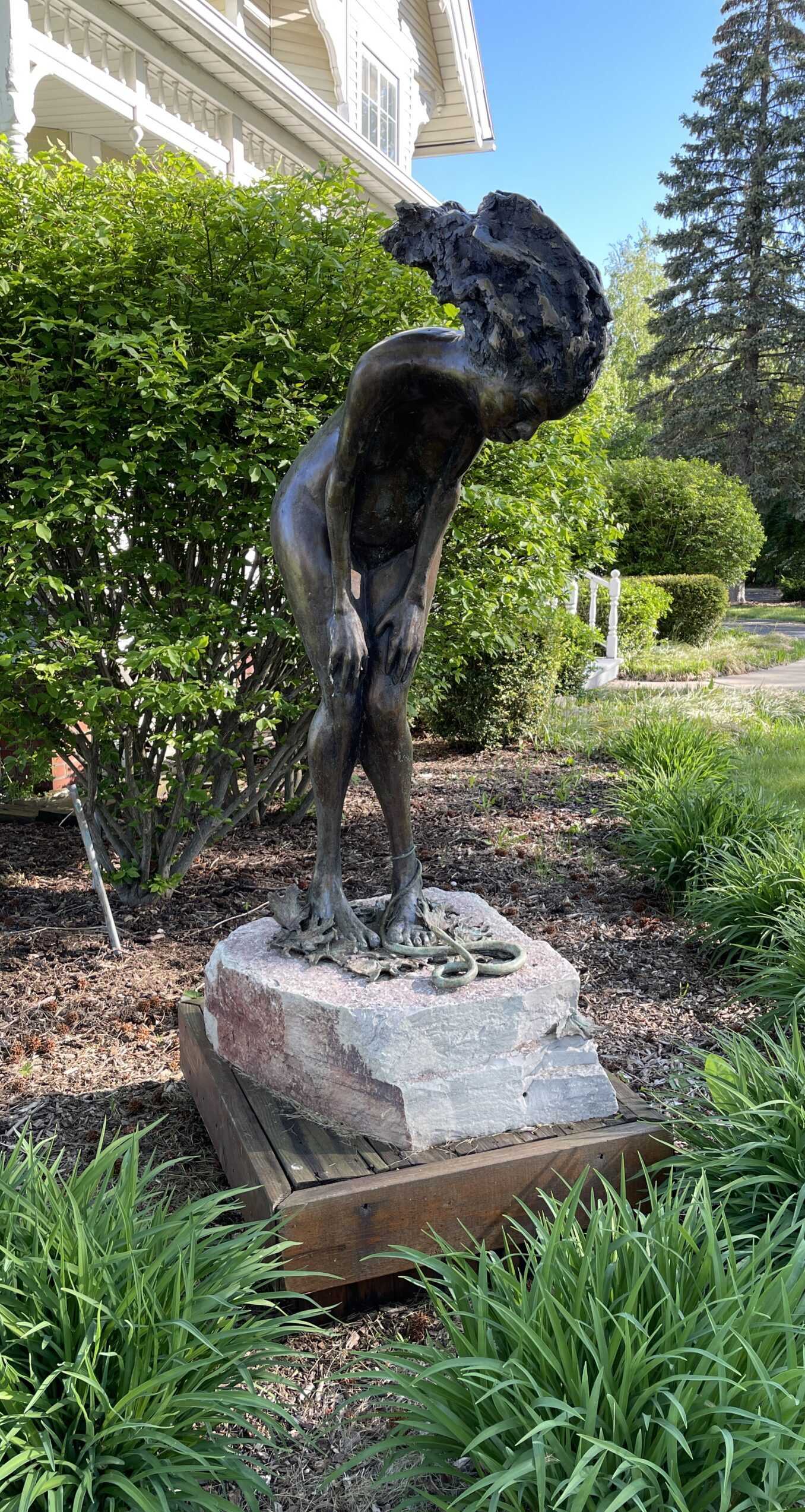
Krasl Art Center
Eve and the Serpent
Brent Harris
Krasl Art Center
Eve and the Serpent
Brent Harris
Bronze, stone, 2013
The figure’s head gazes downward with hair rushing backward as if in motion. Harris says that the “movement in my sculpture is influenced by dance and the rhythms of nature. Dance is a pure form of expression.” This sculpture won the KAC 2016 Biennial Sculpture Invitational Purchase Award.
What is the Biennial Sculpture Invitational?
Since 1996, Krasl’s Biennial Sculpture Invitational has brought large-scale contemporary sculpture to the waterfronts, parks, and urban and artist communities of St. Joseph and Benton Harbor, encouraging visitors to explore art and its surroundings.
2018–2019 Biennial Sculpture Invitational
Historical exhibition: June 2018–September 2019
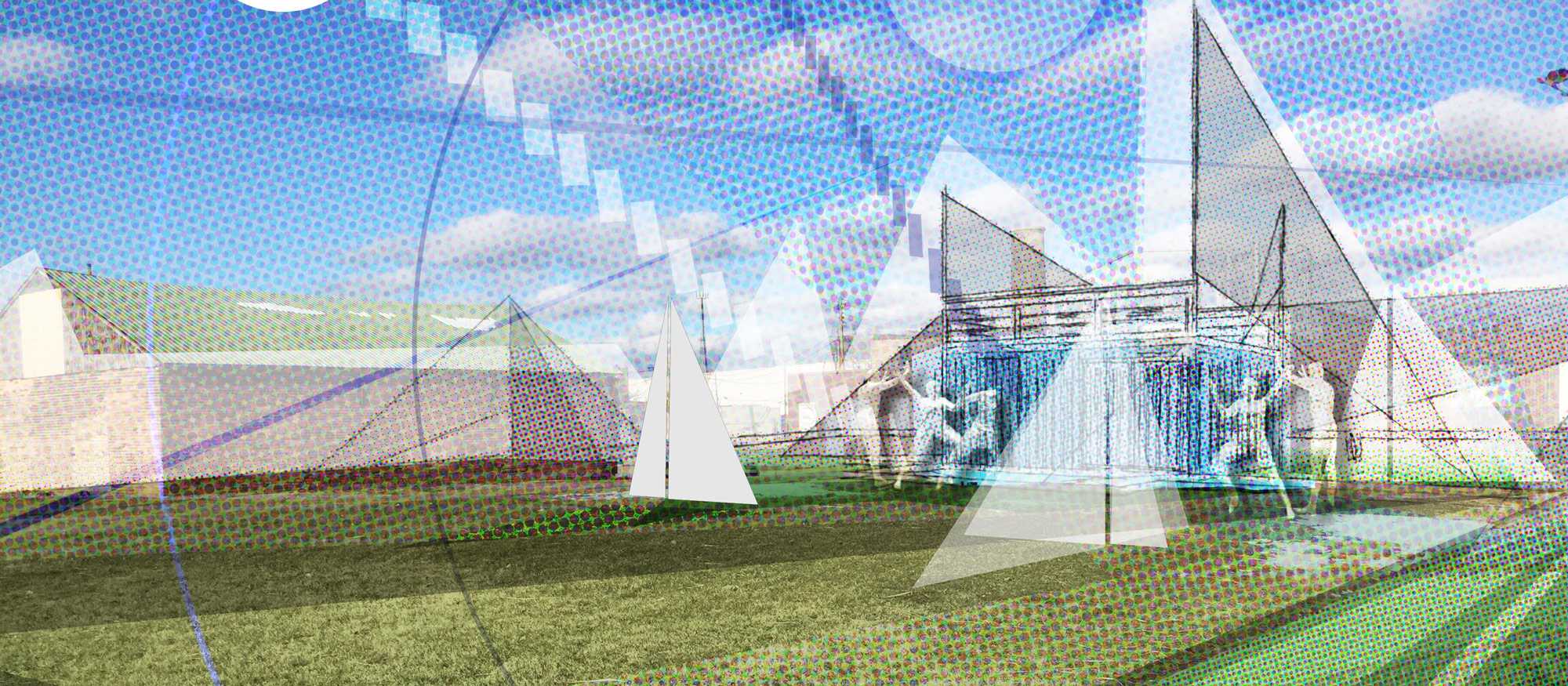
The exhibition was supported by civic partnerships with St. Joseph and Benton Harbor and collaborations with the New Territory Arts Association and the Box Factory for the Arts. The Prairie Group provided special site support.
Featured artists
BIGthink, Bill Boyce, Isaac Duncan III, and Albert LaVergne.
Sculpture sites
- Benton Harbor Arts District
- Box Factory for the Arts
- Jean Klock Park
- Margaret B. Upton Arboretum
- Lookout Park
- Silver Beach County Park
The Krasl collection joined the Biennial
As part of the Sculpting Community project, familiar works from Krasl’s collection were presented in new settings throughout the Biennial, inviting visitors to experience them anew.
Arts District Benton Harbor
Eve’s Awareness
Terry Hewlett
Arts District Benton Harbor
Eve’s Awareness
Terry Hewlett
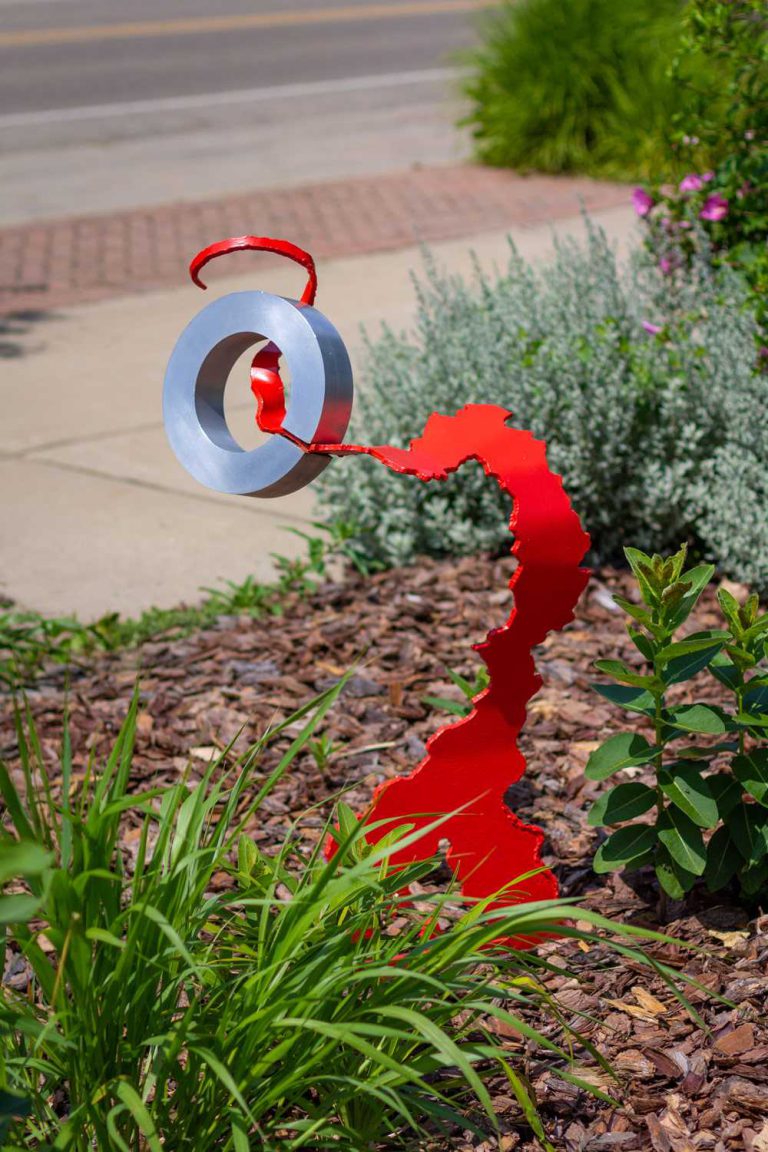
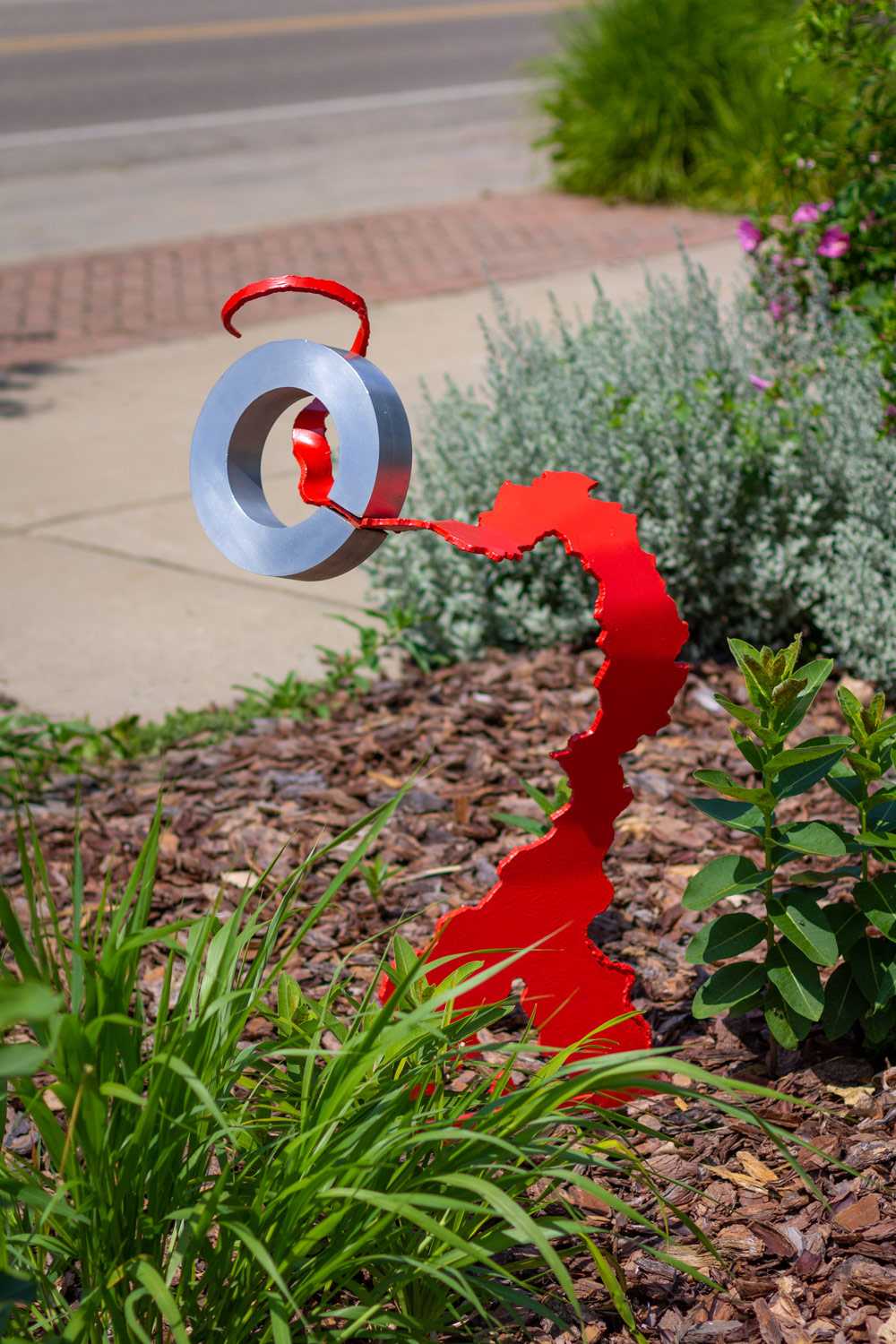
Steel and aluminum, 1988
In this abstract sculpture, the orange organic line symbolizes knowledge. It emerges from the ground, chaotically reaching upward, striking through the side of the aluminum circle which represents innocence. Hewlett “likes there to be a flow between the artwork, surroundings, and the admirer.”
1. Self-taught artist, Terry Hewlett, was raised on a farm in central Michigan. What aspects of being raised on a farm do you think inspired Hewlett’s artwork?
If you guessed brightly colored farm equipment, you guessed correctly!
2. When looking closely at this artwork, do you feel a connection to it or the surroundings in which it sits?
Try to explore why this artwork makes you feel this way.
Margaret B. Upton Arboretum
Five Ships
Eric Shaw
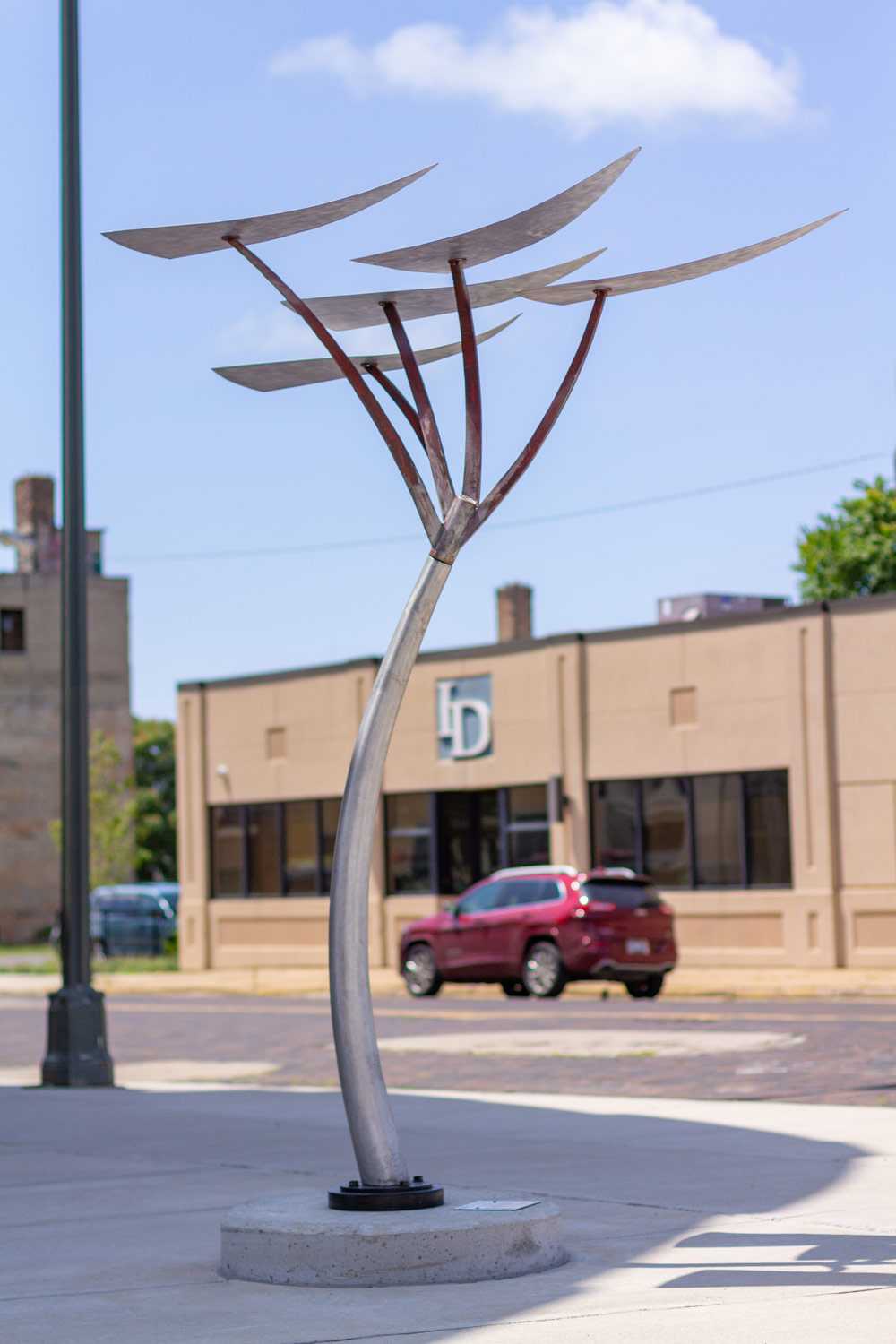
Margaret B. Upton Arboretum
Five Ships
Eric Shaw
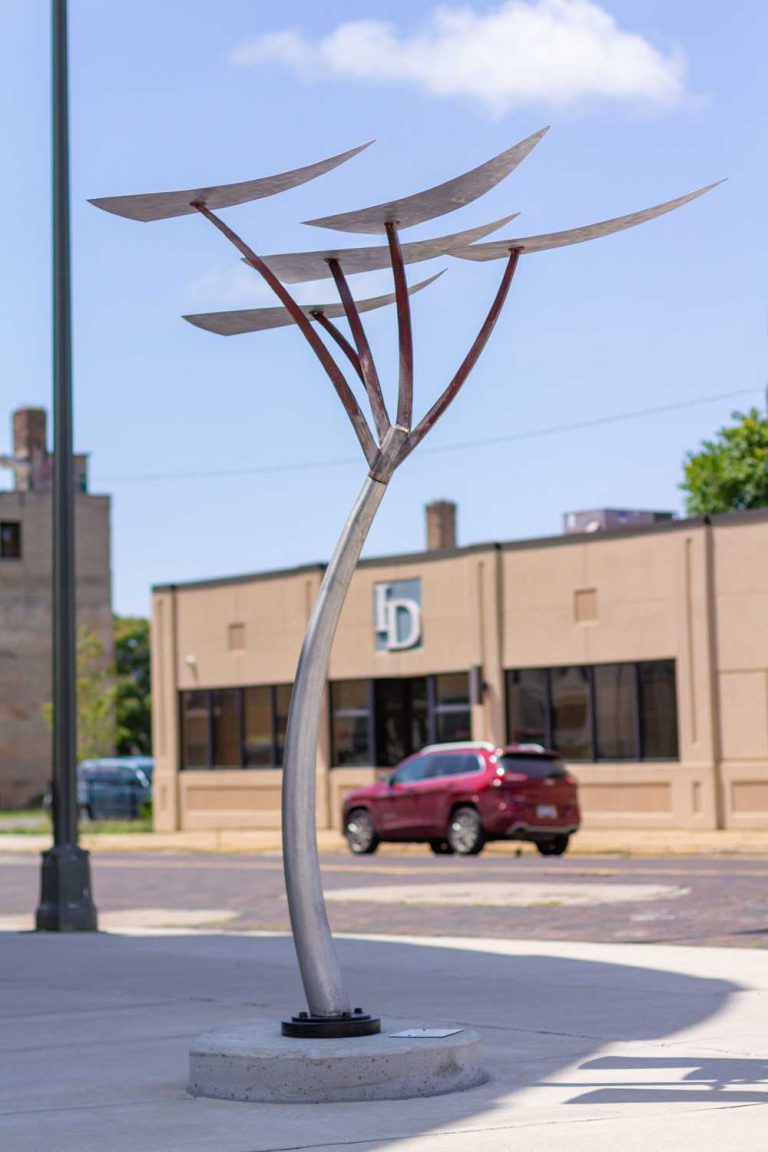
Aluminum and stainless steel, 1990
Can you find the five ships in this sculpture?
Look closely, the strong, tree like base slightly curves as it reaches upward, extending into five branches which support the five ships. The “tree-form” is spiritual for Shaw and he used this rooted motif as well as other symbols from nature in many of his artworks. In this work, you can almost imagine soft waves supporting the bases of these ship forms as they begin to set sail.
Shaw’s work can be described as aerodynamic. What does aerodynamic mean?
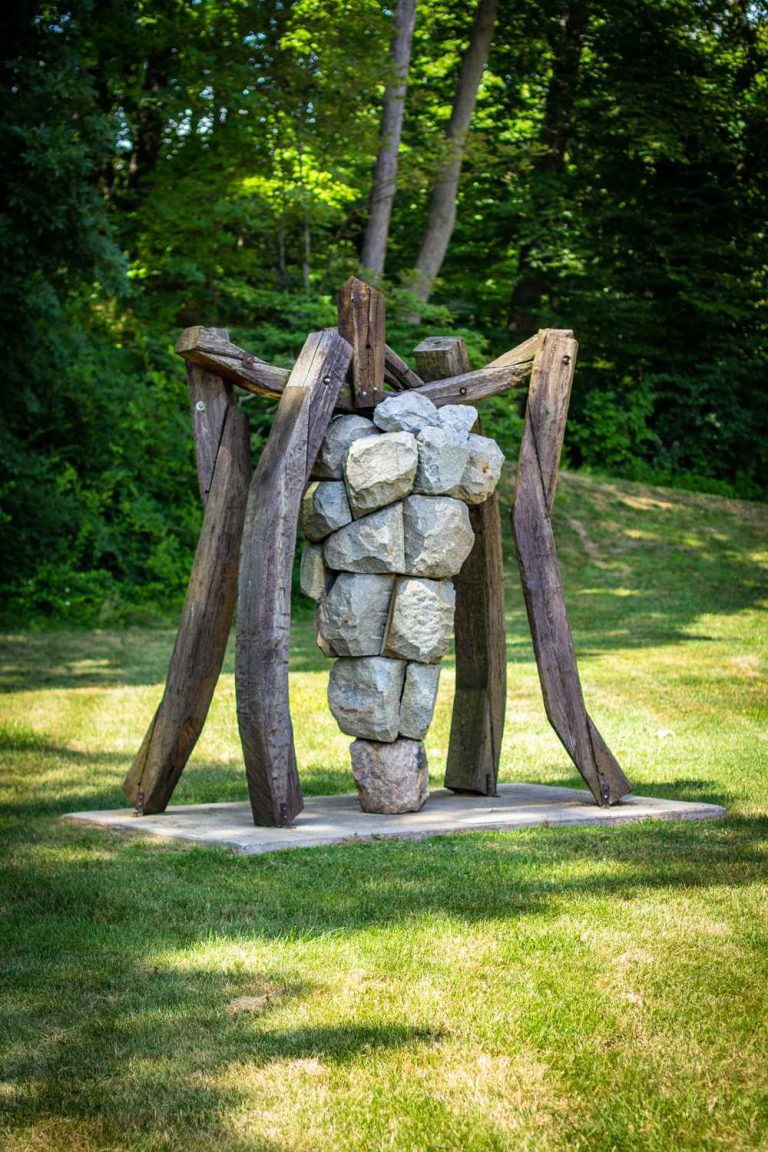
Higman Park Hill
Grapes and Other Promises
Ilan Averbuch
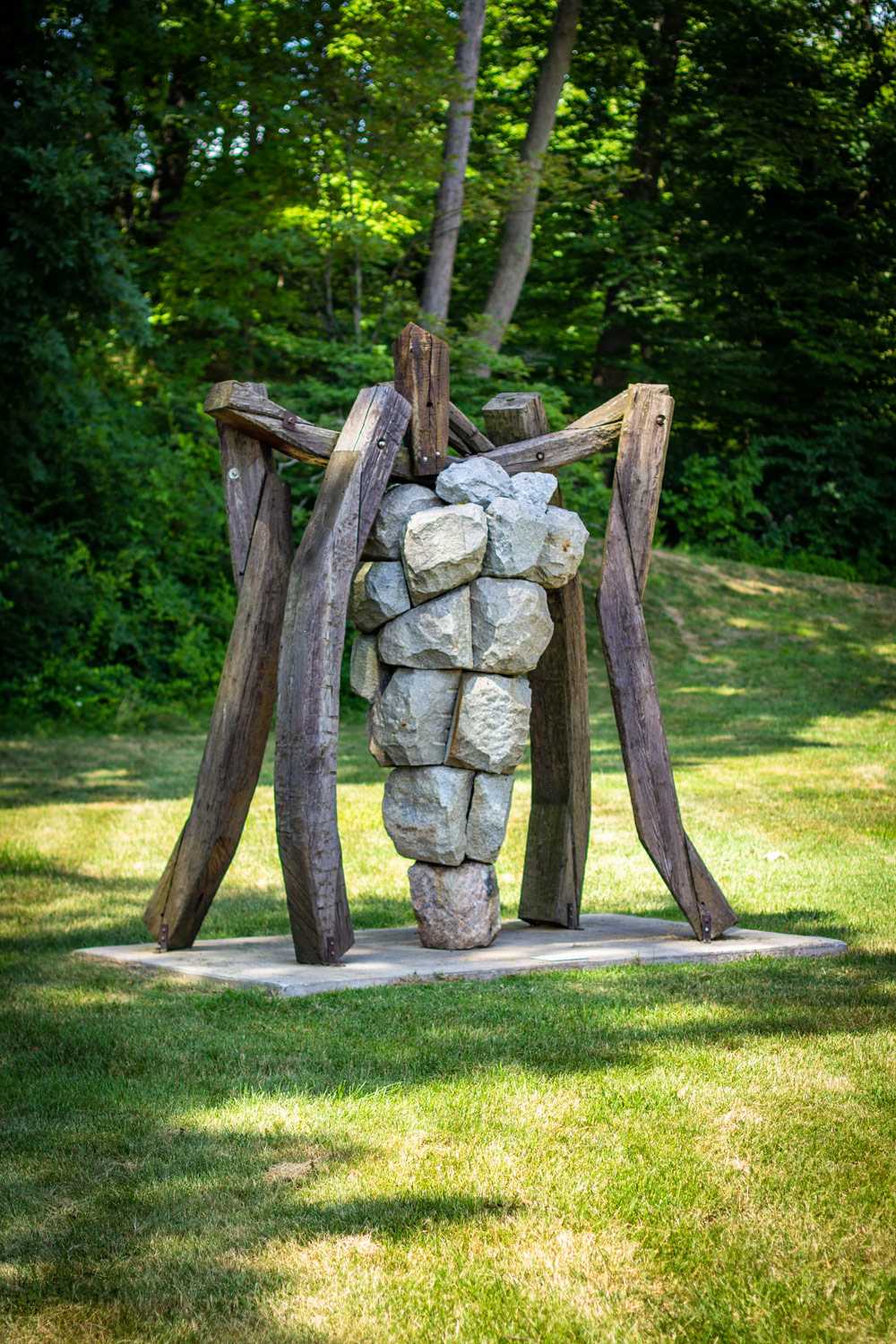
Higman Park Hill
Grapes and Other Promises
Ilan Averbuch
Wood, stone, 1986
Averbuch’s sculptures have many symbolic possibilities including mythology and religious influences. This sculpture, made from wood and stone with an iron framework inside to form the grape cluster, is an appropriate symbol for the many orchards found throughout this region.
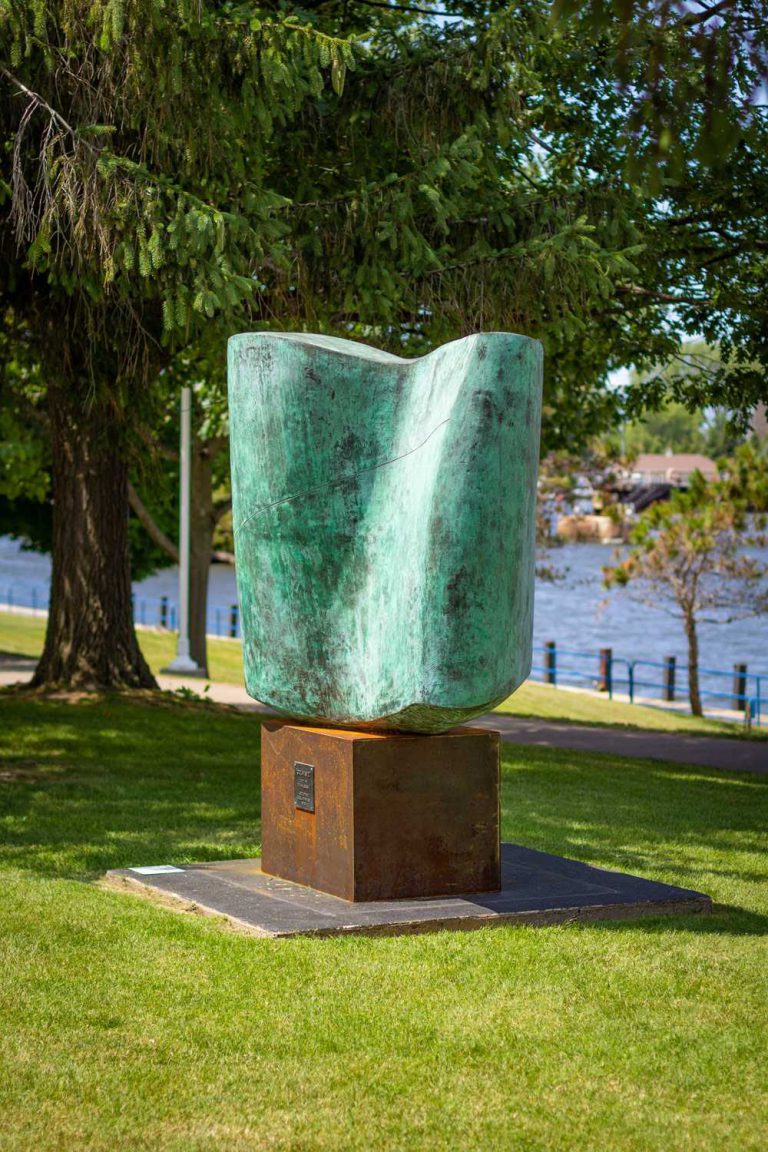
Margaret B. Upton Arboretum
Gulwave
Kirk Newman
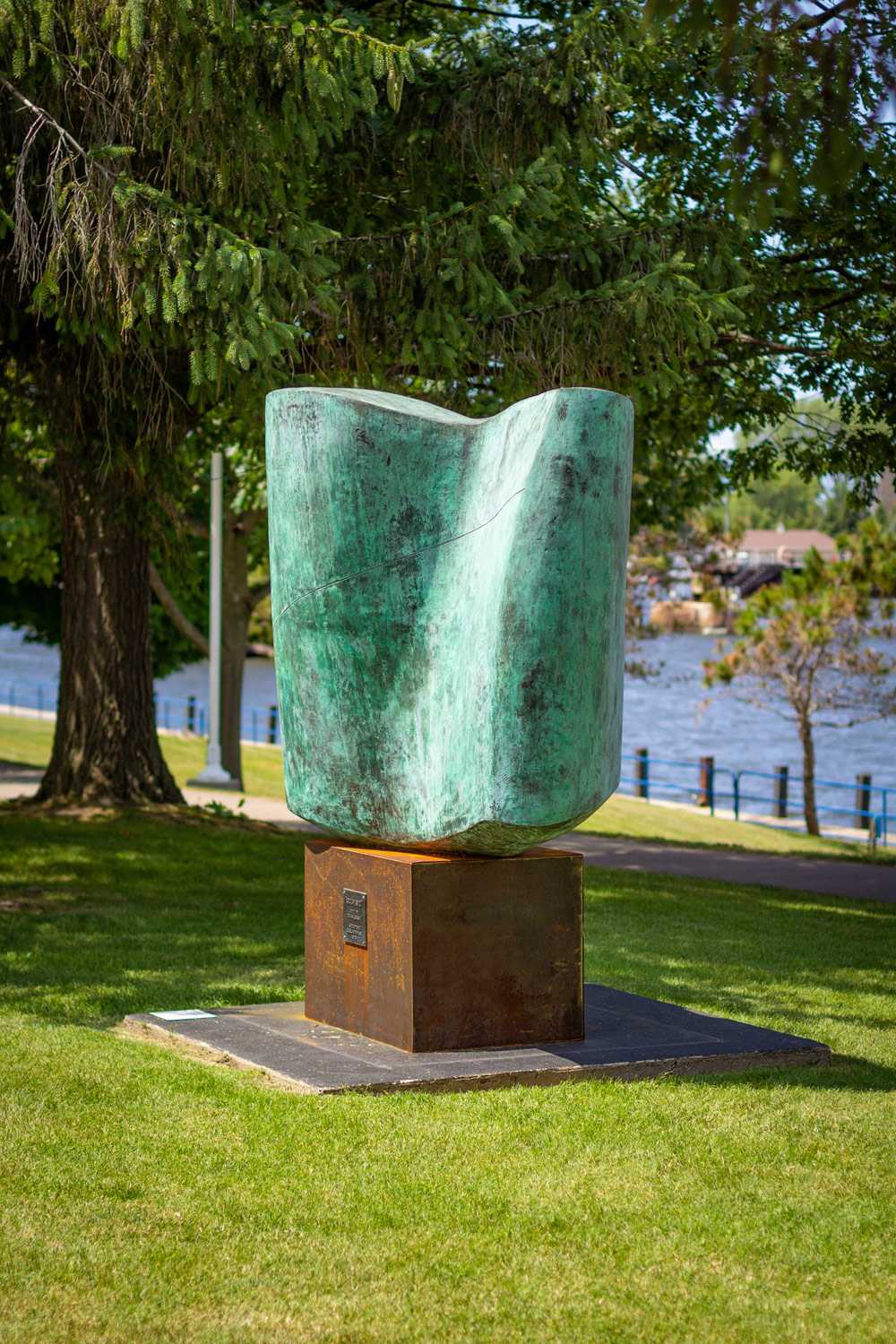
Margaret B. Upton Arboretum
Gulwave
Kirk Newman
Bronze, 1983
Gulwave was the first sculpture to become part of the KAC’s permanent collection. The Michigan-based artist, Kirk Newman, intended for this sculpture to “reflect the feeling of the natural landscape of the lake, dunes, and bird life.” Purchased with funds from Olga Krasl.
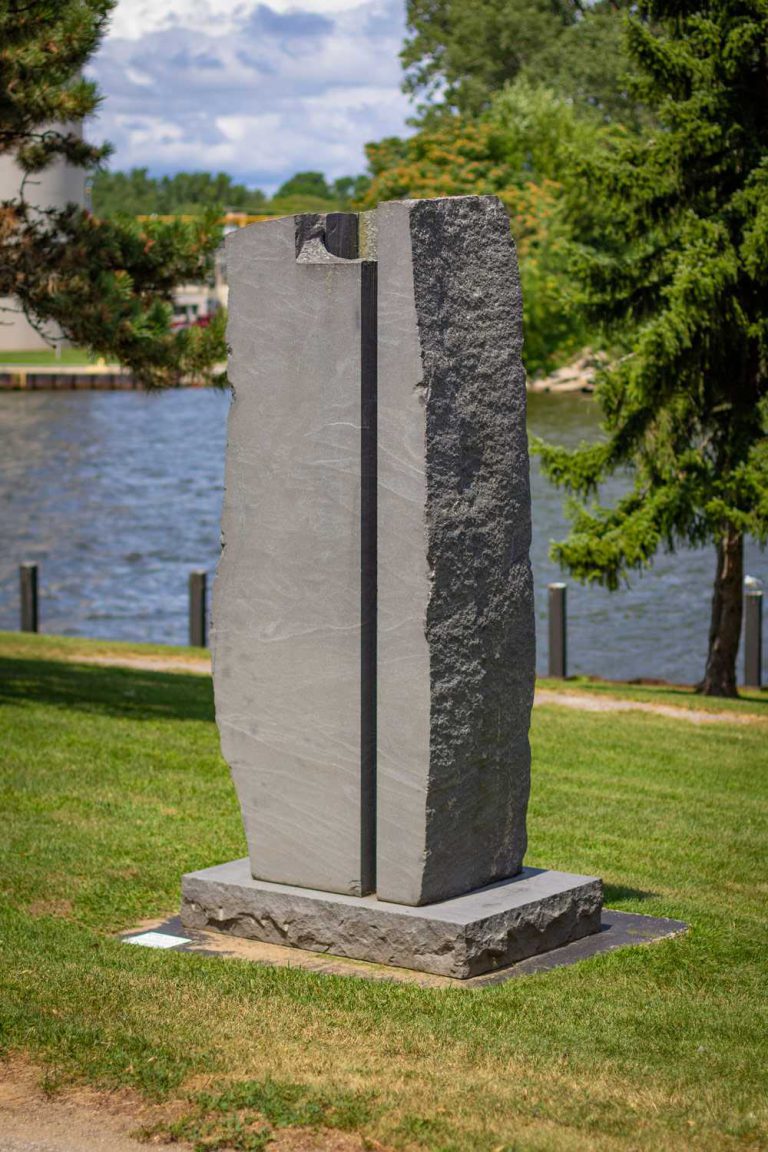
Margaret B. Upton Arboretum
Hidden Legend
Jon Isherwood
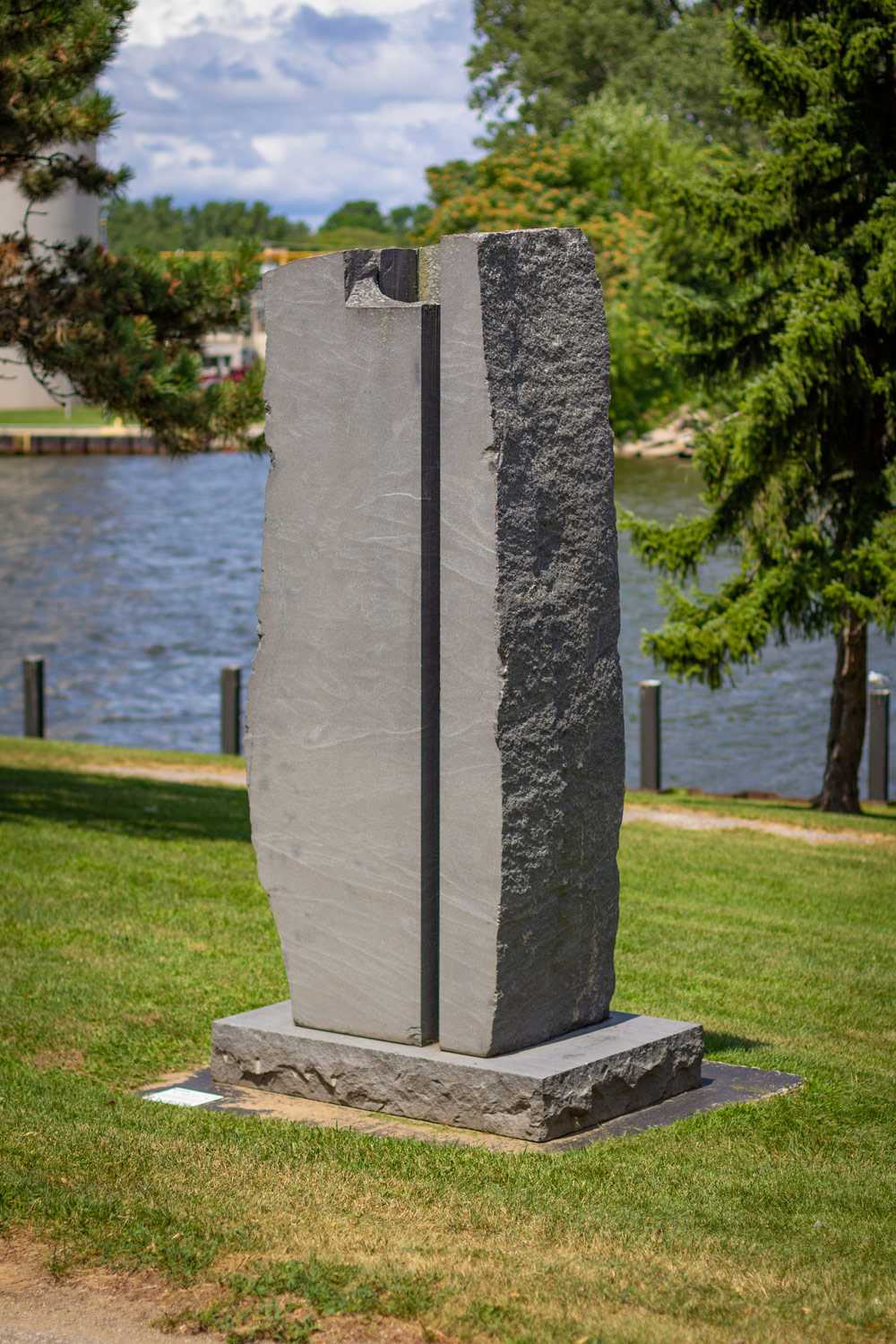
Margaret B. Upton Arboretum
Hidden Legend
Jon Isherwood
Granite, 1994
Look closely at the granite, the large band-saw blade used to cut the granite left behind unique markings on the smooth surface. On the textured sides, pipe marks are visible from when the granite was first quarried. What do you think the legend behind this sculpture is?
Born in England, Isherwood received his Bachelor of Art from Canterbury College of Art in England and his MFA from Syracuse University, Syracuse, New York with artwork on view throughout the U.S. and internationally.
1. Learn where the artist traveled for inspiration.
2. Compare Hidden Legend to the historic structures the artist used for inspiration.

Tombs of the Kings, Paphos, Cyprus, 2012
African American History & Literature Gallery
Infatuation
Albert LaVergne
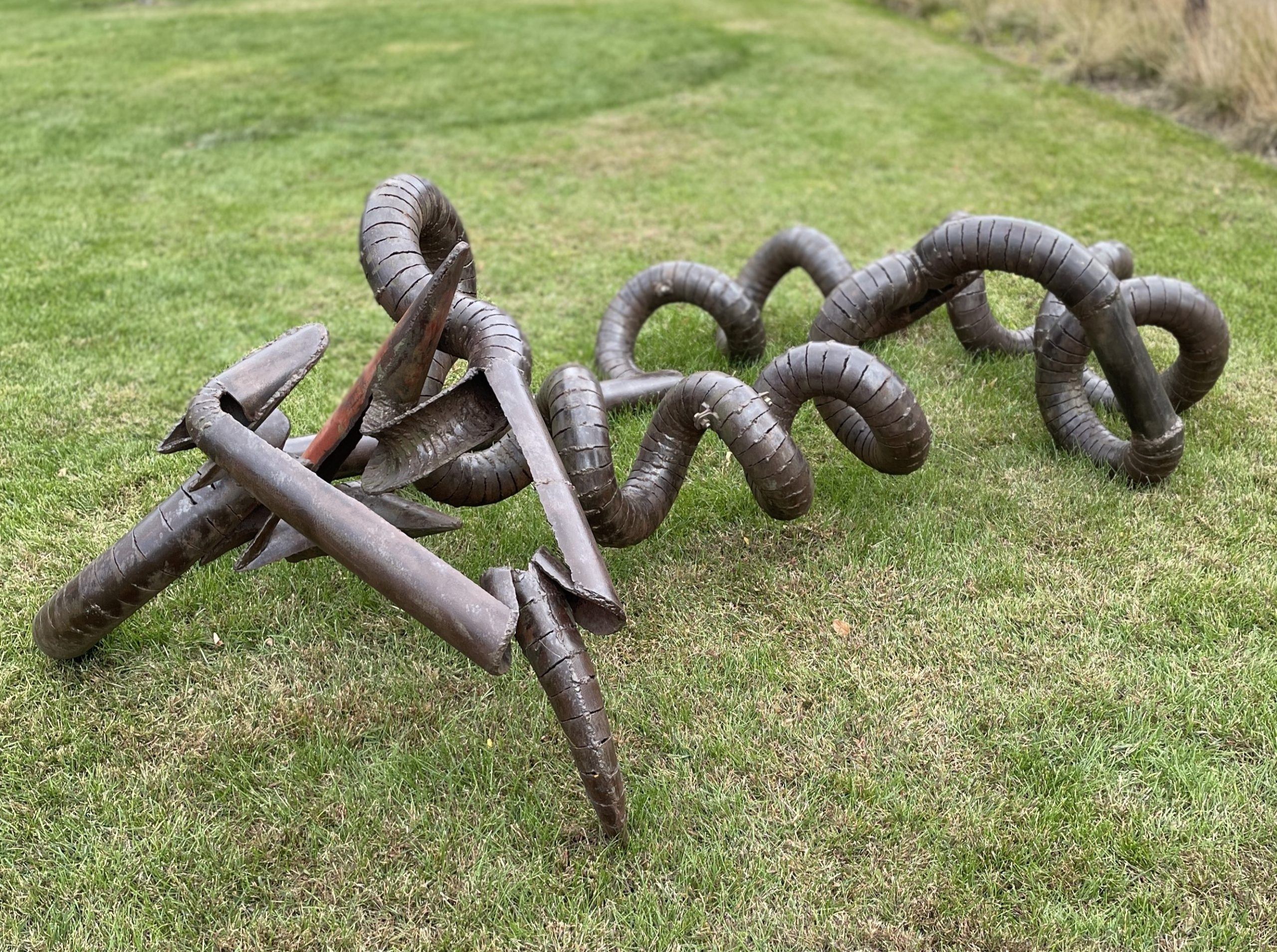
African American History & Literature Gallery
Infatuation
Albert LaVergne
Fabricated steel, 1995
"With Infatuation I explored a number of ideas I eventually discarded. I tried to force a number of forms I created to fit in a satisfactory way, but over time it became clear that they didn't work well, didn't say enough. They had to go..." ~Albert LaVergne
Michigan-based artist Albert LaVergne proved that experimentation is a lifelong pursuit. As a sculptor with a multi-decade career, LaVergne preferred improvisation to planning, metal to bronze. His artistic choices were based on that which allowed the greatest freedom in the making.
"It's like jazz." Click here to read an interview with Albert LaVergne.
“I want a piece to be defined as I do it, as opposed to the working out of some preconceived and fixed idea. It’s like jazz, where you start with a musical idea and see what you can make of it. The decisions you make will be judged by the problems that you create for yourself. Solutions come when find a way to leap beyond the problems you’ve created to get back into the general flow of the piece itself.”
Read the full interview in LaVergne – Issues in Steel
Contemporary Influences. Click here to learn about artists who impacted LaVergne's work.
“LaVergne found his inspiration in African American contemporaries rather than the Western art historical canon; many of them were his teachers and mentors, such as Jean Paul Hubbard and John T. Scott.”
Albert LaVergne’s influences were grounded in the current moment. Even his connection to his African roots he pursued in the present, traveling to Nigeria in 2012 and 2016 with Fulbright Awards to develop public art there.
LaVergne’s early career focused primarily on figurative work. In addition to the impacts of his teachers and mentors, the artist fondly recounted a shift in his career after working with artist Chakaia Booker. Booker presented a lecture of her work at Western Michigan University in 2005 while LaVergne was teaching there. Notably, despite the influences of his contemporaries, LaVergne did not stray from his own technique, medium, and voice.
QUOTE BY KIRSTEN CAMPBELL, LOUISIANA STATE UNIVERSITY MUSEUM OF ART, FROM 2021 EXHIBITION “MODERNIST FURNITURE DESIGN AND SCULPTURE AT LSU MOA.”
Krasl Art Center
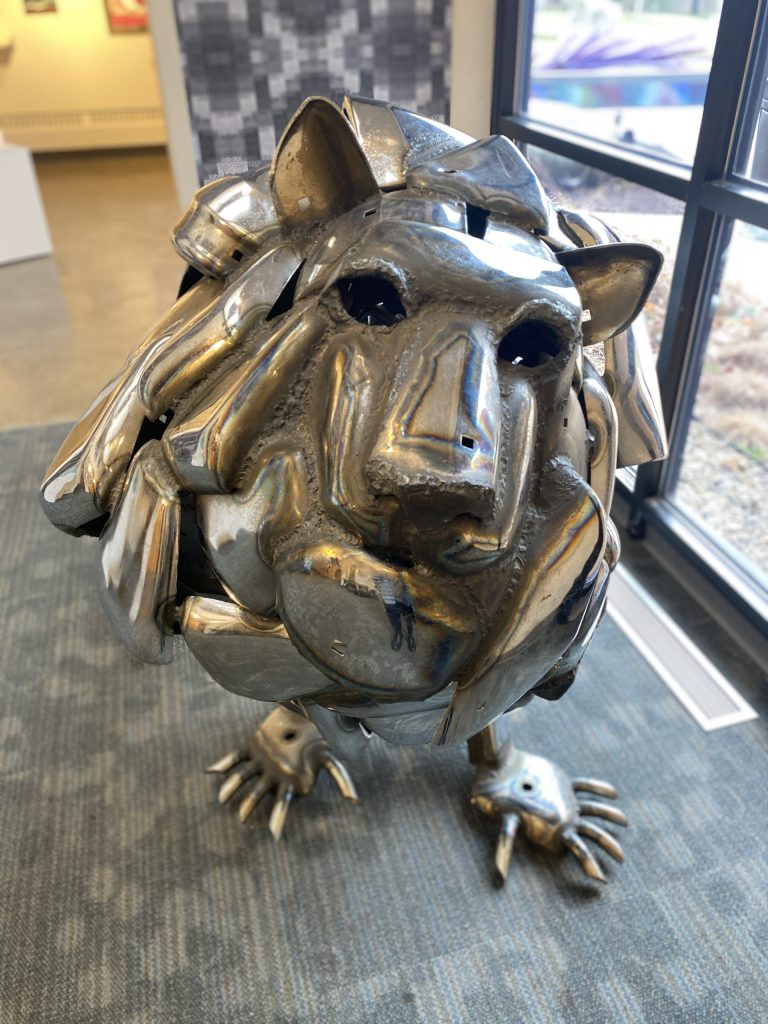
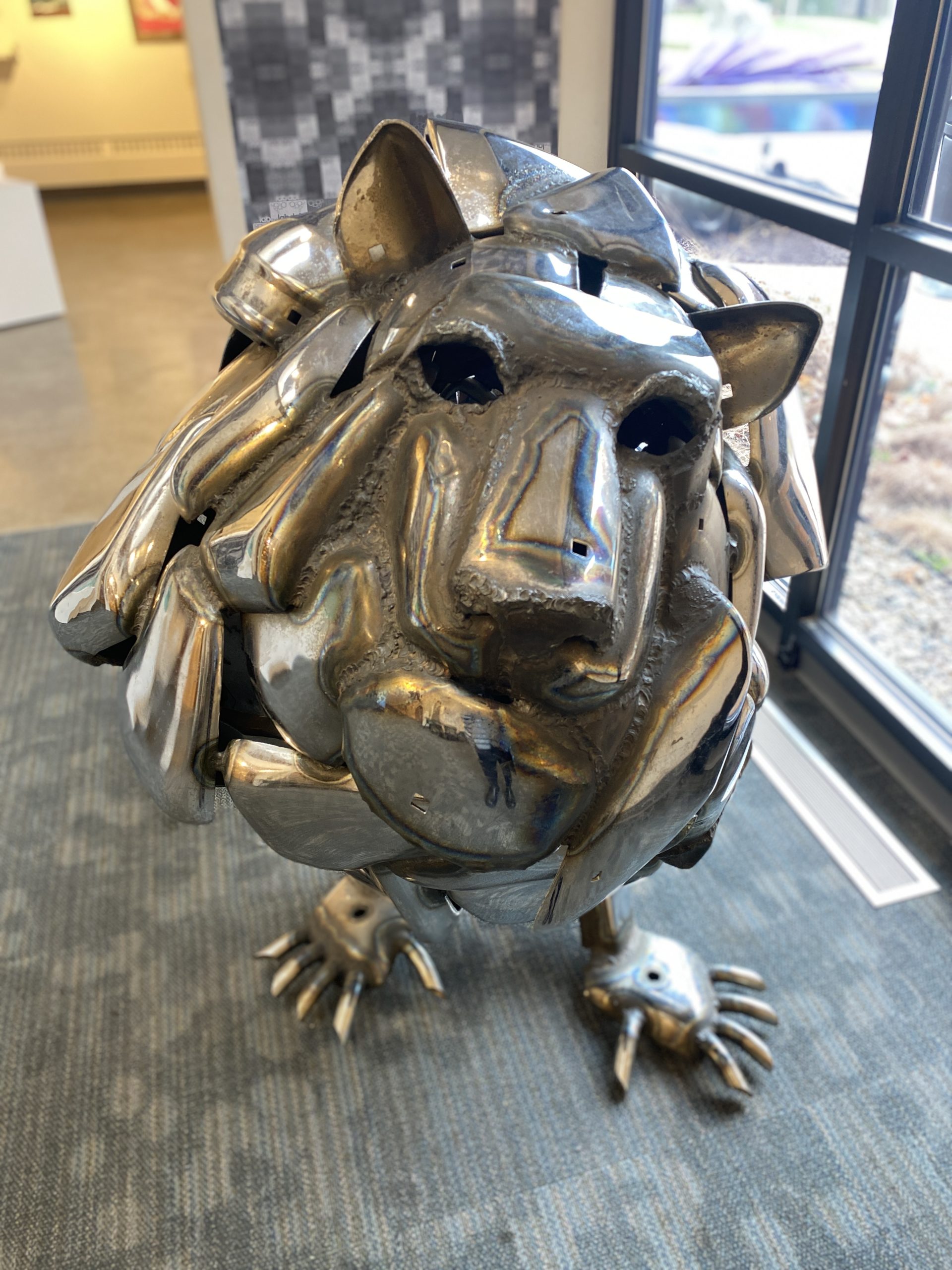
Lion of Judah
John Kearney
Krasl Art Center
Lion of Judah
John Kearney
Welded metal, chrome auto bumpers, 1974
This sculpture is on temporary loan from Temple B’nai Shalom, for whom it was commissioned by Enid Goldstein on behalf of her siblings and in memory of her mother and father, who was a former Temple President. Lions are well known as “king of the beasts” throughout the world and have special significance in ancient Jewish texts for their bravery, strength, and nobility. The Lion of Judah was originally associated with the tribe of Judah, one of the twelve tribes of Israel, but has come to be a meaningful symbol for all Jewish people. As intended, John Kearney’s modern twist on the noble lion made “Jude” a charming and welcoming presence in the entry of the temple for 50 years. KAC is delighted to care for the sculpture through 2025.
Silver Beach County Park
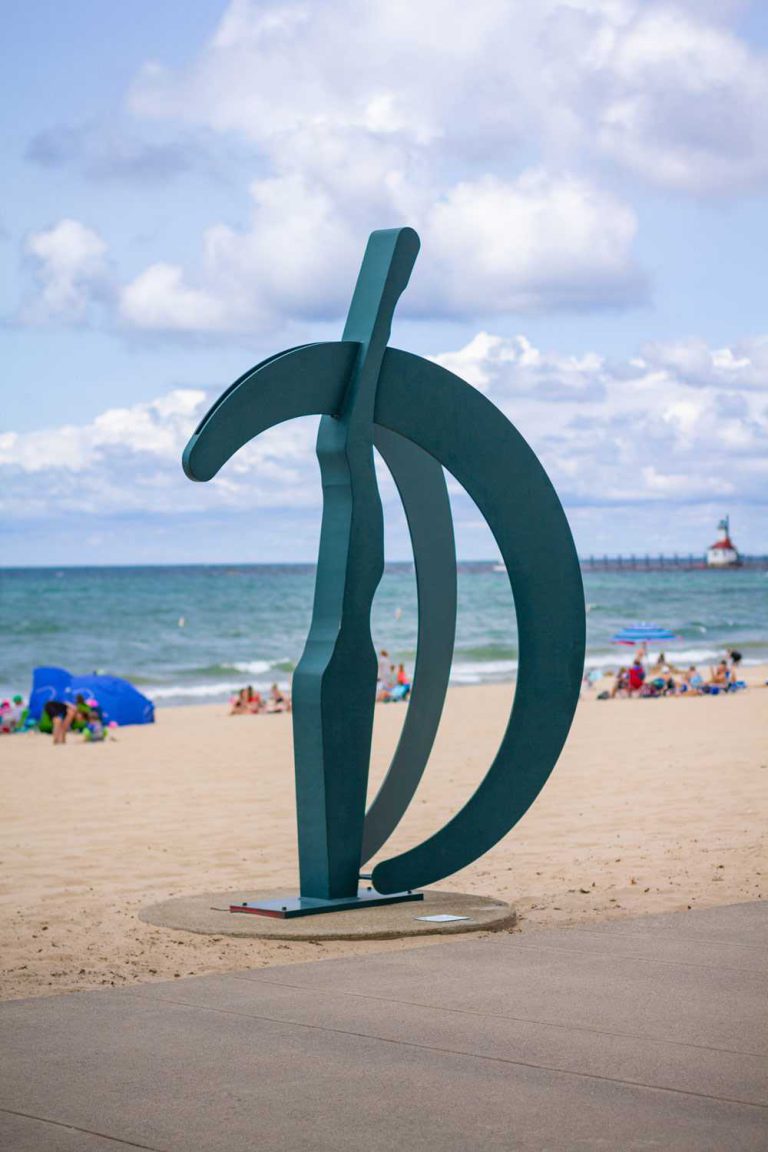
Moon Dream
Benik Motevosian
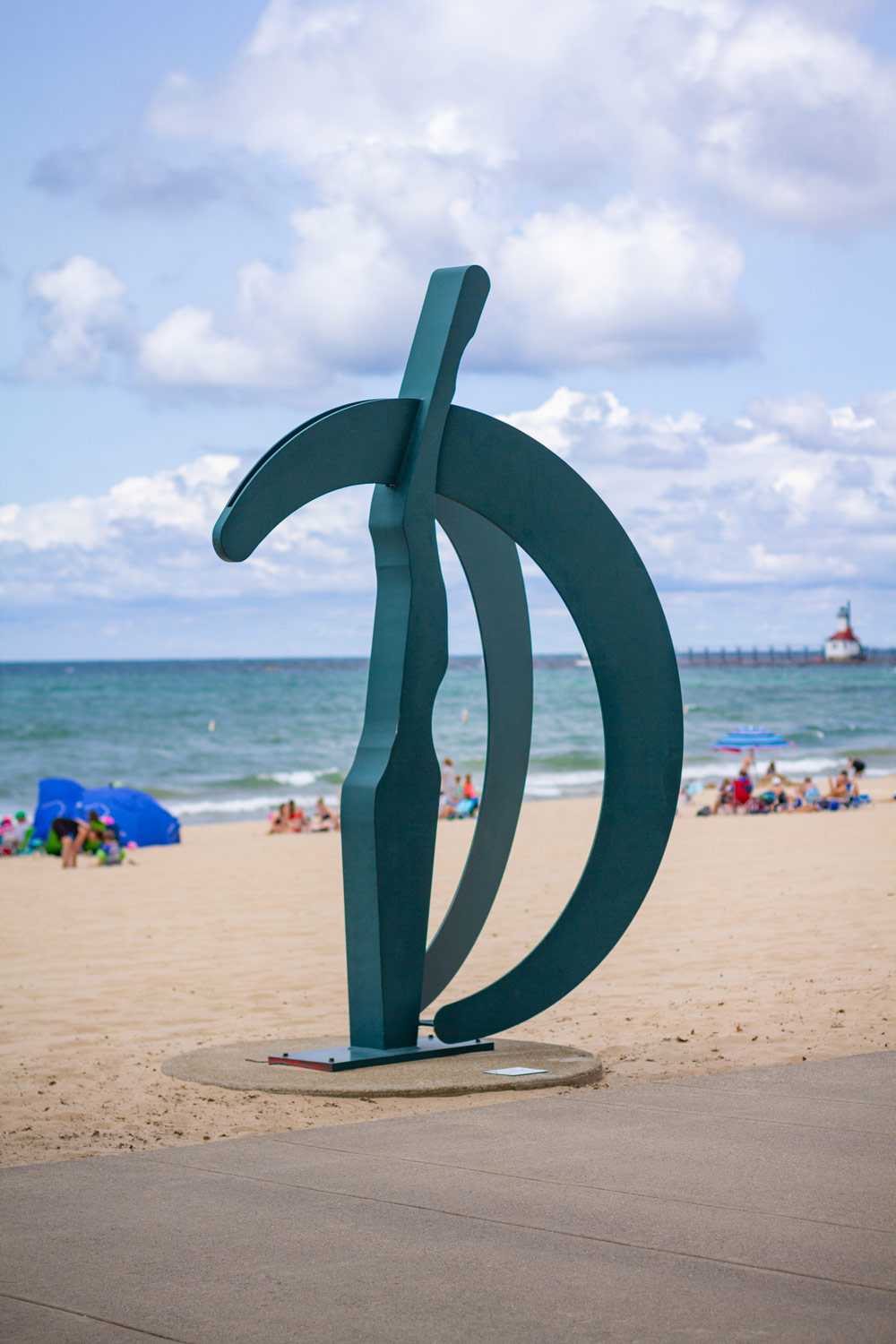
Silver Beach County Park
Moon Dream
Benik Motevosian
Steel, 2001
Born in Armenia and having difficulties assimilating into American culture, Motevosian spent a lot of time along the eastern shore of Lake Michigan. While watching the sun fade and the moon gain intensity, he found himself “split between two worlds of being Armenian and American.”
1. Read a quote from the artist about this sculpture:
“I stare at the moon and dream of being in both worlds, imagining how things would be as an Armenian and as an American. My sculpture Moon Dream represents exactly that, one heart dreaming of two moons.”
2. Look closely, Motevosian said this sculpture represents one heart dreaming of two moons.
Where do you think the moons are in this sculpture? Where is the one heart?
3. Benik speaks about being split between two places, have you ever felt torn between two places?
Explore what places have made you feel this way? Why?
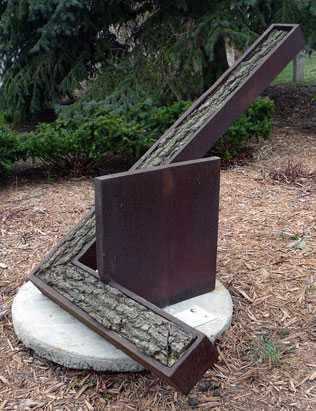
Margaret B. Upton Arboretum
Nasca Iron
Jay Wholley
Margaret B. Upton Arboretum
Nasca Iron
Jay Wholley
Welded steel with inlaid wood, 1985
Inspired by the Nasca Lines, figurative designs created in the desert earth over 1500 years ago by the ancient people of Peru, this sculpture addresses the connection between nature and man; steel representing the industry of man and the wood inlay representing nature.
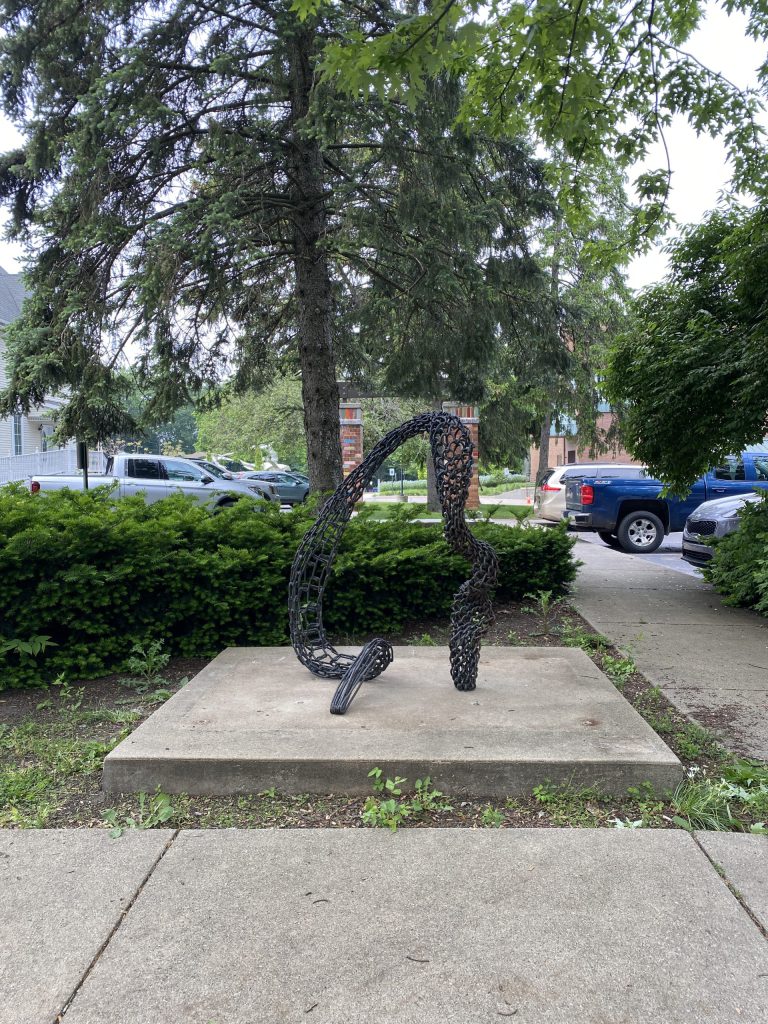
Krasl Art Center
Princess
Albert LaVergne
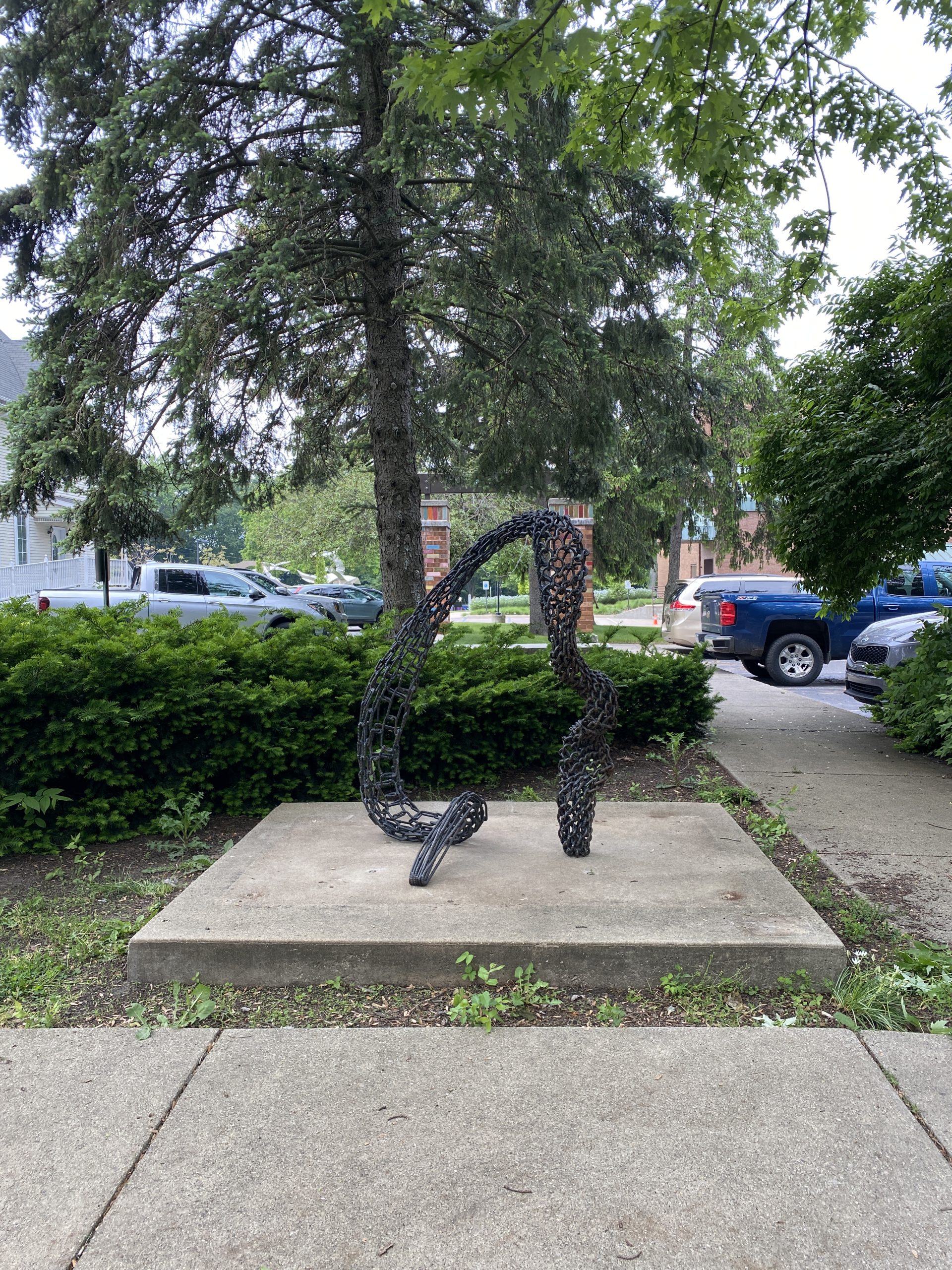
Krasl Art Center
Princess
Albert LaVergne
3/8 welded steel rebar, not dated
Jean Klock Park
Riddle
Bruce White
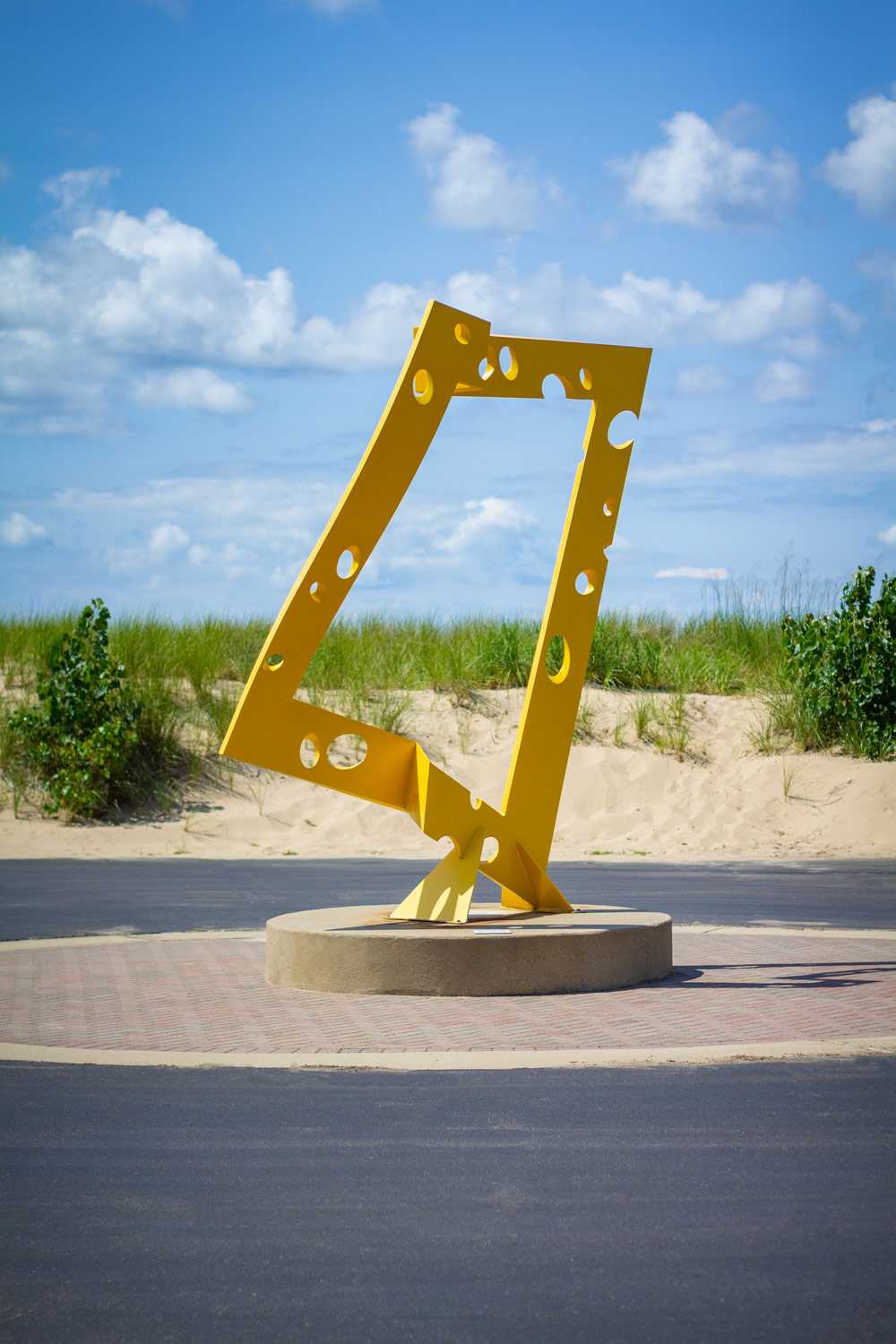
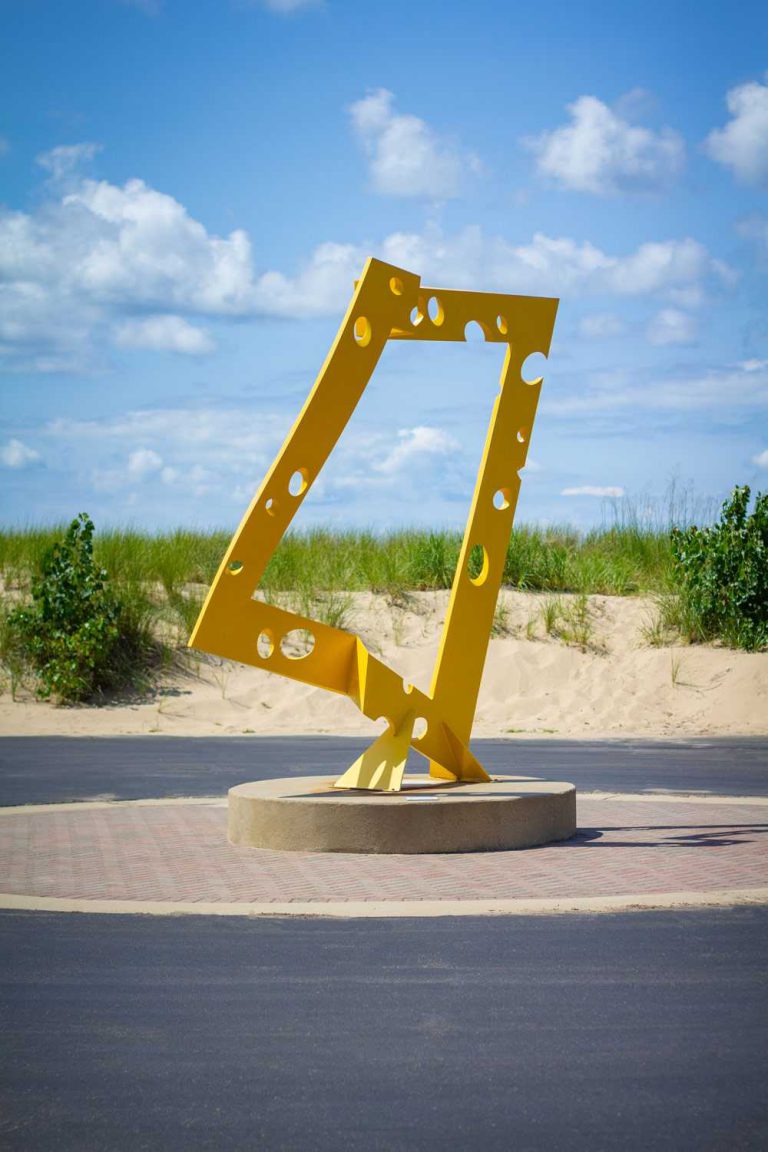
Jean Klock Park
Riddle
Bruce White
Painted aluminum, 2000
White looks at natural objects when coming up with the design for his sculptures. What do you think inspired this sculpture? If you guessed cheese, or more specifically swiss cheese, you guessed right!
Krasl Art Center
Rising Crossing Tides
Richard Hunt
Krasl Art Center
Rising Crossing Tides
Richard Hunt
Steel, 2018
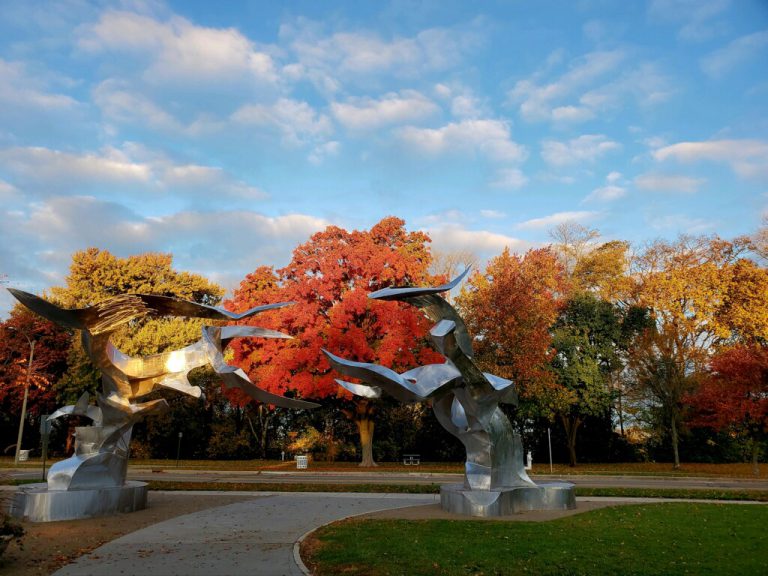
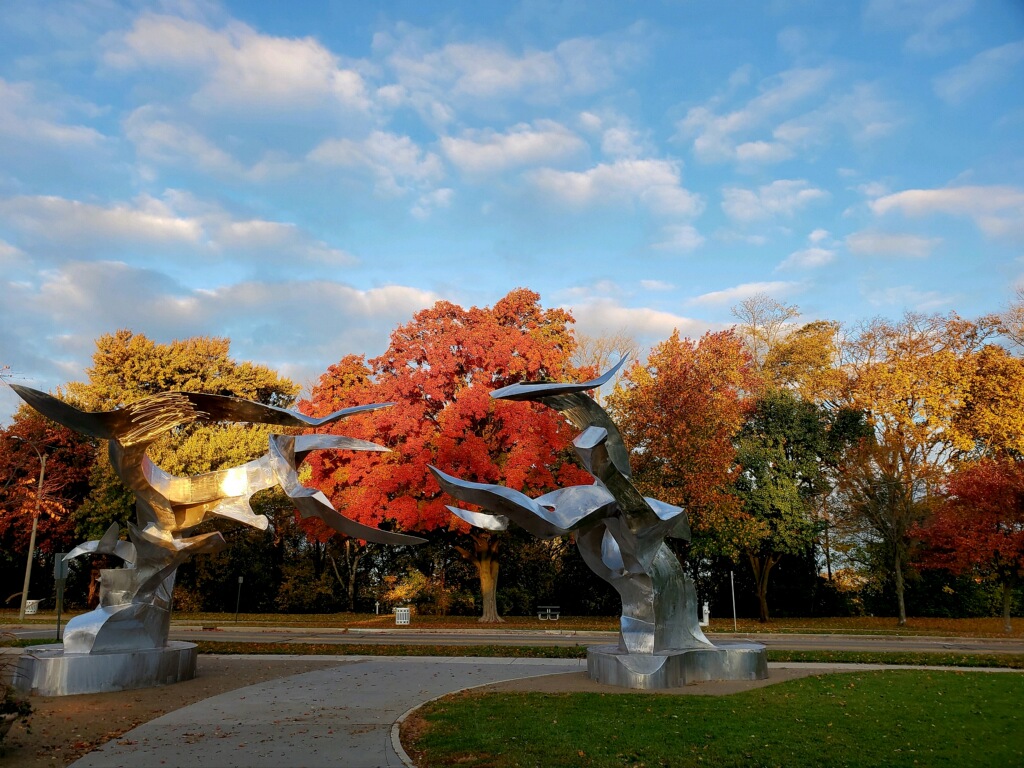
Walk under and around this sculpture. Sit down on its base and look up. Richard Hunt designed Rising Crossing Tides as a gateway to Krasl Art Center and the local community. The monumental sculpture that welcomes you is intended to encourage you to interact with nature and the public art you find here!
The curvilinear forms of Rising Crossing Tides are an abstraction of the local environment. They might remind you of the wind or the waves of Lake Michigan as they crash against the bluff. Like waves, the shape of the sculpture lifts upward, which is a common theme in Hunt’s work. Hunt considers the way his sculptures take up space similar to the way birds or planes move through the air or fish move through water, often contributing to the wing-like shapes that make up his sculptures.
Richard Hunt started attending the Junior School of the Art Institute of Chicago in seventh grade and received his BAE from SAIC in 1957. In 1967, Hunt completed his first large scale public sculpture commission. This was the beginning of what Hunt calls “his second career,” when he began to work on sculpture that “responded to the specifics of architectural or other designed spaces and the dynamics of diverse communities and interests.”
See the model that inspired Rising Crossing Tides.
In 2014, on a tour of Richard Hunt’s Benton Harbor studio, a young boy noticed a model for Seabridge, a sculpture that Hunt had envisioned but never completed at full scale. At that time, Krasl Art Center was seeking to commission a major sculpture as part of an updated outdoor campus. The boy called attention to the model, which fit the needs of the new commission (to be an engaging work of public art and a gateway to KAC). His enthusiasm led to a series of conversations and ultimately inspired KAC to work with Hunt to design the massive site-specific sculpture that became Rising Crossing Tides.

What is direct metal sculpture?
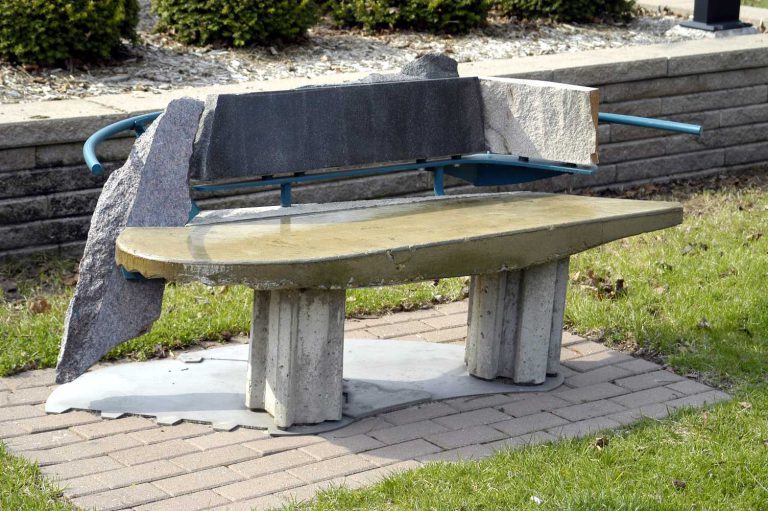
Margaret B. Upton Arboretum
Sharp’s Bench
Barry Hehemann
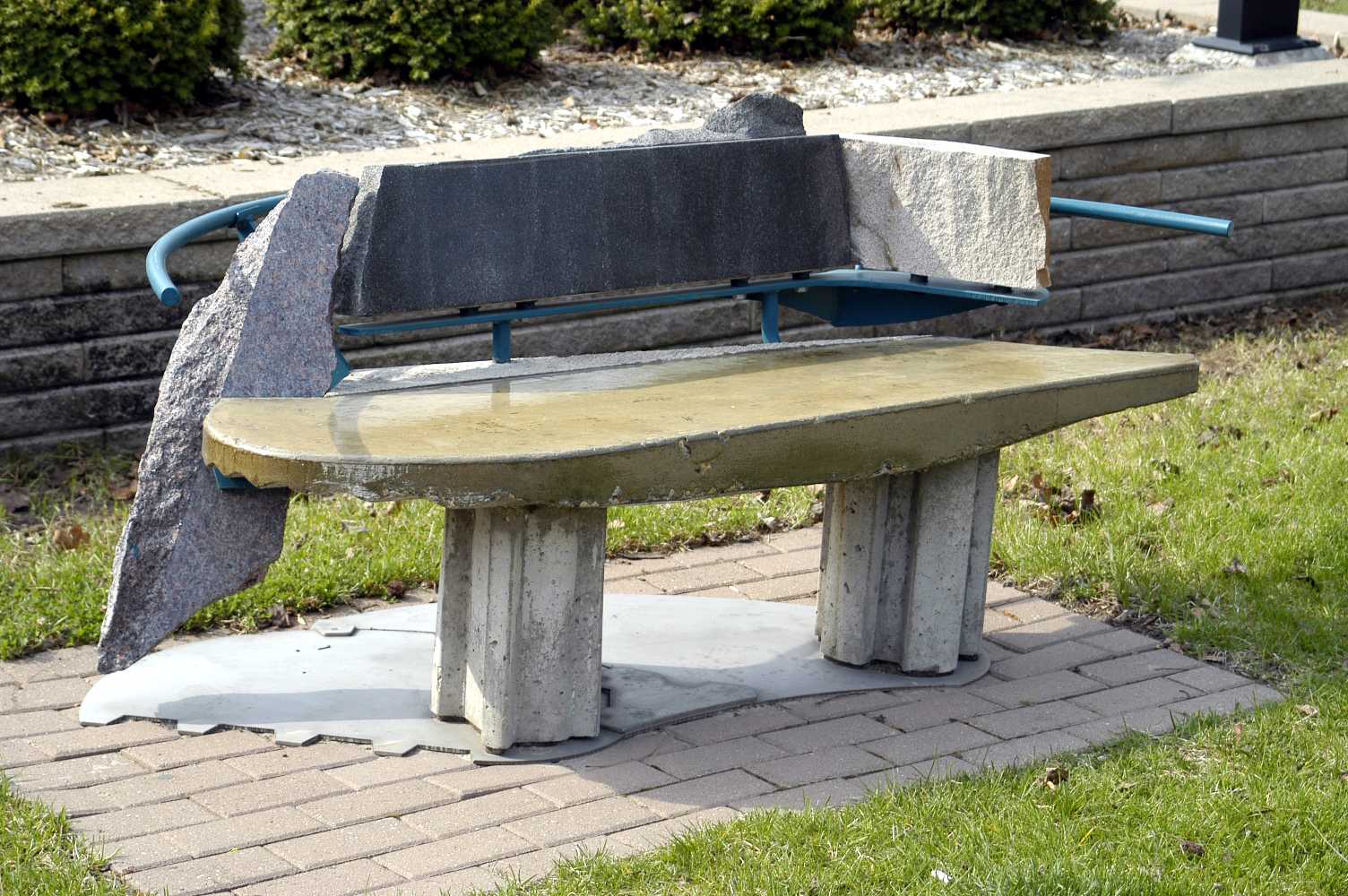
Margaret B. Upton Arboretum
Sharp’s Bench
Barry Hehemann
Granite, concrete, painted steel bench,, 1995
Is it a sculpture, a bench, or both?
Barry Hehemann primarily creates large-scale sculptures in metal and stone, but Sharp's Bench is one of several “sculptural benches” designed and fabricated by the artist. Hehemann’s benches are considered functional sculpture. In addition to the aesthetics of form - the way the sculpture looks - the benches encourage visitors to consider how well the sculpture works - its stability and comfort.
Take a moment to move all the way around the sculpture. Consider its color, shape, and texture. Then, take a seat. What do you think? Is it a sculpture, a bench, or both?
Born in Cincinnati, Ohio in 1953, Barry Hehemann received a BFA in sculpture from the Herron School of Art, Indiana University-Purdue University at Indianapolis in 1975. After receiving an MFA from the University of Illinois at Urbana-Champaign in 1977, Hehemann co-founded Vector Custom Fabricating in 1978. Vector is an architectural metals and sculpture fabricating company that continues to serve the art and construction communities today.
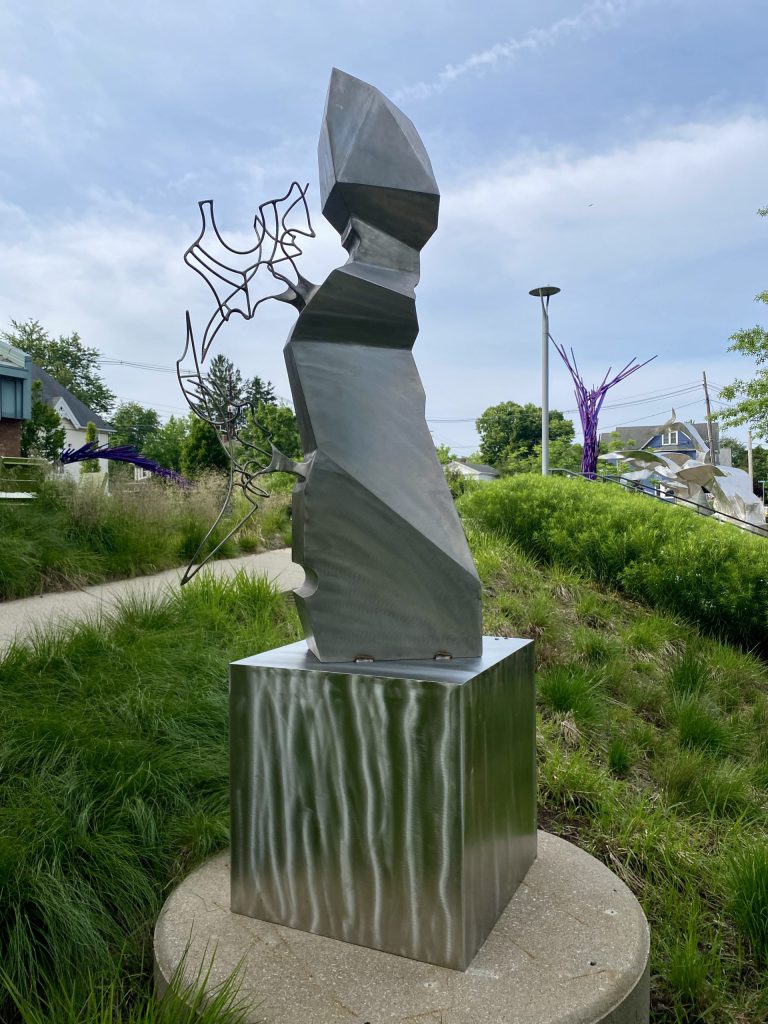
Krasl Art Center
Shiver
Eric Stephenson
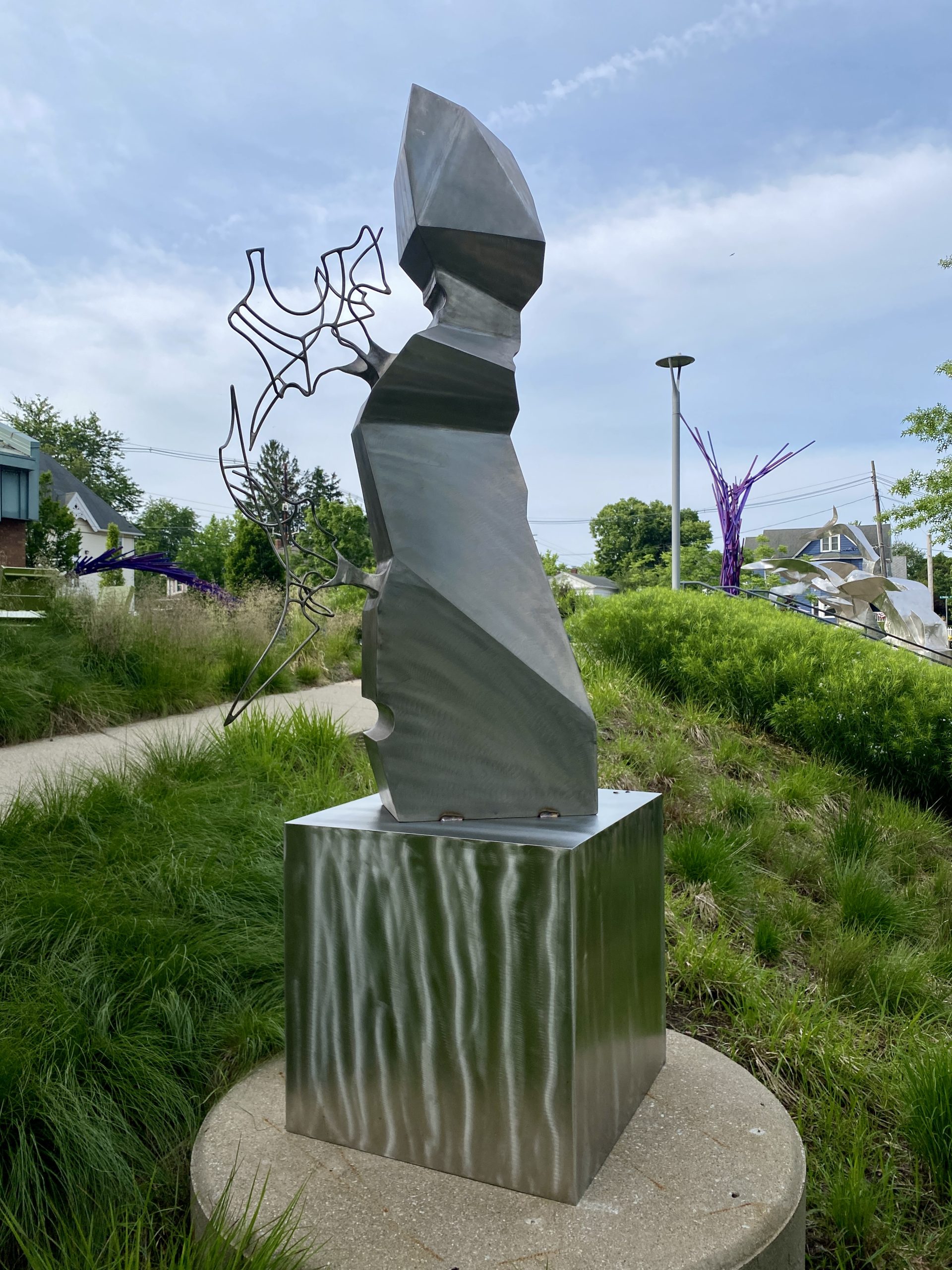
Krasl Art Center
Shiver
Eric Stephenson
Welded stainless steel, 2011
Take a deep breath. Now, close your eyes and image a chilly breeze rising up from the lake across the bluff. Did you...shiver?
Eric Stephenson is an abstract sculptor whose work explores the form, sprit, and experience of the human body. It may not seem like it at first, but Shiver is a figurative sculpture, which means that its shape is meant to represent a real object - in this case, a person!
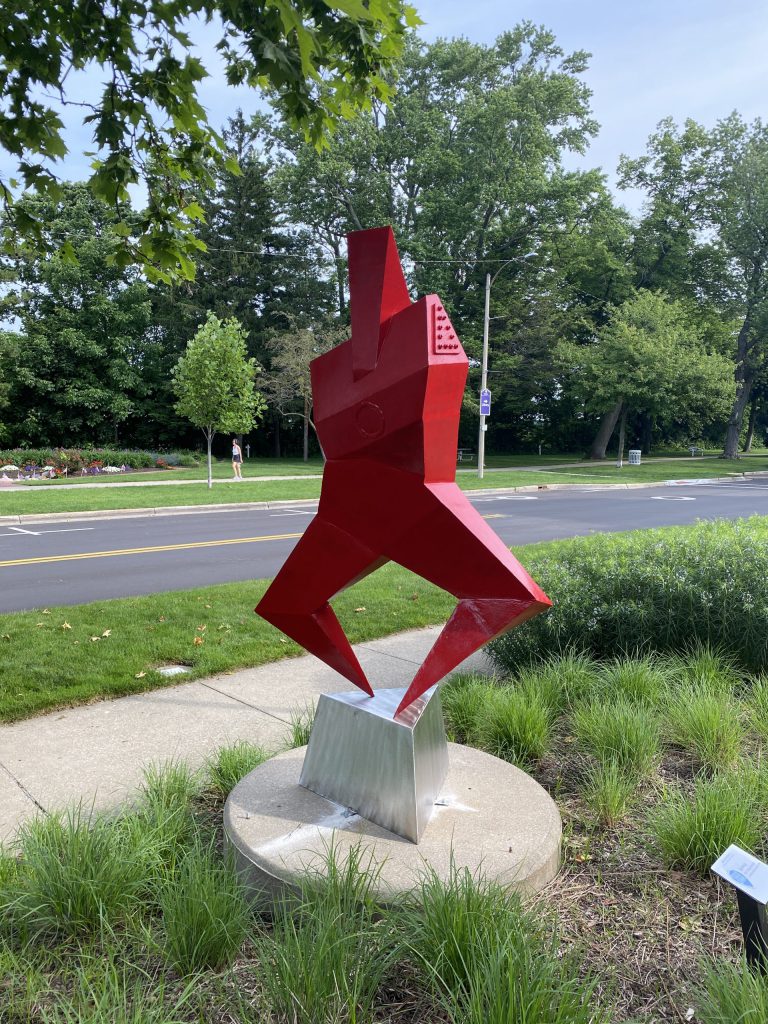
Krasl Art Center
Sprung
Eric Stephenson
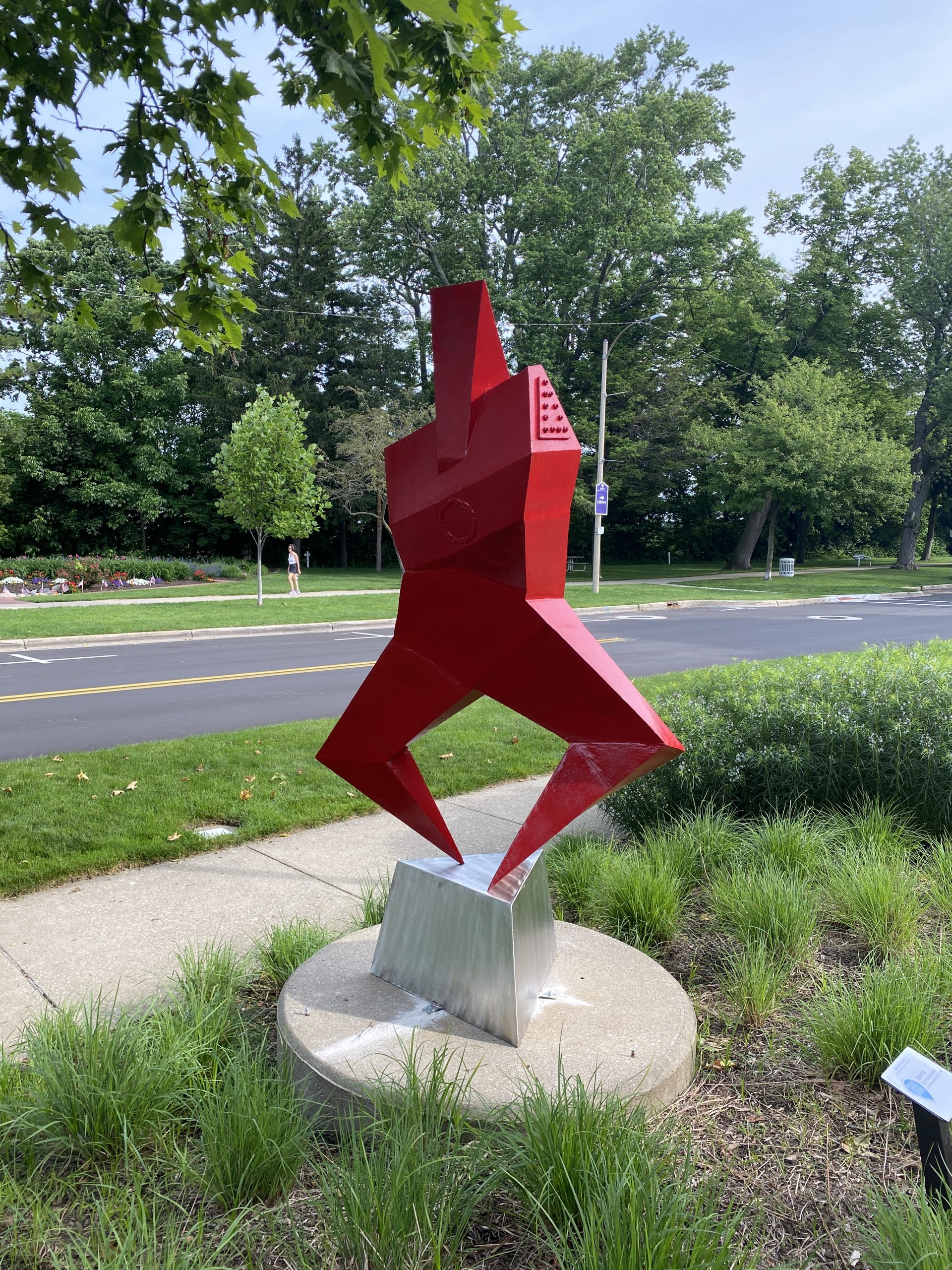
Krasl Art Center
Sprung
Eric Stephenson
Painted welded steel, 1996
These three sculptures by Eric Stephenson form a mini retrospective of his work, each sculpture representing a different phase of his career.
Sprung is the earliest sculpture in this grouping, completed in 1996 while Stephenson was completing his Master of Fine Arts in Sculpture at The University of Houston.
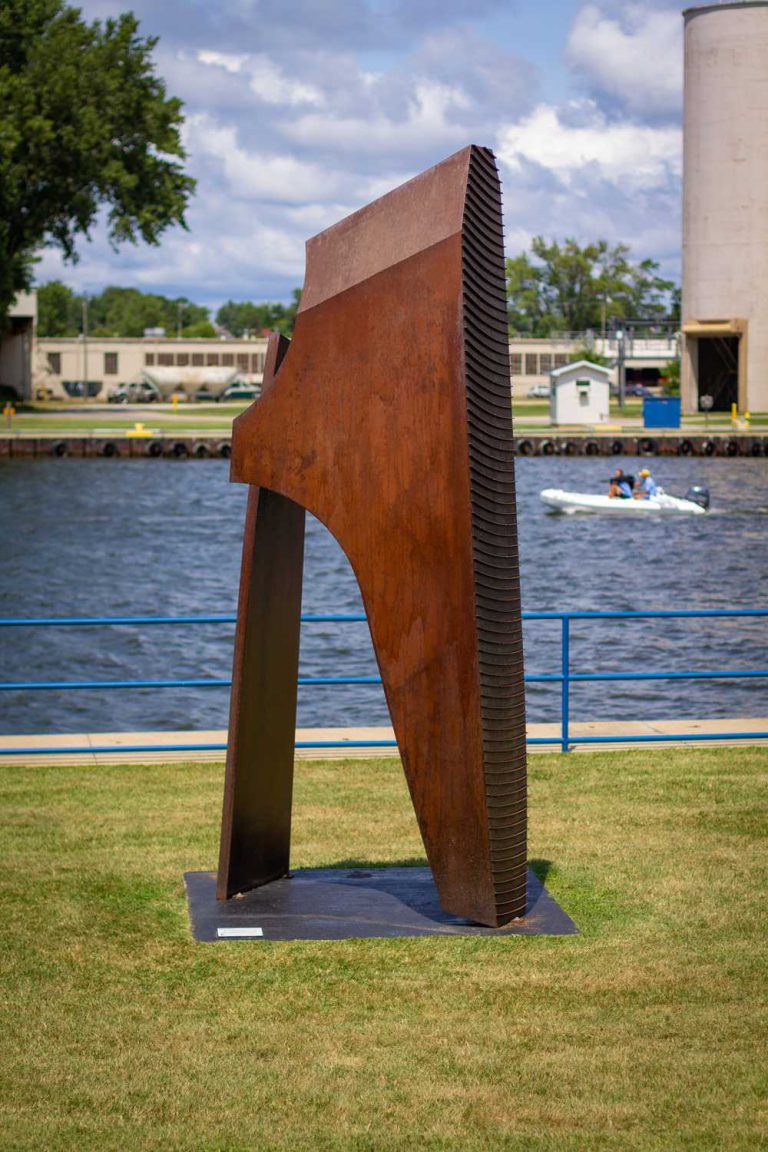
Margaret B. Upton Arboretum
Standing Arch, Five
Ken Thompson
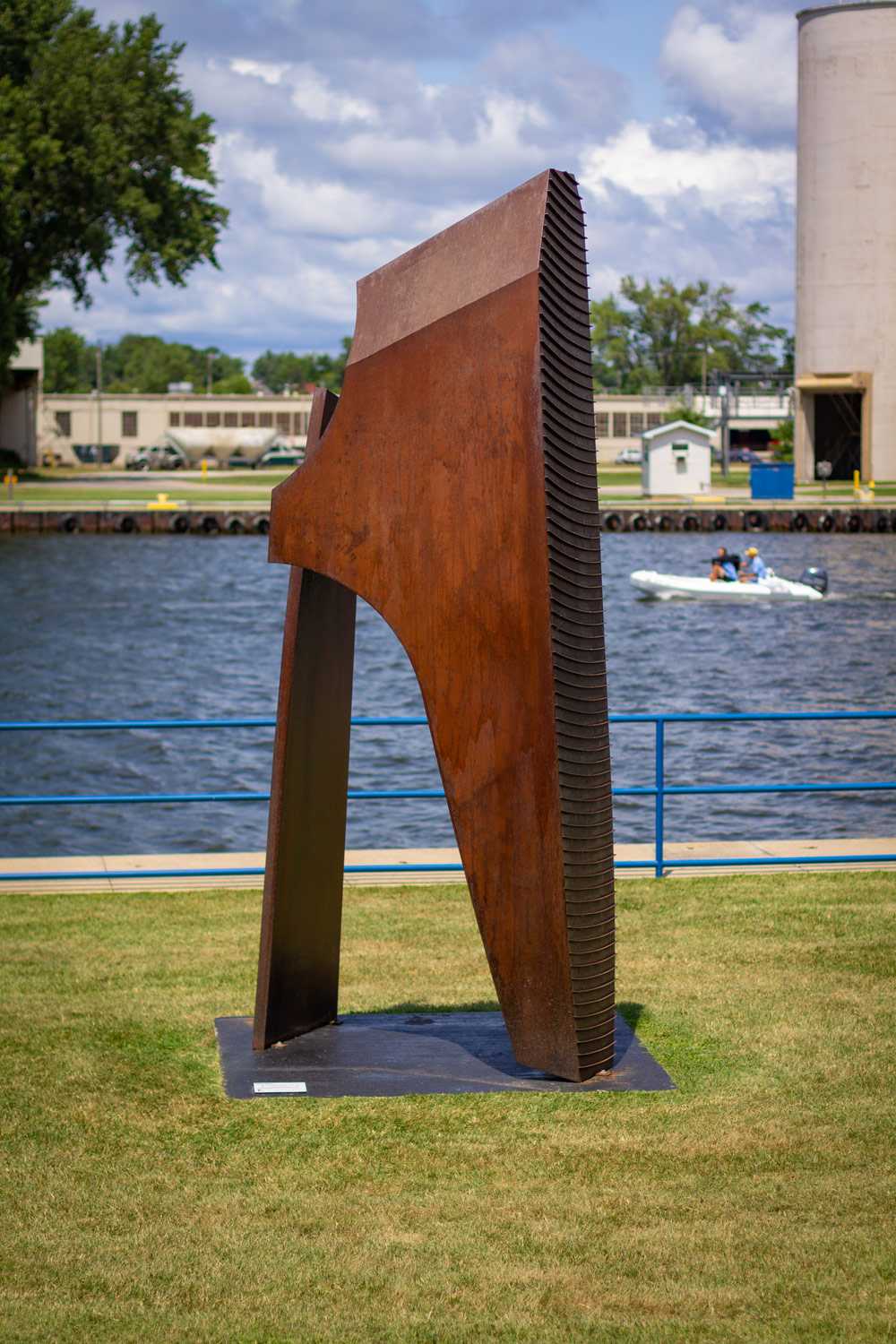
Margaret B. Upton Arboretum
Standing Arch, Five
Ken Thompson
Corten and Stainless Steel, 2014
Thompson is a Michigan artist based in Blissfield, MI where he operates Flatlanders Sculpture Supply and Art Galleries. Can you believe that Standing Arch, Five is actually considered a small model for a larger version located in Jackson, Michigan?
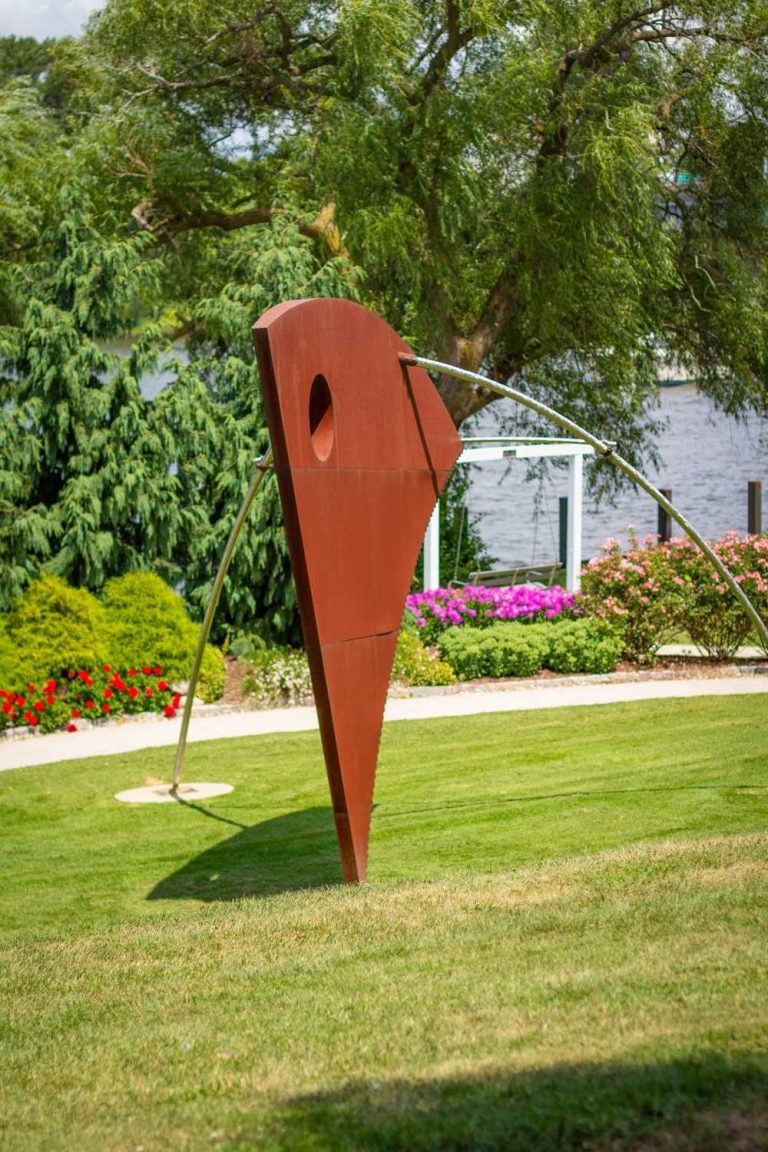
Margaret B. Upton Arboretum
Steel Arch 4
Ken Thompson
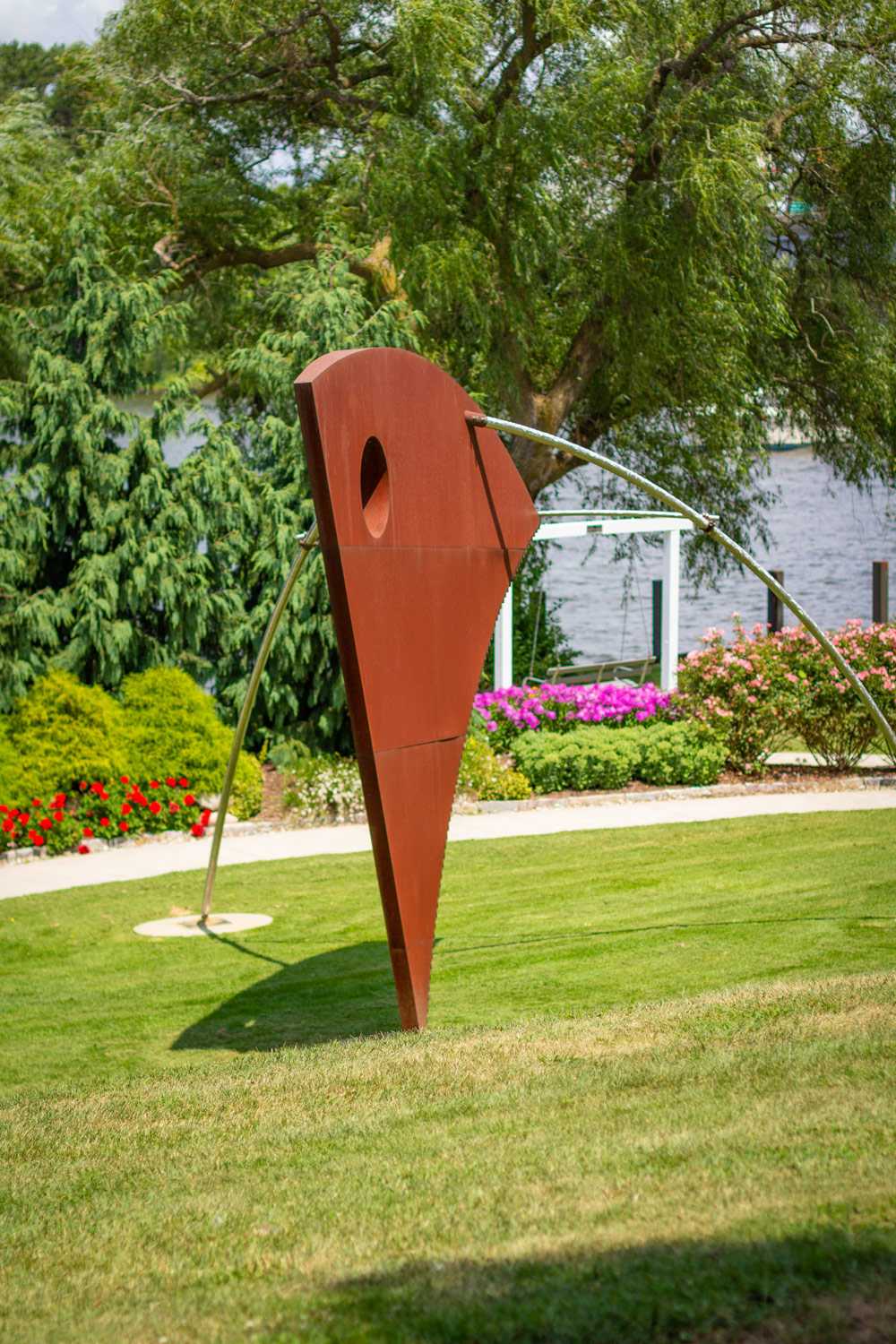
Margaret B. Upton Arboretum
Steel Arch 4
Ken Thompson
Corten steel, stainless steel, 2009
Steel Arch 4 won the KAC 2012 Biennial Sculpture Invitational Purchase Award. This sculpture stands just over 13’ tall and weighs 2400 pounds! It was selected for its resonance with the waters of Lake Michigan and the St. Joseph River, its monumental form, and its immaculate craftsmanship.
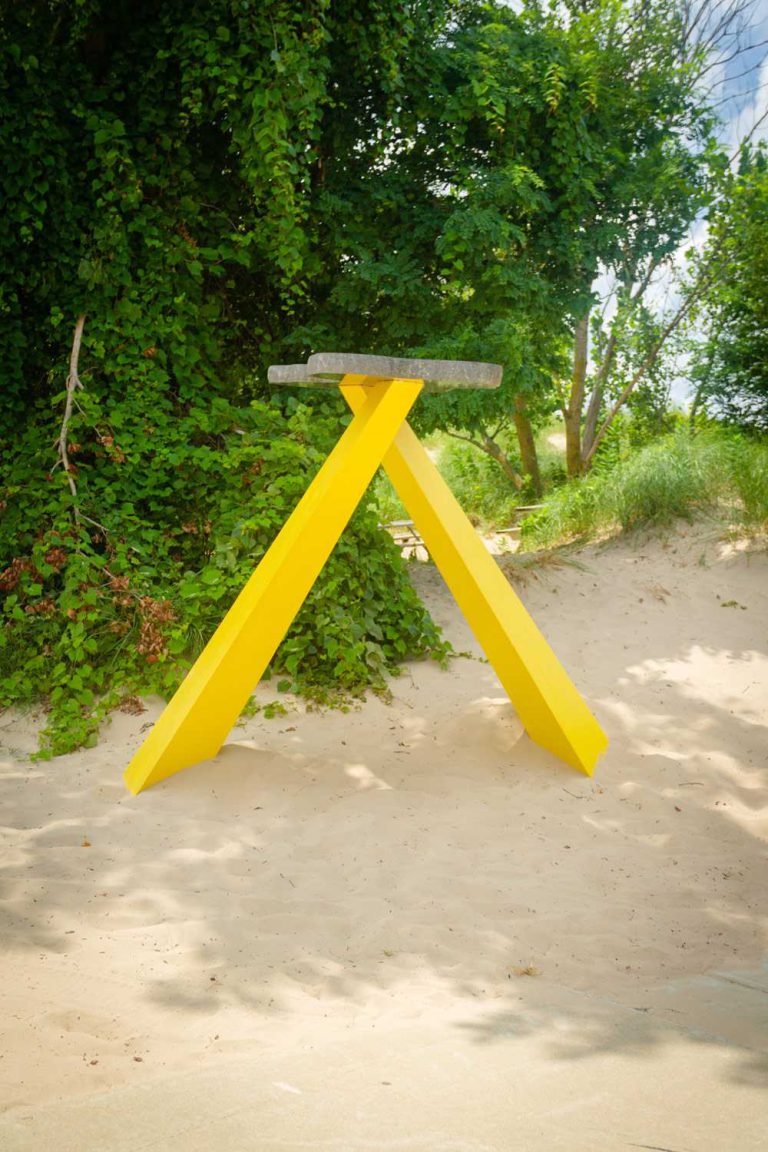
Silver Beach County Park
Strata
David Barr
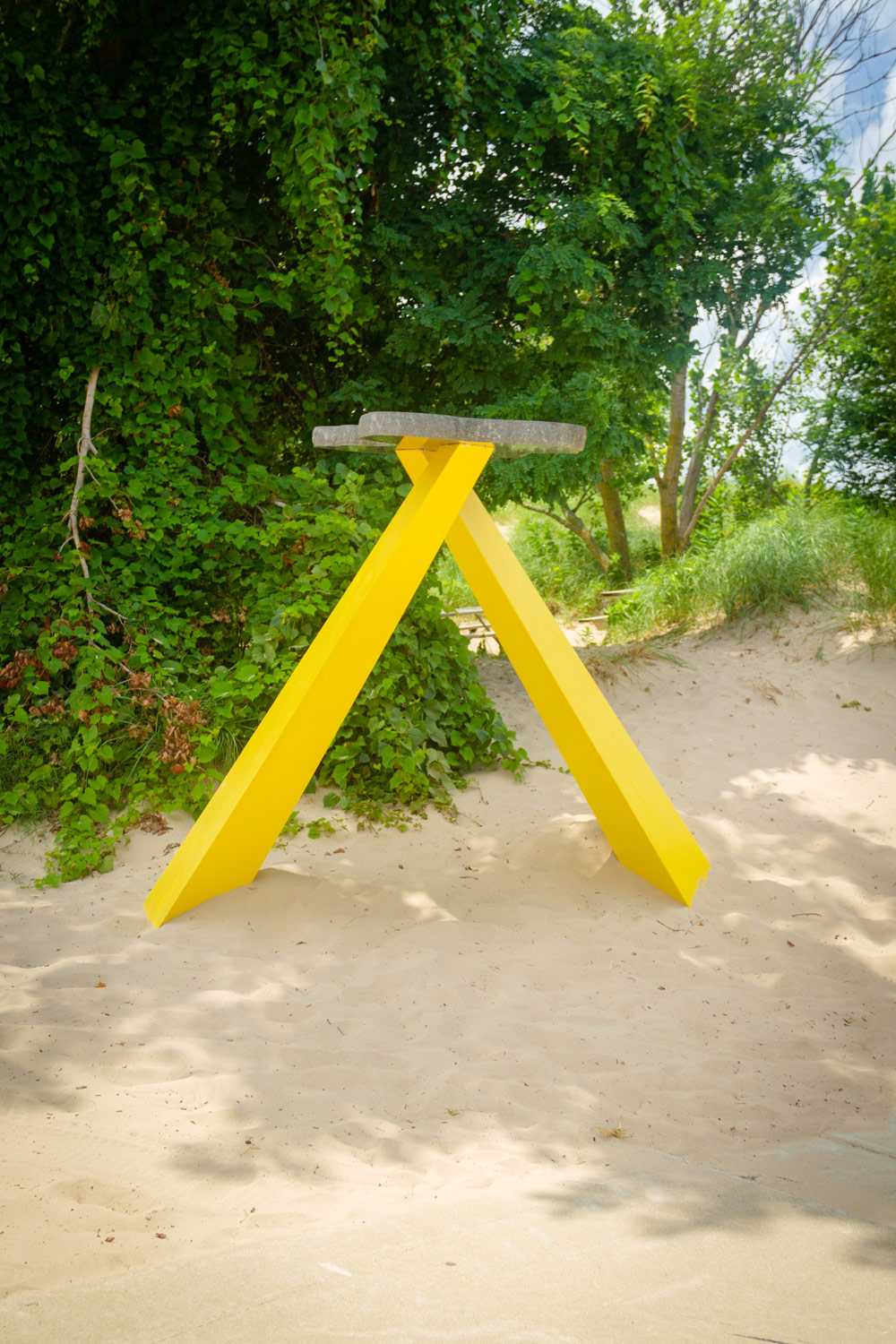
Silver Beach County Park
Strata
David Barr
Painted steel, granite, 1981
This three-piece sculpture guides viewers through the sand dunes to the shores of Lake Michigan. Barr was a sculptor and founder of the Michigan Legacy Art Park in Thompsonville, Michigan, “a place where artists could tell the story of our state in and through the fundamental materials of nature.”
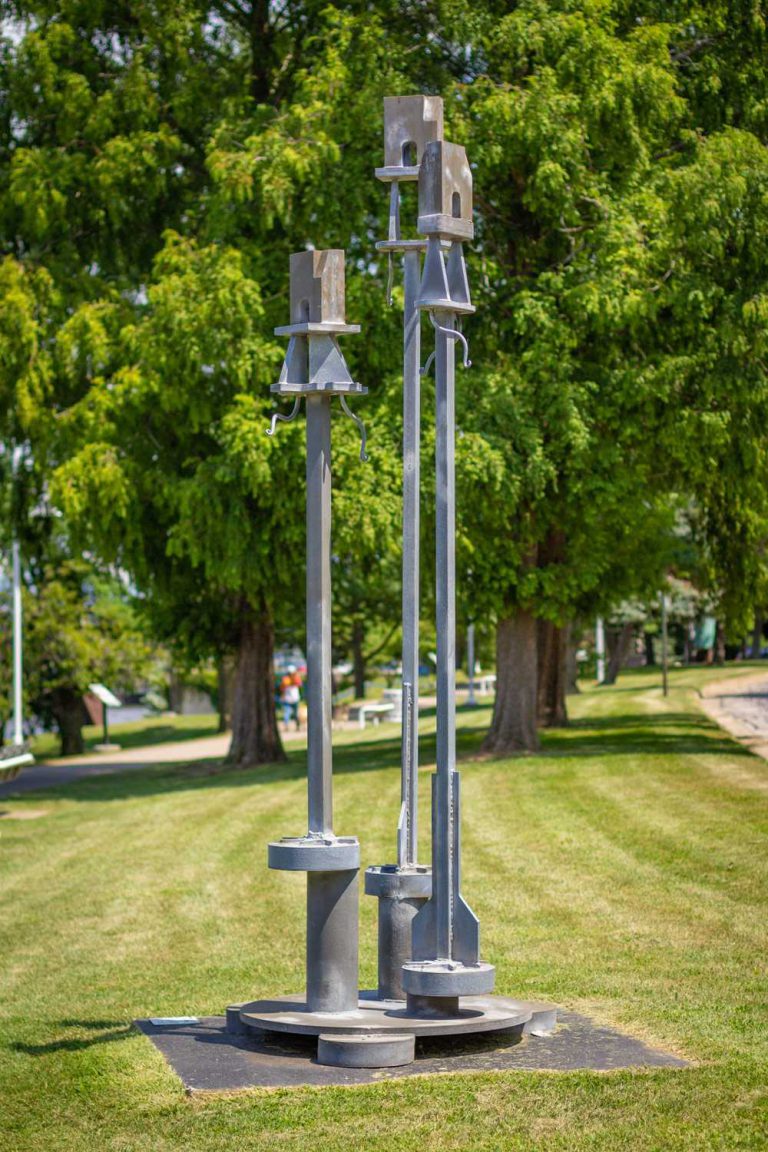
The Box Factory for the Arts
Temple Carousel II
Austin Collins
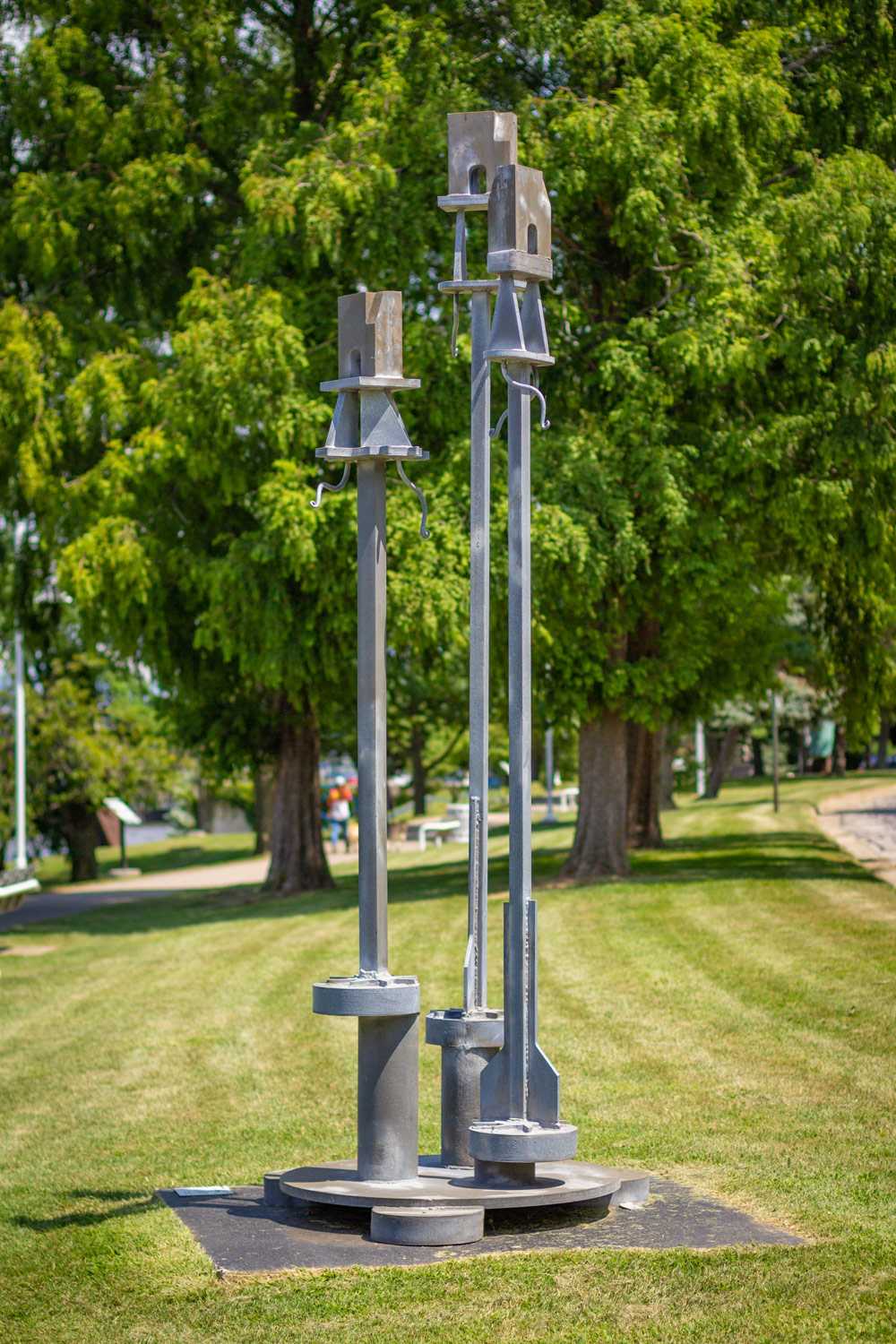
The Box Factory for the Arts
Temple Carousel II
Austin Collins
Galvanized steel, 2006
This three-piece sculpture conveys both strength and movement. Three sturdy galvanized steel columns reach upward at different heights while several flowing metal strands radiate from the abstract tops. Collins finds “sculpture compelling, as individual or collective pieces and as an artform.”
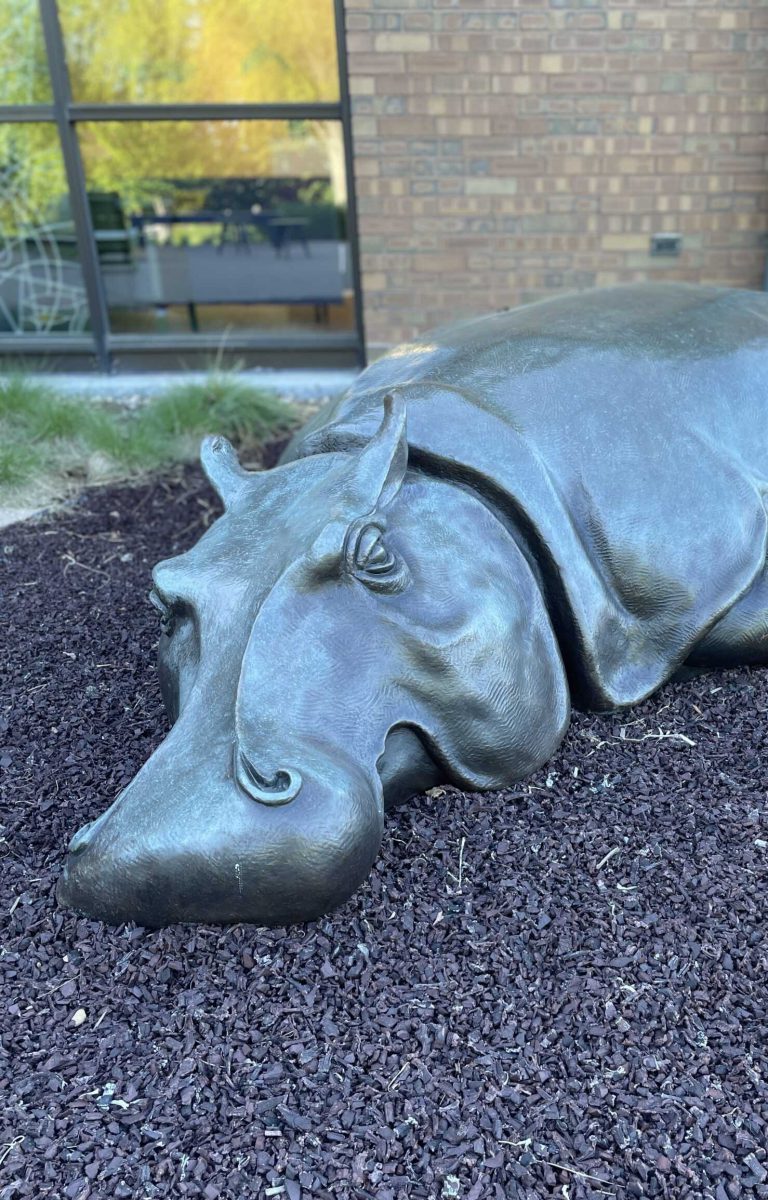
Krasl Art Center
The Heavyweight (Lotus)
Dr. Burt Brent
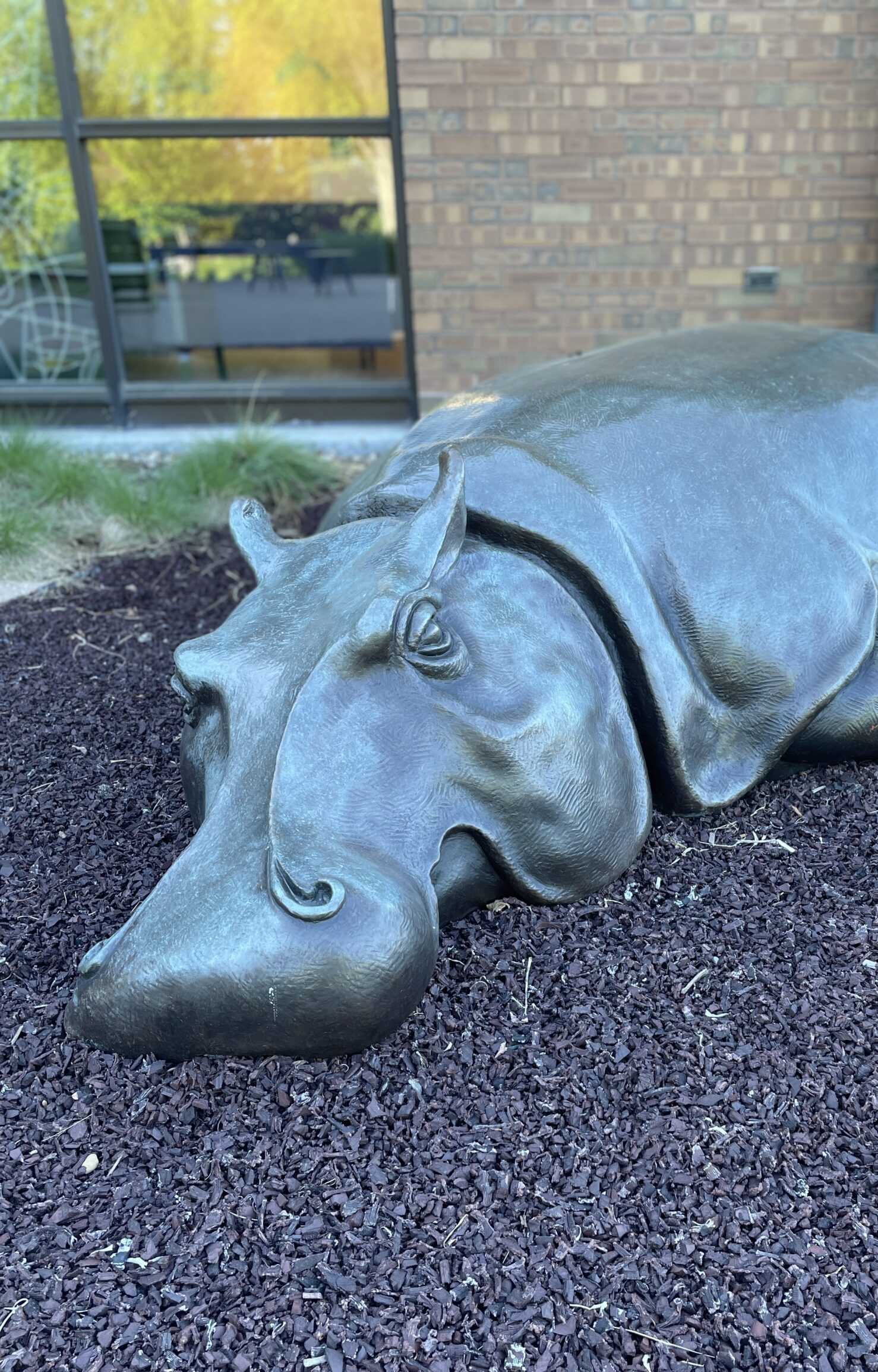
Krasl Art Center
The Heavyweight (Lotus)
Dr. Burt Brent
Bronze, 1994
Go ahead, take a seat! The Heavyweight was commissioned for Krasl Art Center’s sculpture garden in 1994. From the beginning, the sculpture was intended to be welcoming and interactive. Each year, hundreds of children and adults climb on, stand on, sit on, and hug the 800-pound hippo now known as Lotus.
Dr. Burt Brent was an apprentice in a taxidermy studio at the age of thirteen. He went on to become a world-renowned surgeon, famous for ear and face reconstruction for children. In 1987, Brent sculpted a bronze rhinoceros for Rhino Rescue, an auction at Sotheby’s that raised money to establish a Kenyan rhino preserve. Dr. Brent’s rhino became an instant success, and since then he has created many wildlife sculptures, often donating his earnings toward other organizations like Rhino Rescue.
Do you know how The Heavyweight got its nickname?
In anticipation of the arrival of The Heavyweight, and to raise funds to place the sculpture in its new home, an educational display about hippo natural history was placed at Orchard Mall. Children visiting the hippo display at the mall were invited to submit nicknames for the new sculpture. Katie Camp of Stevensville won the contest, and The Heavyweight became who we now know and love as Lotus.
Click here to hear what happens when science and art collide.
Listen to Dr. Burt Brent talk about his path to being both surgeon and artist and how it’s all related by clicking this link.
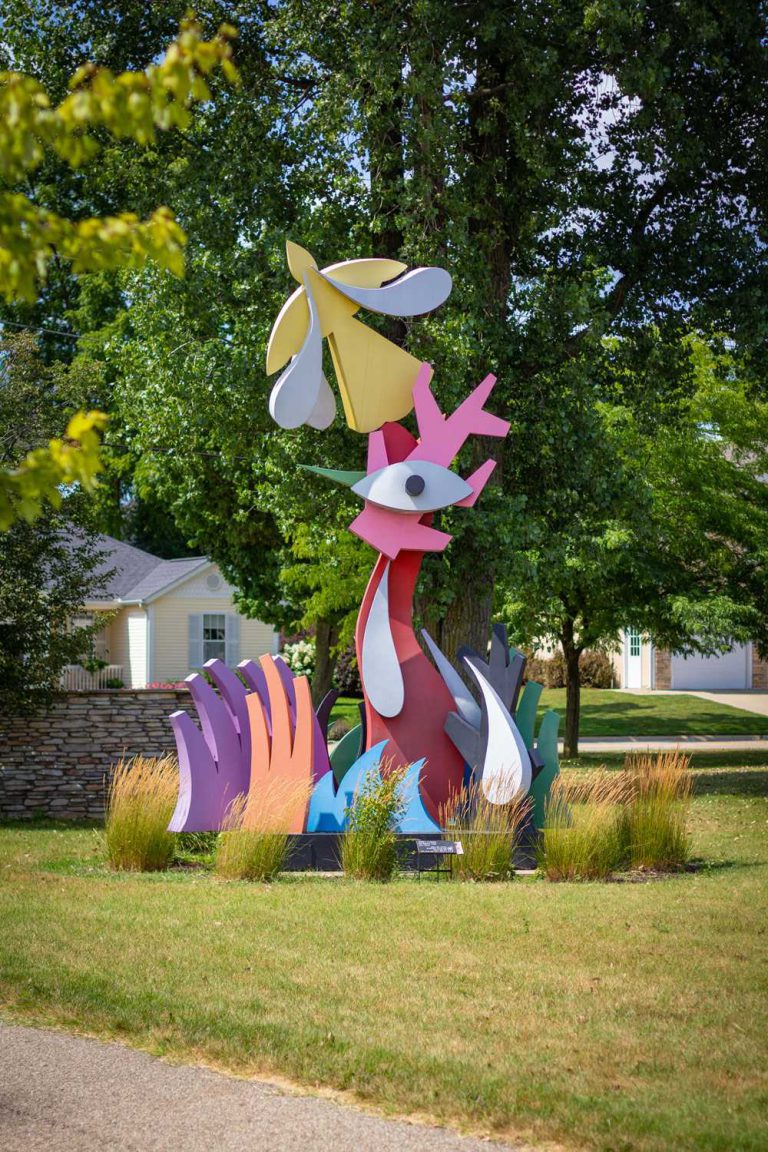
Edgewater Plaza
The Marsh
James Clover
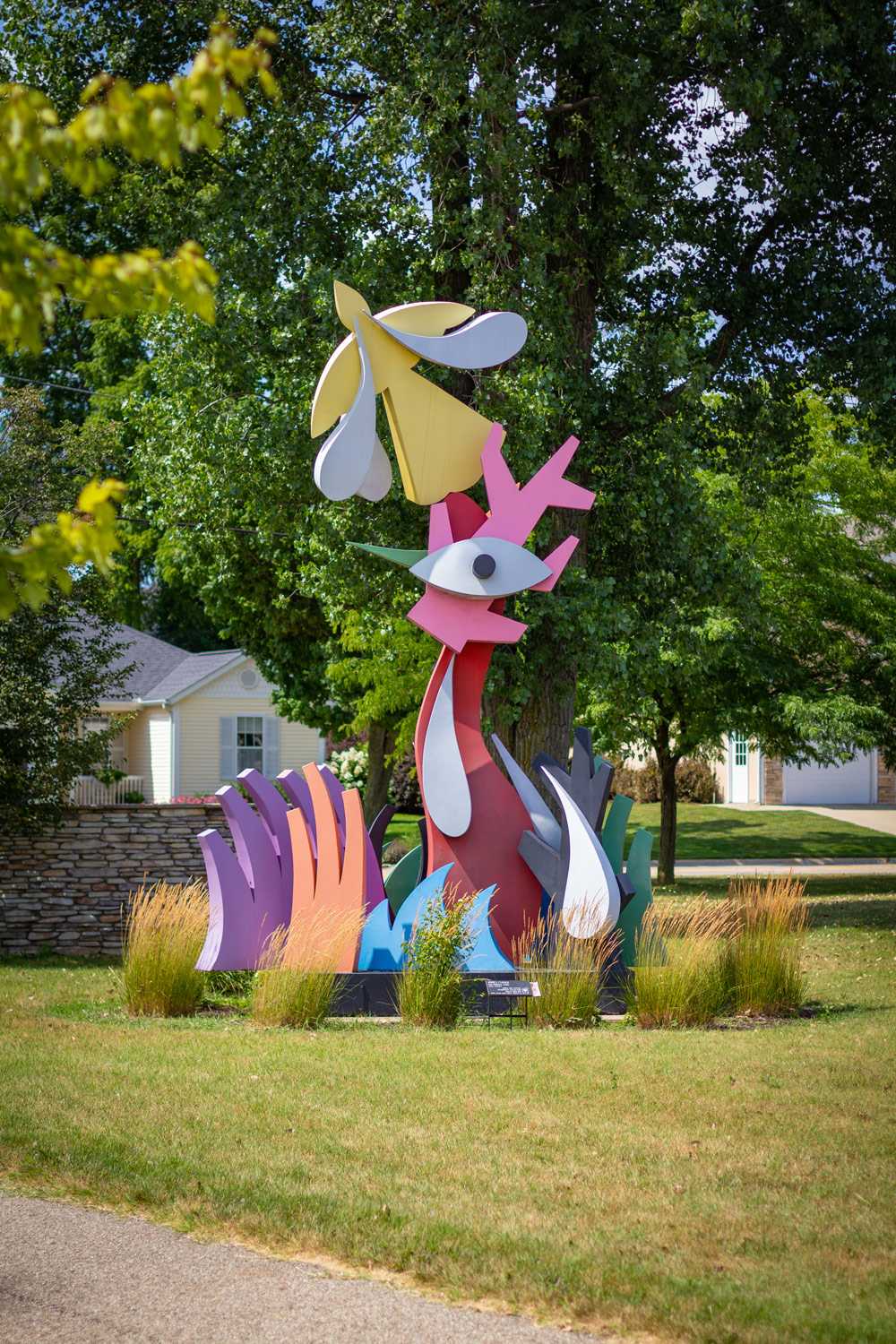
Edgewater Plaza
The Marsh
James Clover
Steel, epoxy, 1986
Seemingly abstract, James Clover’s sculpture, The Marsh, has many familiar shapes from nature. At the base, tall, purple, green and orange grasses and blue waves support the upward reaching branches in red and pink. White water droplets fall from the bird taking flight, once hidden among the grasses of the marsh, is now flying high into the sky.
Born in Iowa in 1938, Clover studied sculpture at Kansas City Art Institute and School of Design in 1962 and received his MFA from Newcomb Art School at Tulane University in 1964. He later taught sculpture at both universities.
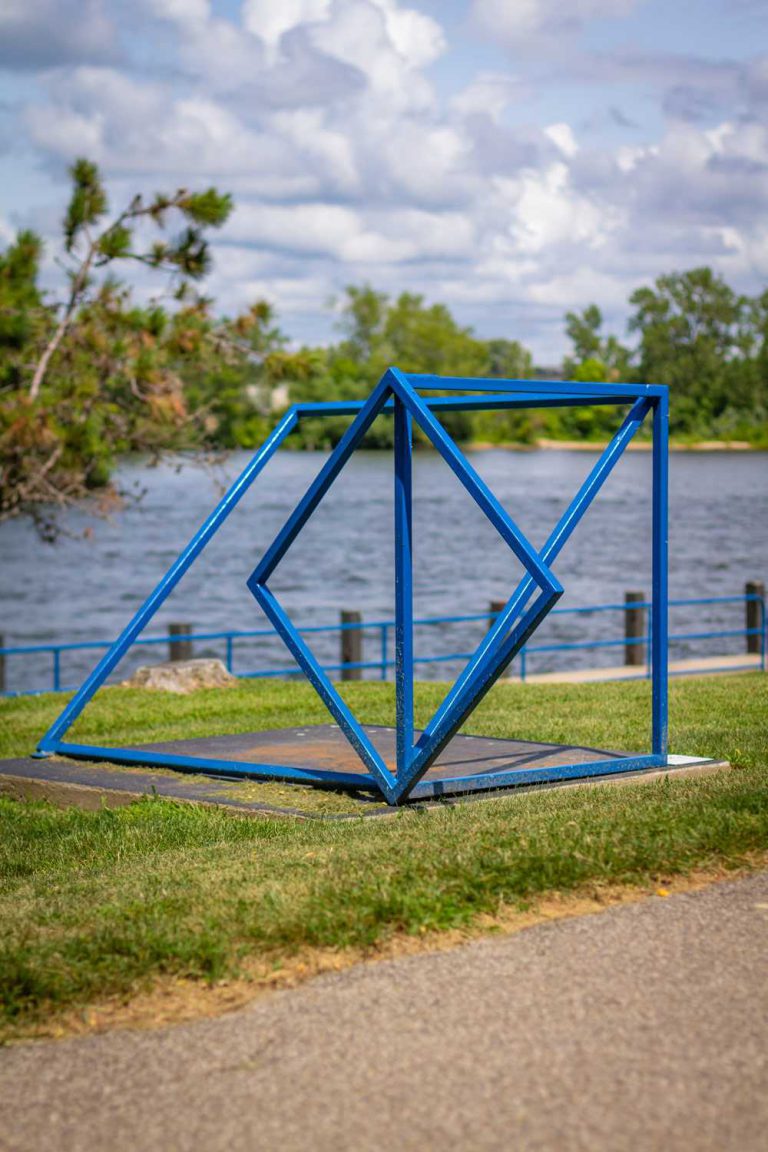
The Box Factory for the Arts
Three Fates – A Dance Set
David Barr
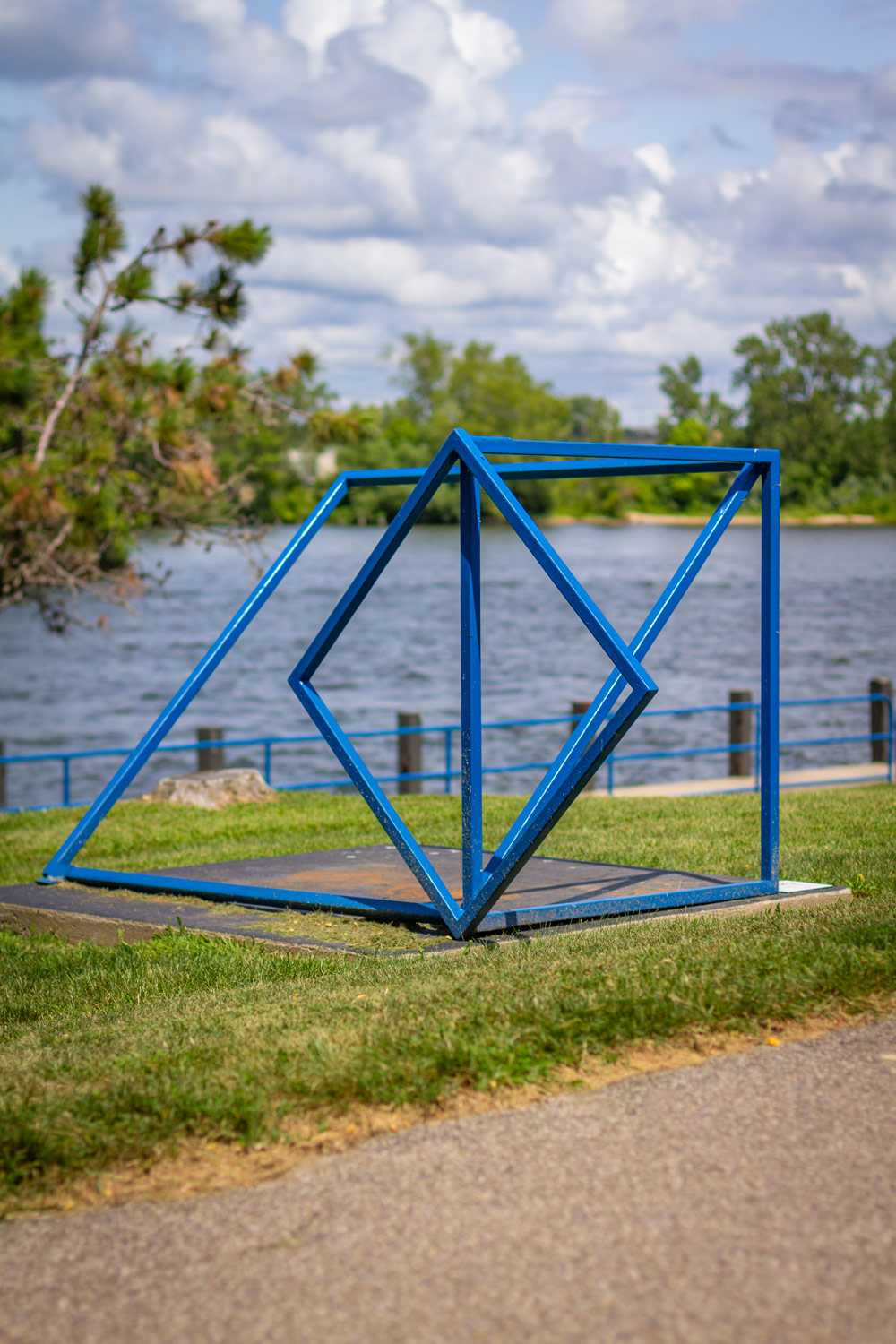
The Box Factory for the Arts
Three Fates – A Dance Set
David Barr
Welded and painted steel, 1974
“Three Fates was a dance set for Paula Kramer’s choreography for the myth ‘The Three Fates’… The fates spun threads (of life), determined their pattern, and finally, cut the threads.” Barr pushed himself as an artist and has been involved in numerous dance productions and film documentaries on various art subjects.
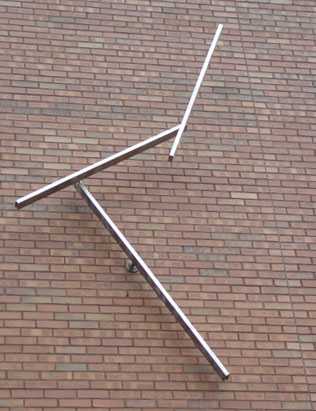
Krasl Art Center
Three Lines Diagonal – Jointed Wall
George Rickey
Krasl Art Center
Three Lines Diagonal – Jointed Wall
George Rickey
Stainless steel, 1984
Can you feel the wind off the bluff today? The breeze is what helps make George Rickey’s sculpture, Three Lines Diagonal – Jointed Wall, move! There are NO motors in this sculpture. Notice how the shadows and light change as the three stainless steel arms swing into different positions. Each day, this sculpture will make a never-ending arrangement of random movements.
This kinetic sculpture became part of KAC’s collection in 1986. Born in 1907 in South Bend, Indiana, Rickey has become a regional and internationally known artist with artwork in Southwest Michigan, New York, London, Germany and beyond.
What is Kinetic art?
Kinetic art is art that has motion or the appearance of motion. Kinetic sculpture typically has mechanical parts that can be set in motion by a person, motor, or the wind. See more examples of kinetic art here.
Fun fact!
George Rickey did not always study art. He studied history in school and, in 1942, was drafted into the US Army to work as an engineer.
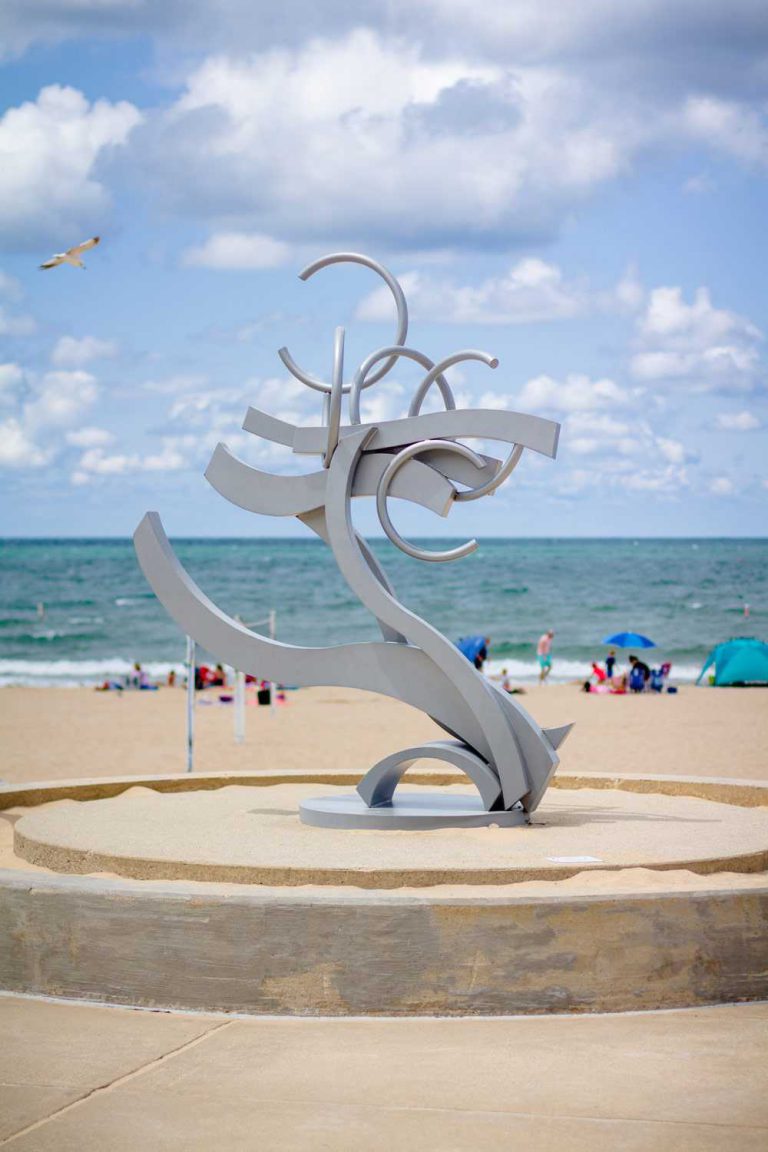
Silver Beach County Park
Turbulence
Denis Folz
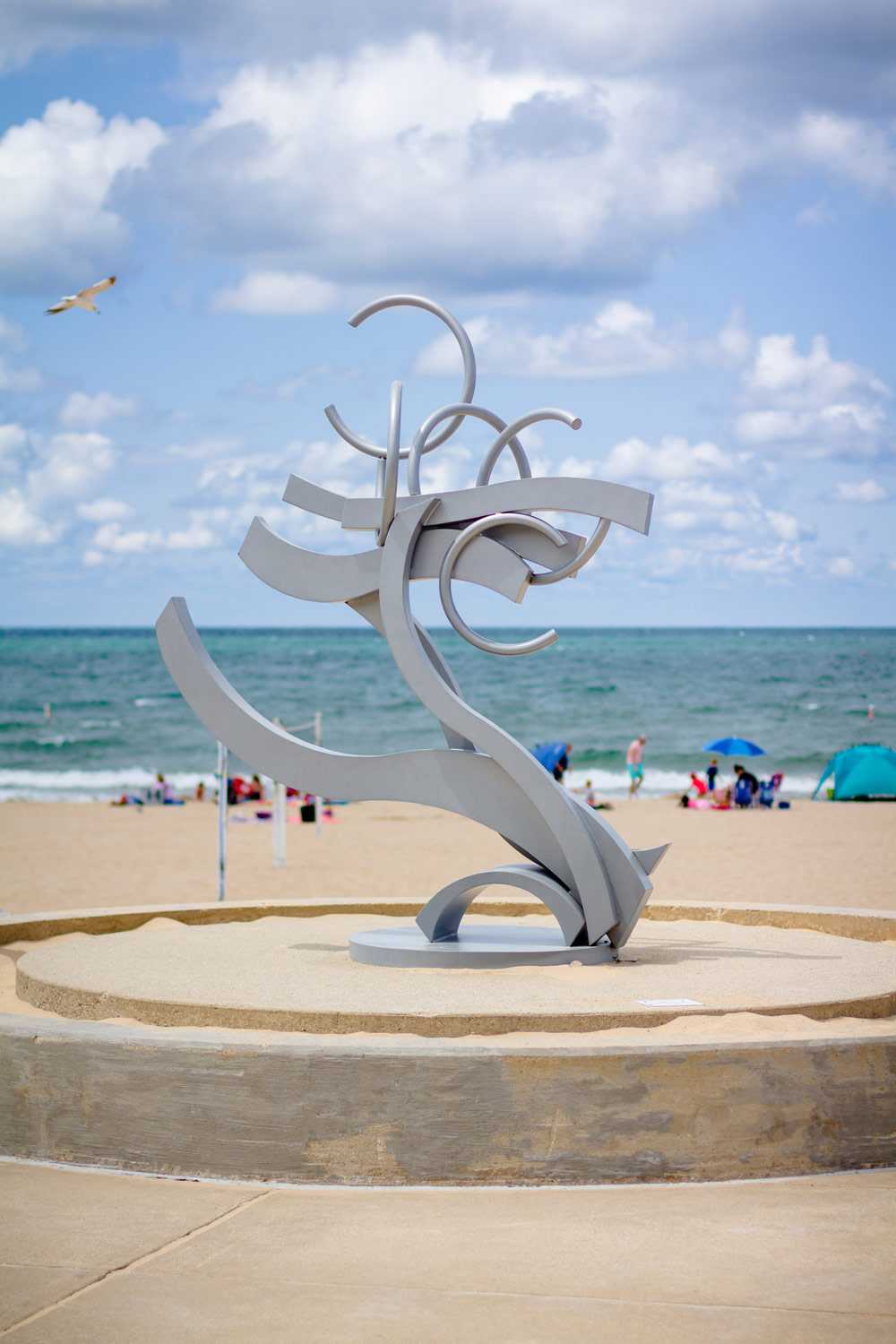
Silver Beach County Park
Turbulence
Denis Folz
Silver powder coated carbon steel, 2012
“Does it really matter who I am or, for that matter, what I think? Enjoy art.”
Denis Folz finds inspiration in his everyday surroundings, often sketching his observations. He believes that “there isn’t a wrong and right message” conveyed through his artwork - “whatever it says to the viewer is the right message.” What does Turbulence say to you? What message does it convey?
Not sure WHAT to think? Click here for some ideas.
1. Keep it simple. What do you see? What color is the sculpture, what’s the first shape you notice, are the shadows doing something interesting?
2. Sometimes titles unlock a whole new meaning. What does “turbulence” mean to you? Is turbulence good, bad, or sometimes both? Do you think it’s a fitting name for this sculpture?
3. Context. Does this sculpture belong on a beach? Why or why not?
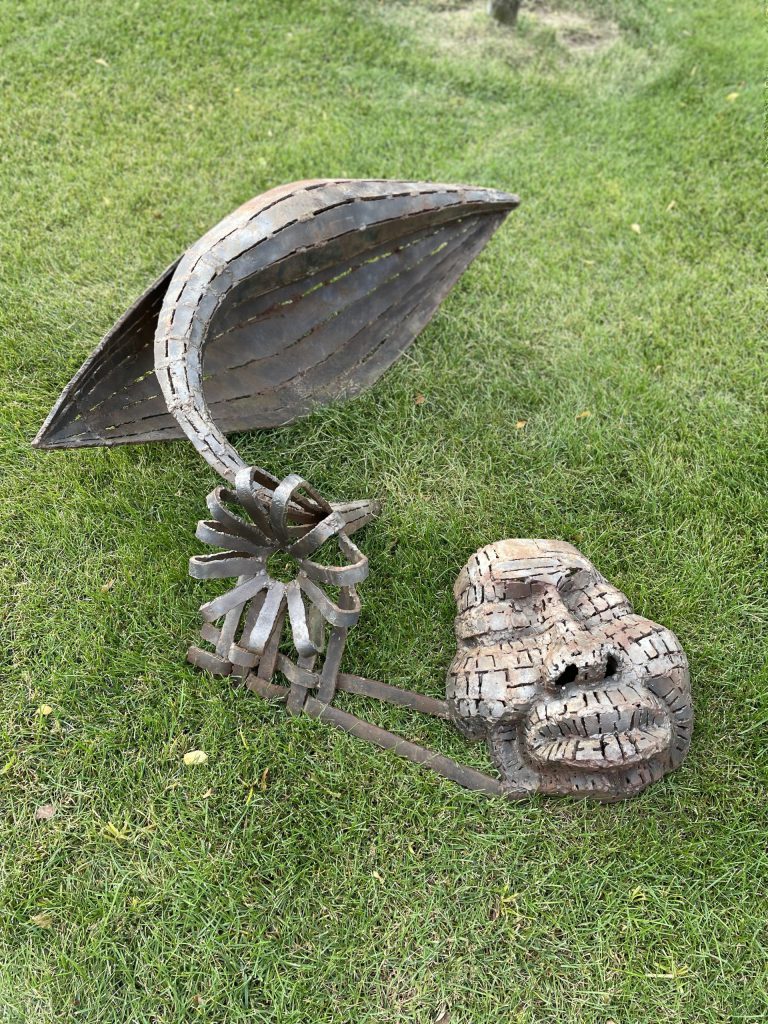
Silver Beach County Park
Untitled
Albert LaVergne
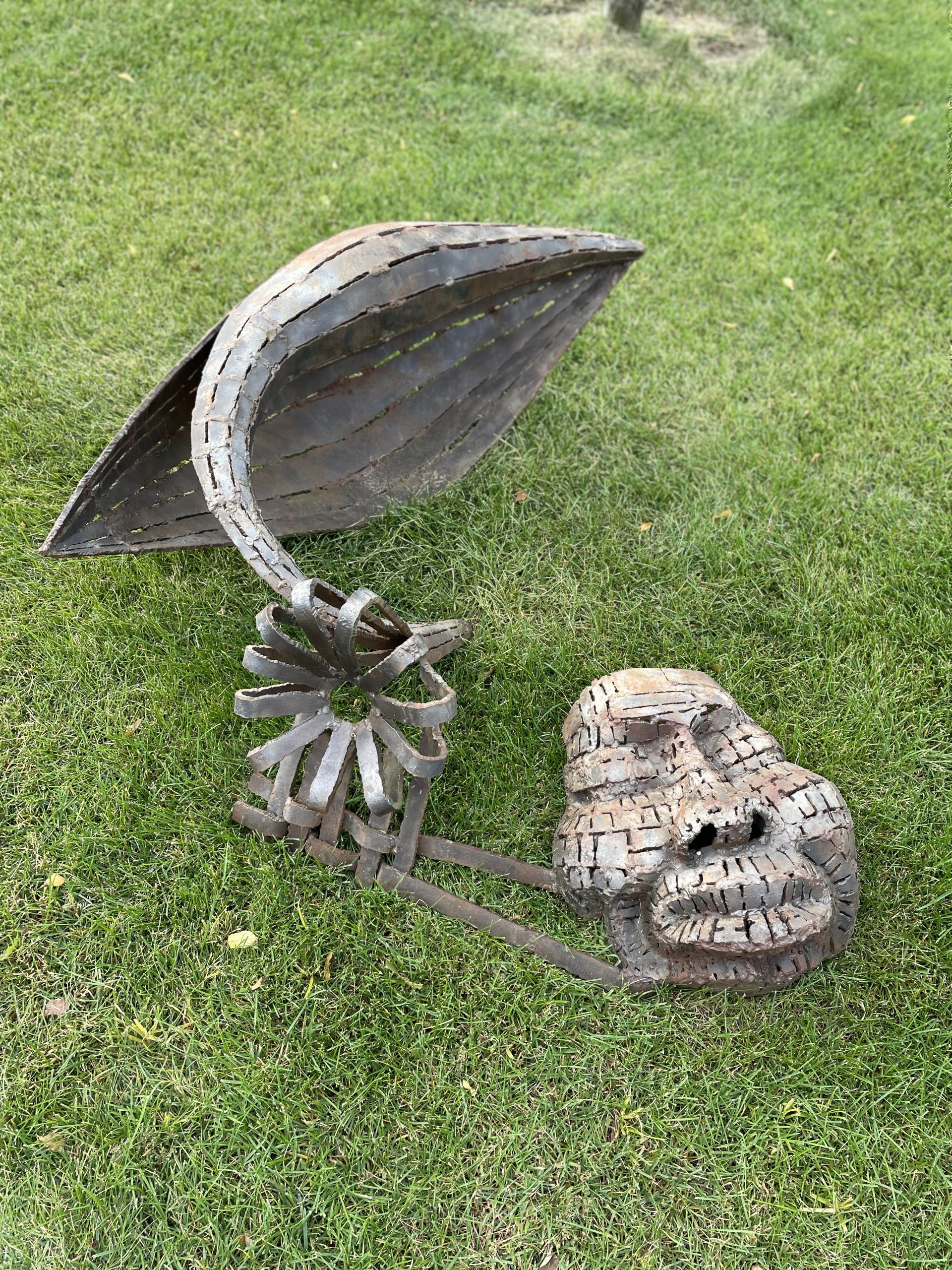
Silver Beach County Park
Untitled
Albert LaVergne
Welded steel, not dated
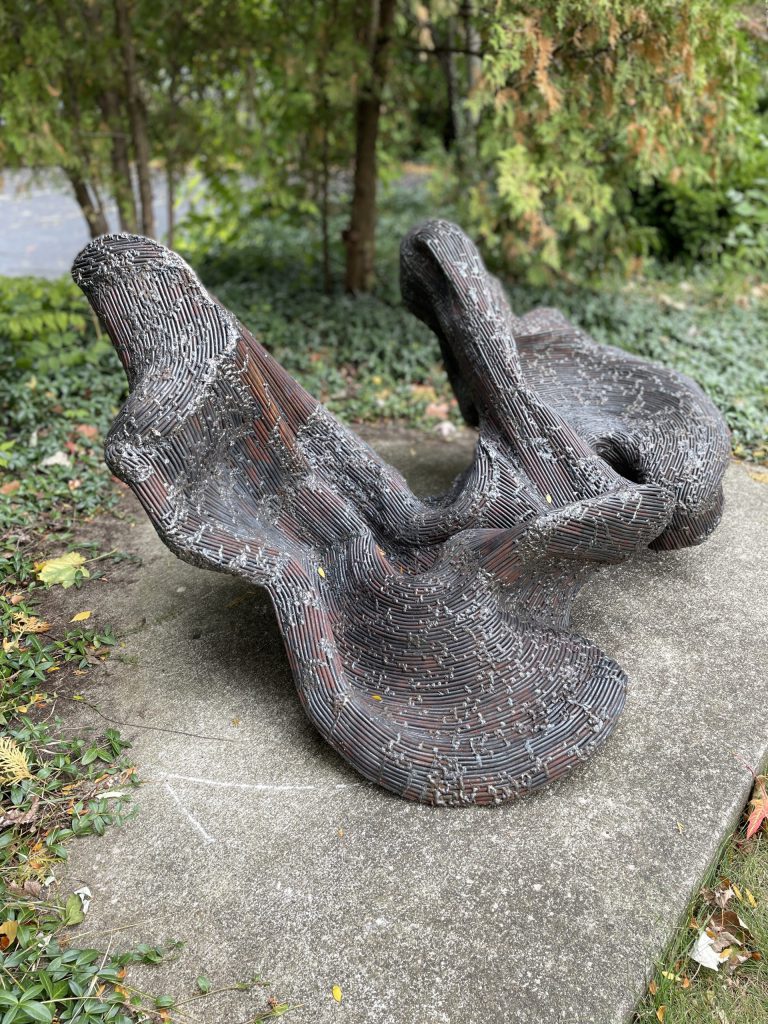
African American History & Literature Gallery
Untitled
Albert LaVergne
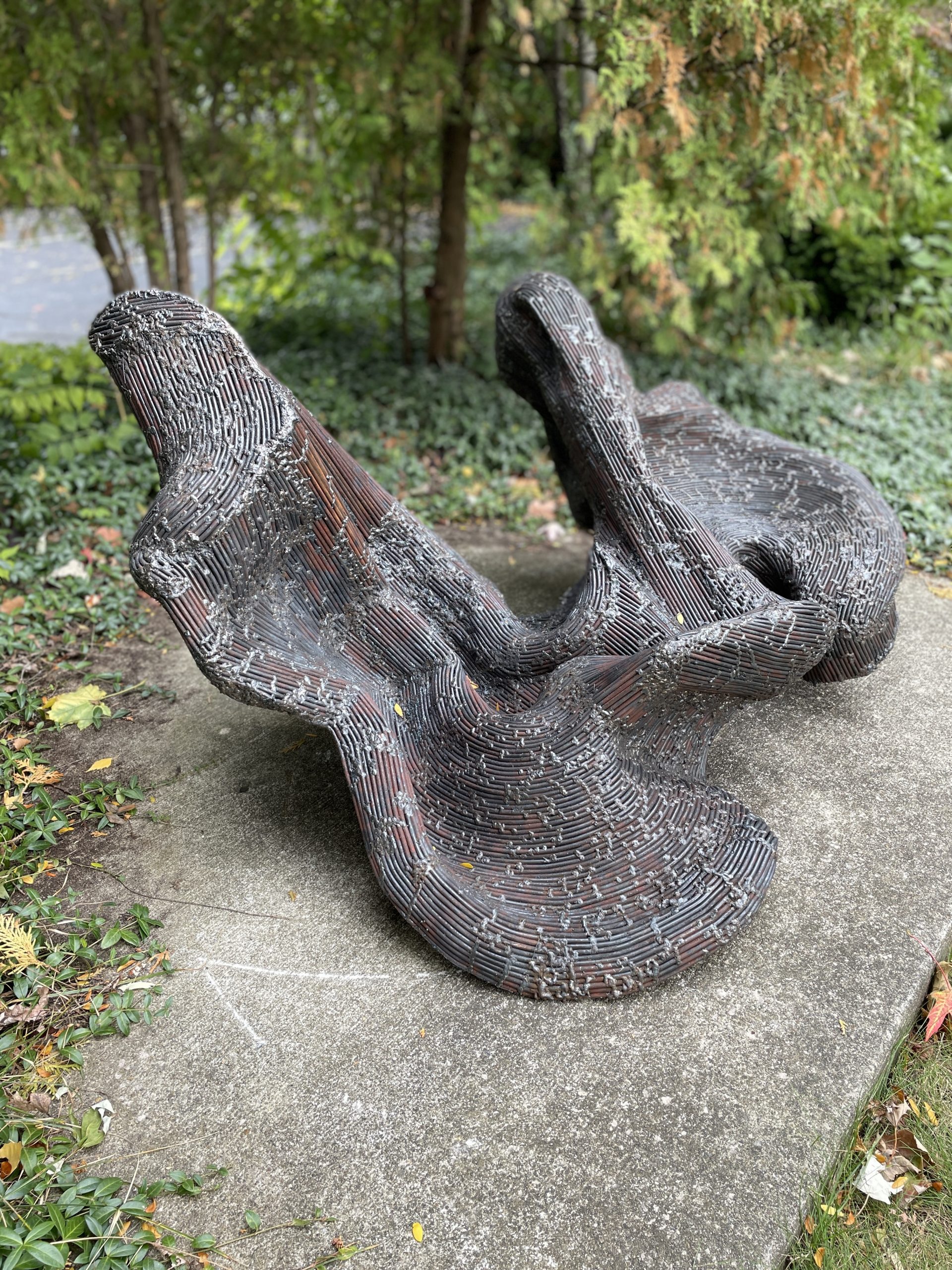
African American History & Literature Gallery
Untitled
Albert LaVergne
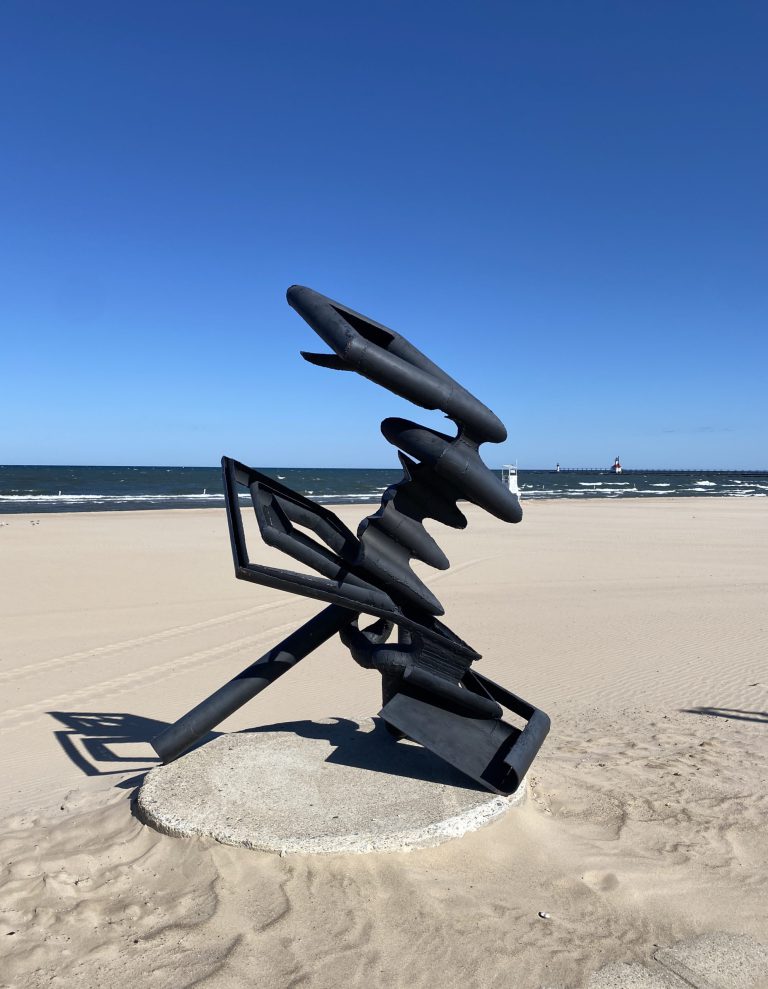
Silver Beach County Park
Untitled
Albert LaVergne
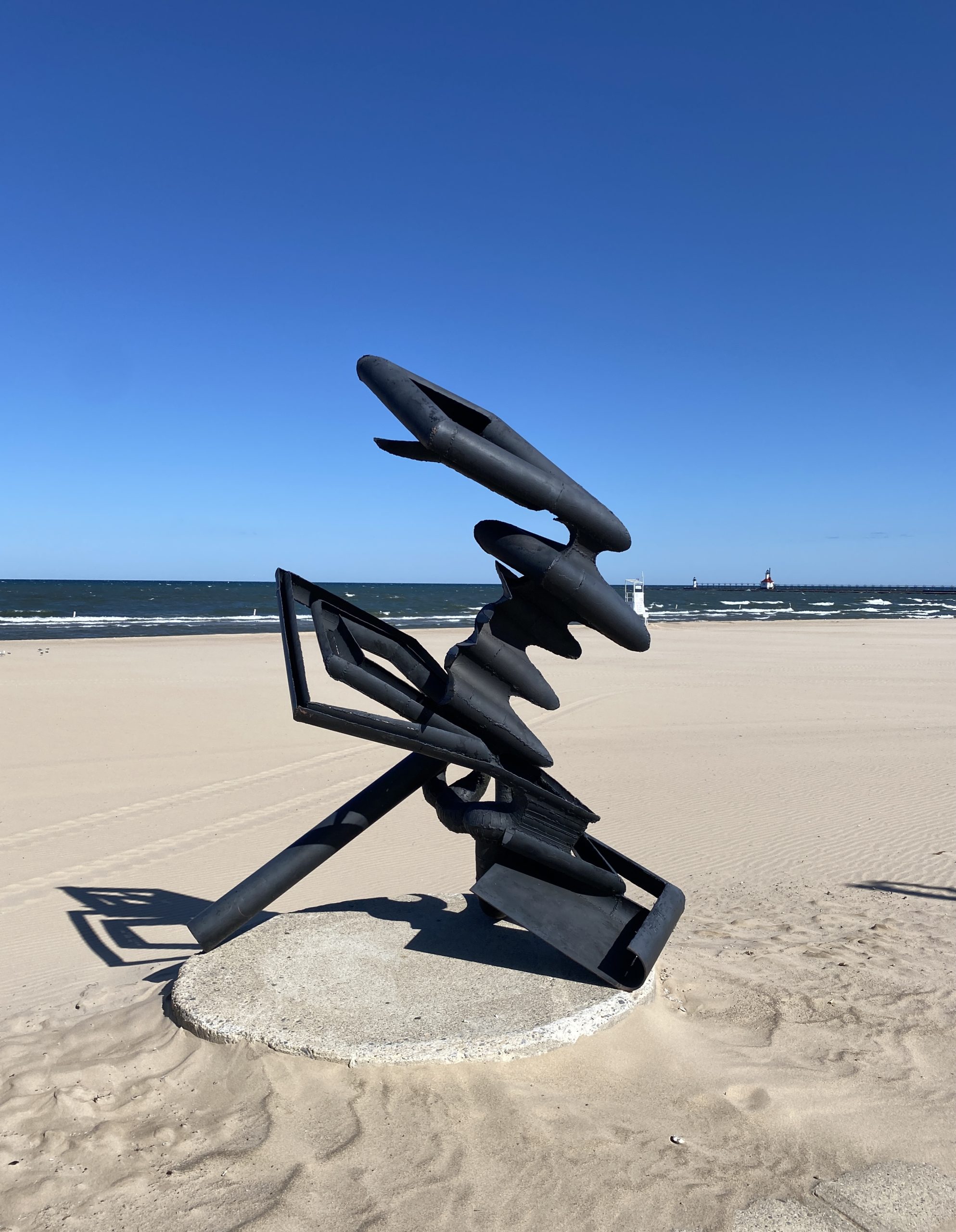
Silver Beach County Park
Untitled
Albert LaVergne
Welded steel, 1996
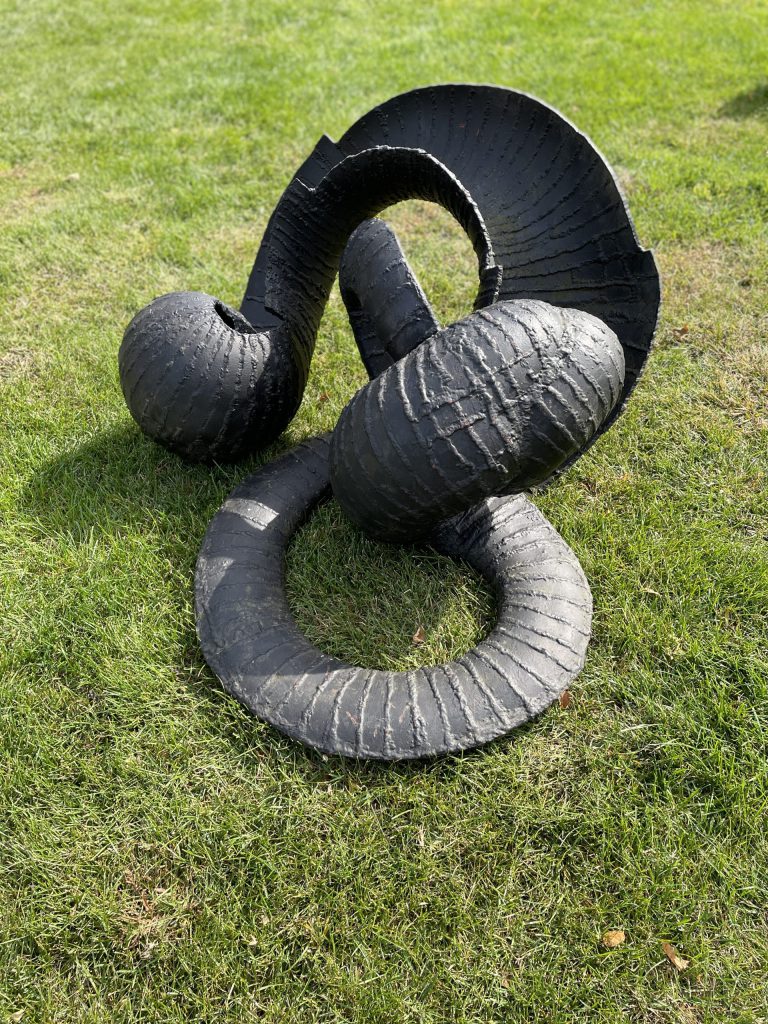
African American History & Literature Gallery
Untitled
Albert LaVergne
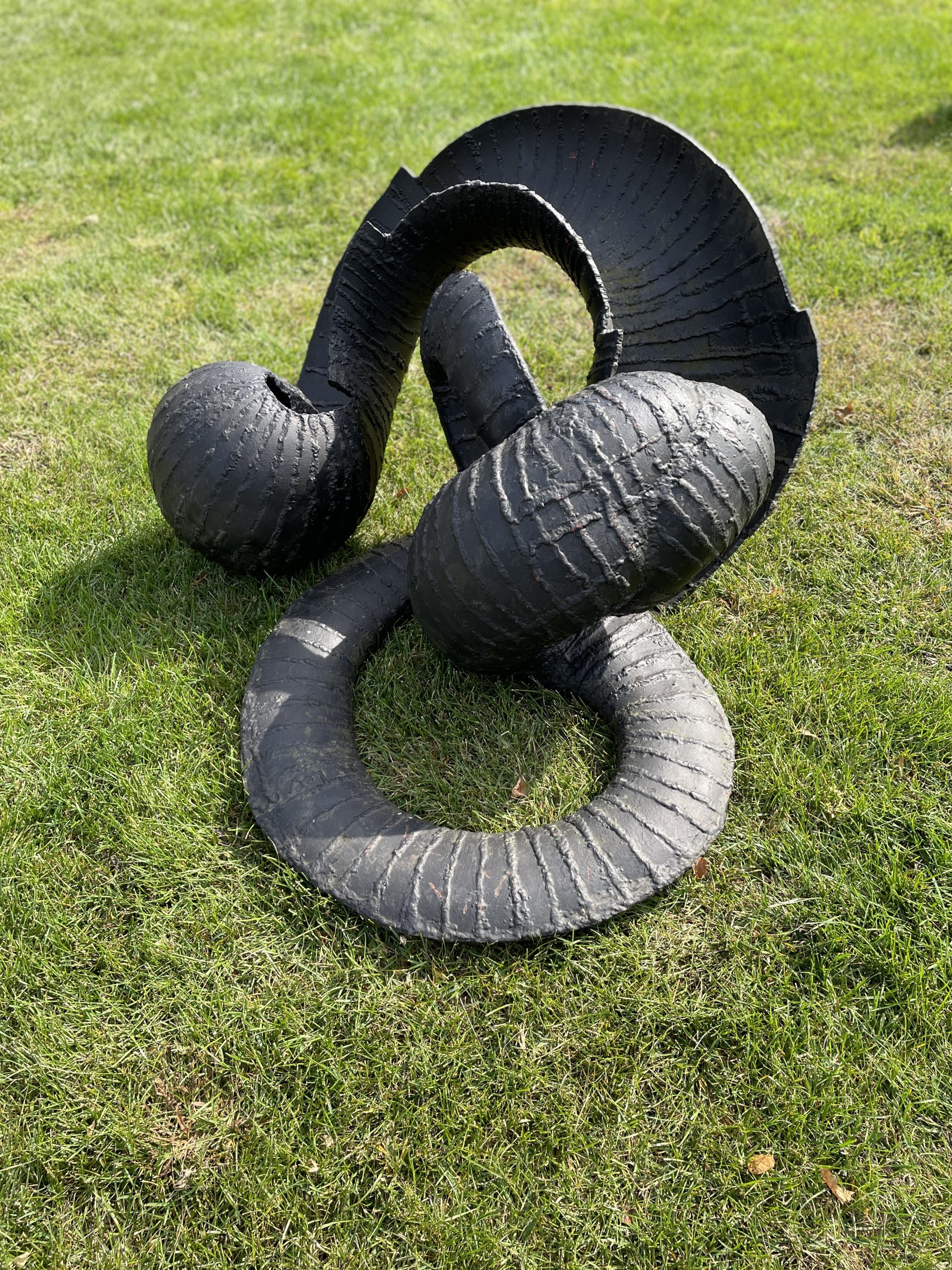
African American History & Literature Gallery
Untitled
Albert LaVergne
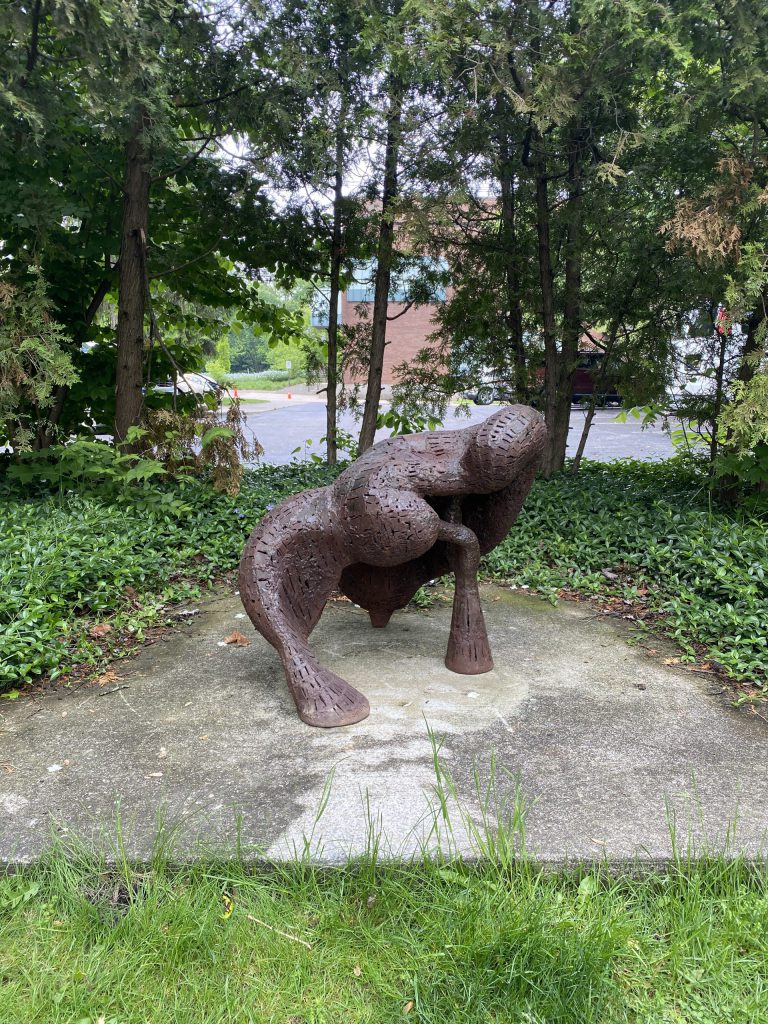
Krasl Art Center
Untitled
Albert LaVergne
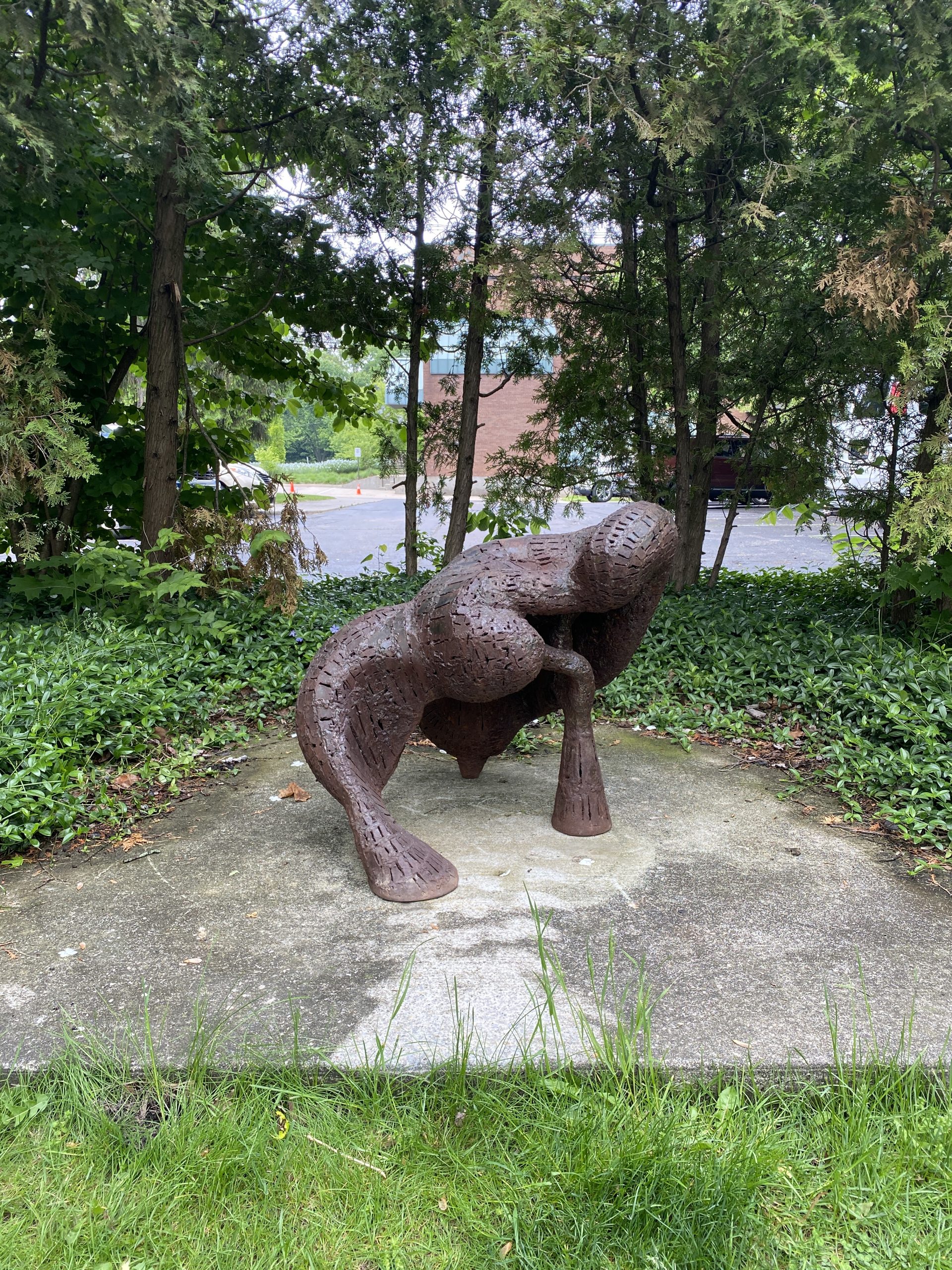
Krasl Art Center
Untitled
Albert LaVergne
Welded steel, not dated
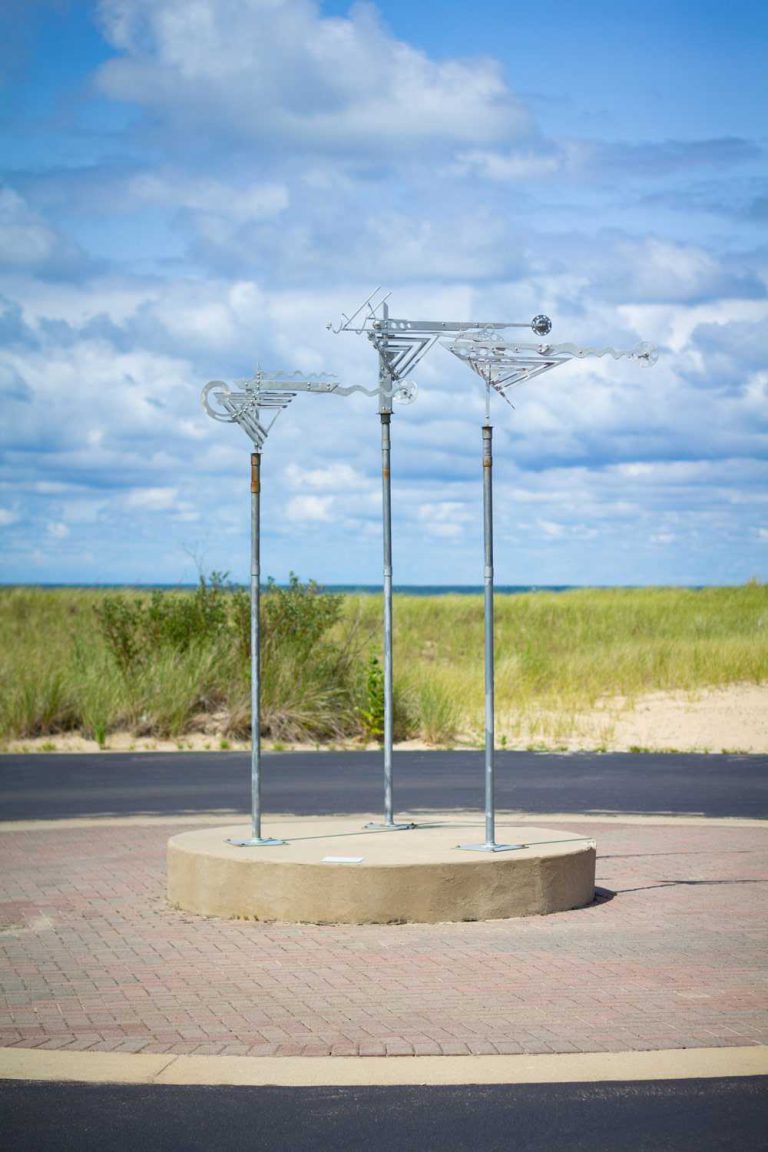
The Box Factory for the Arts
Winds of Change
Rick Ott
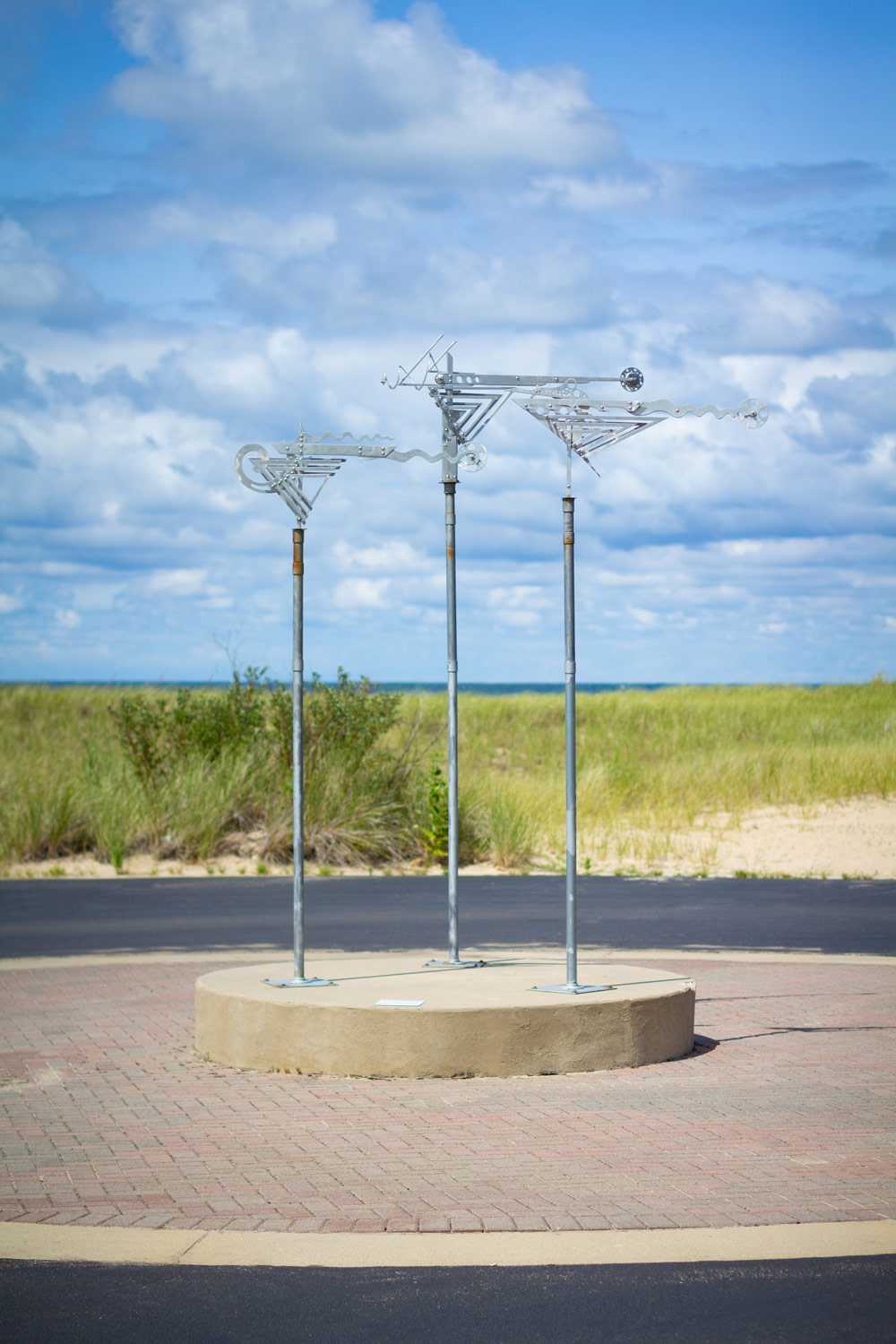
The Box Factory for the Arts
Winds of Change
Rick Ott
Aluminum, stainless steel, 2010
Ott is inspired by “tractors, automobiles, and everyday objects exhibiting purpose through form and movement.” Constructed of stainless steel and aluminum parts, this sculpture has three vertical columns topped with dynamic, machine-age inspired fins that move in the wind.
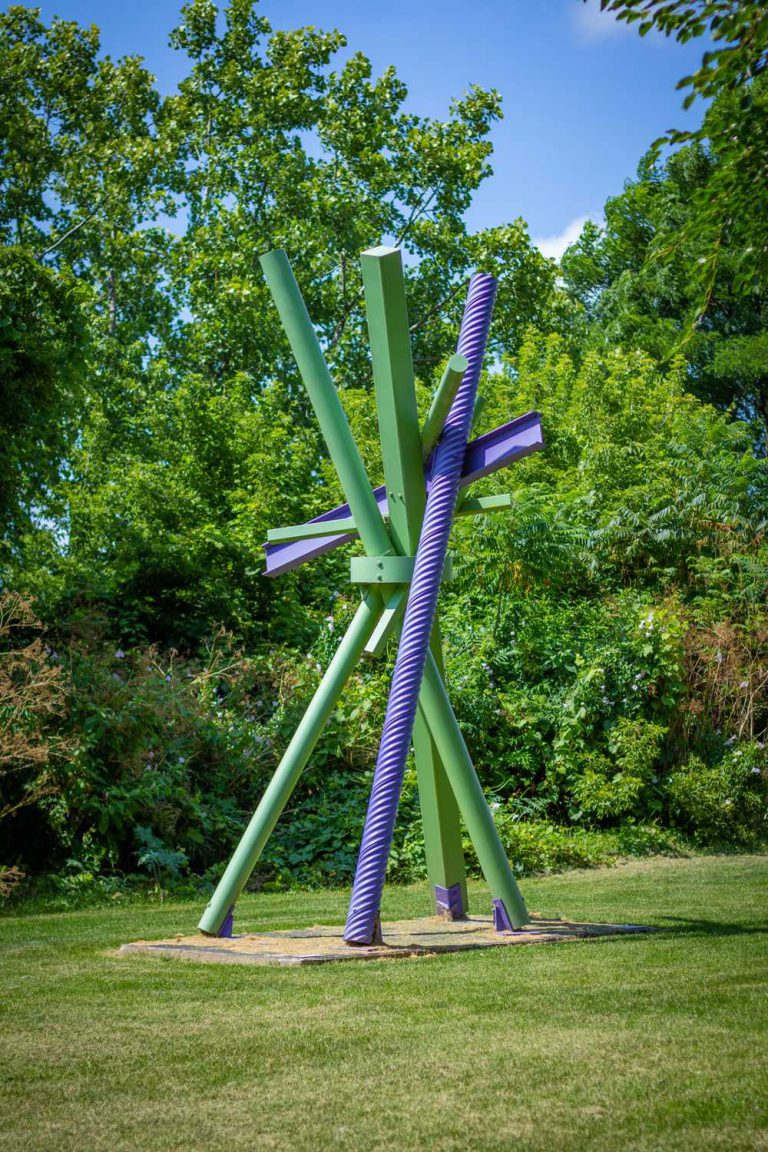
Lookout Park
Wintergreen
Ray Katz
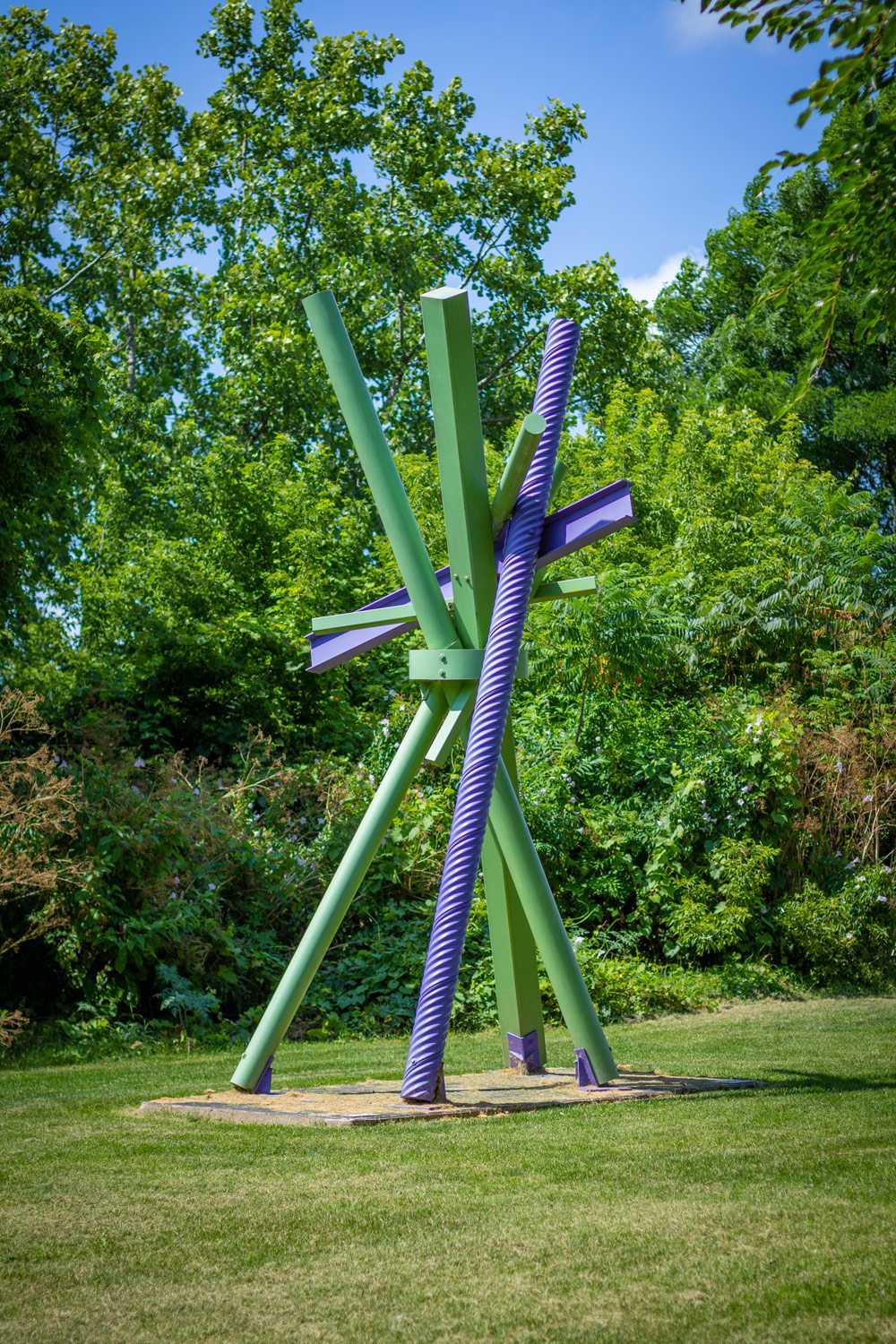
Lookout Park
Wintergreen
Ray Katz
Painted steel, 2012
Industrial objects, bright colors, and dynamic forms are all aspects that can be found in Ray Katz’s sculpture. He combines geometric and organic elements that work together to convey kinetic energy. Although Katz creates artwork in various mediums, metal remains his passion.
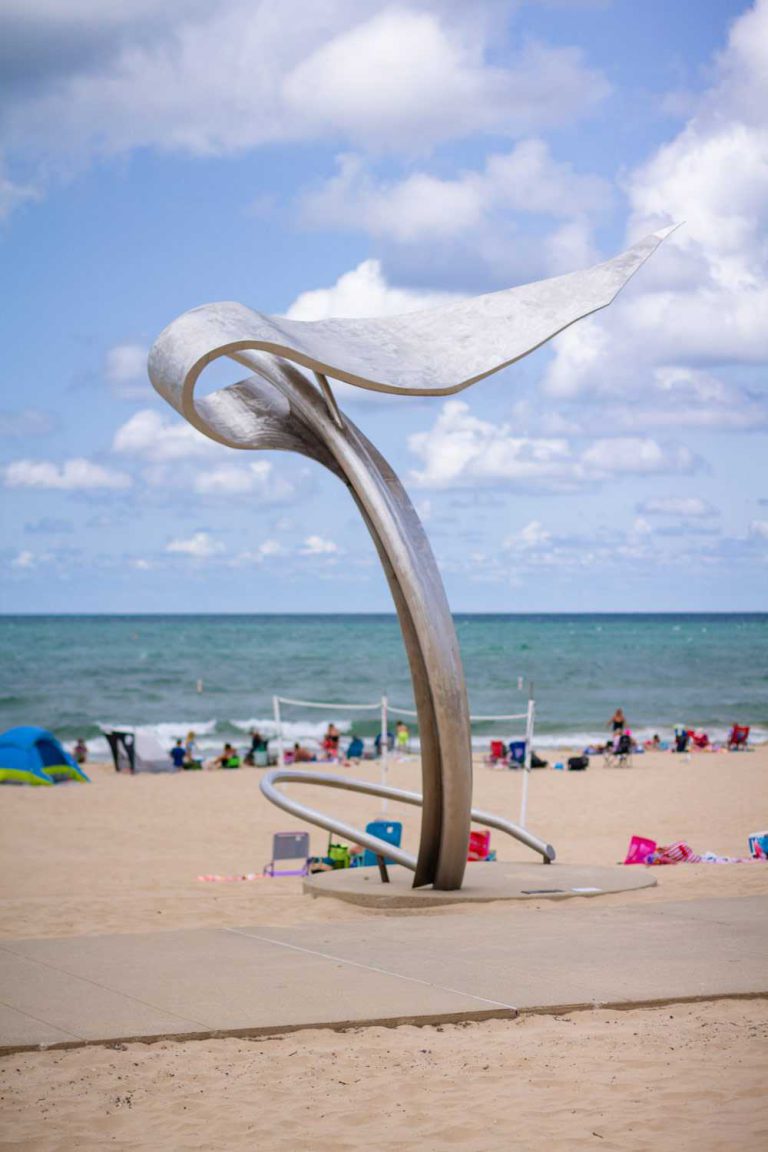
Silver Beach County Park
Young Flight
Gail mally-mack
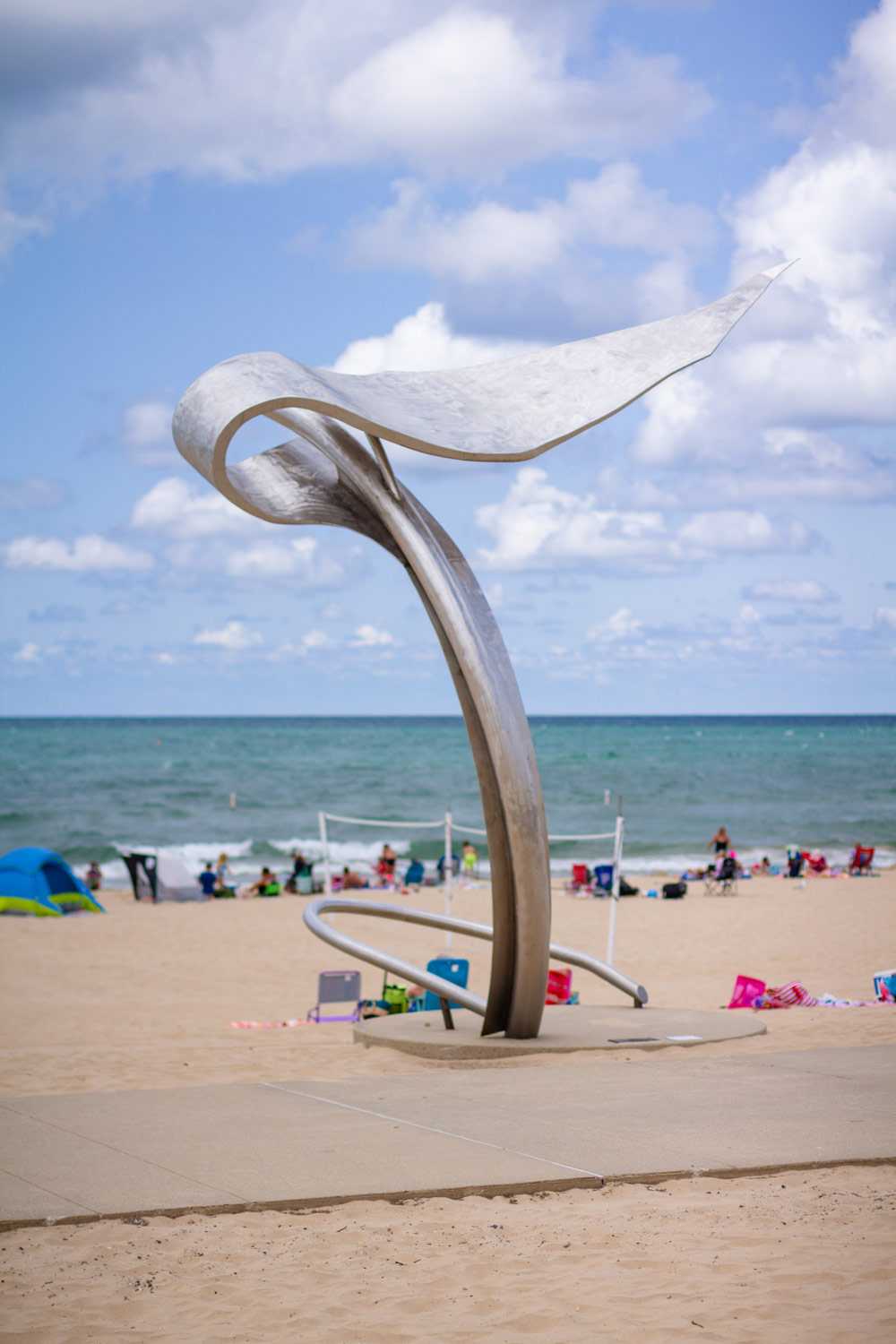
Silver Beach County Park
Young Flight
Gail mally-mack
Stainless steel, 2005
Young Flight conveys a sense of peace, serenity and a celebration of life. In this abstract sculpture, the soft curved lines at the base direct your eye upward to the wing like shape, ready to soar. Detroit sculptor, Gail mally-mack, used these abstract shapes to symbolize children and their youthful outlook on life.
1. How you think this sculpture would move?
Move your body to show how you think this sculpture would move if it could!
2. Look closely, what do you see in this abstract sculpture?
The wing of a bird flying? A jumping fish?
No artworks match your search. Try another artist, title, or location.